Archive for Baseball

Can’t Science Solve Baseball’s Silly Foreign Substance Debate?

If you watch the HBO television program Last Week Tonight with John Oliver, you may be familiar with a reoccurring segment titled “How is This Still a Thing?” in which approximately three to four minutes are used to discuss the merits of some kind of tired tradition that probably needs to come to an end.

With the recent suspension of not one, but two major league pitchers for infractions regarding foreign substances, you may be asking yourself the same question. Sports, of course, loves a good debate, so when the whole issue was brought up again this go-round, the same old questions arose. Does it really help the pitcher? Do the batters really mind? Does anyone really care?

But the most prevalent question seems to revolve around how this issue hasn’t been put to bed already. Major League Baseball — and some certain managers, it seems — think that a pitcher’s employment of certain substances gives them an unfair advantage. This has not stopped the pitchers from disregarding the rules banning those substances, however. A recent segment on ESPN’s Baseball Tonight featuring former big leaguers Alex Cora and Dallas Braden accentuates this fact.

The subject of all this debate is confusing however. The current discussion isn’t revolving around Vaseline or hair tonic or emory boards or gobs of tobacco spit. Less my memory fails me, all the pitchers who have been suspended for abusing the foreign substance rule within the past few years have all used some sort of combination of pine tar, rosin, and sunscreen. These are all substances that can easily be found within the field of play during any baseball game, and, as Braden pointed out, are freely available for the hitter to use.

The quotes from John Farrell used at the beginning of the segment are also interesting.

“I would like to see an approved substance that pitchers can use,” Farrell said. “Because when we take a manufactured baseball and rub it with dirt, it’s going to create a slippery feeling to it. The mud residue leaves a film on it that you don’t necessarily feel a good, consistent grip. Unless you go to a ball like the one used in Japan where it’s got a tacky feel to it. But I’d like to see something that’s approved that everyone can use. I think if you poll any hitter, the hitter wants to know that the ball’s got a grip. The ball’s not going to get away from [the pitcher].”

This seems like an incredibly even-headed idea. Pitchers want a little something to make sure they have a proper grip on the ball. Batters want to make sure that pitchers aren’t throwing balls caked in substance that will make them dart all over the strike zone. Can we not find a happy medium? Lord knows MLB has not been shy about telling players what kinds of other substances they can and cannot use. Were those just picked willy-nilly? There had to be some science involved.

We have the technology to track a balls rotational spin, on either axis, with pretty tremendous accuracy. In today’s installment at The Hardball Times, Jesse Wolfersberger profiles private companies that are doing amazing things in the world of sports tracking and technology. I find it hard to believe that Major League Baseball, with all their resources and their StatCast tech already in place, couldn’t conduct some kind of study on the effects of certain substances on a pitched baseball.

Golf has a whole division devoted to testing clubheads and balls and shafts and putter inserts. While it would be cool to see baseball invent some contemporary to the golf swing robot, it wouldn’t even have to be that advanced. A group of pitchers and a large enough data set should be enough to find preliminary results.

There has to be a happy medium between tactile grip and rotational disruptment. A bevy of tests should be able to shake out the best compromise between pitcher and hitter. Heck, why not get third parties involved and have them submit their best attempt. Who wouldn’t want to be the Official Ball Gripping Substance of Major League Baseball?

There are rules in baseball regarding lengths, widths, and weights of bats. Gloves need to be within a certain size range. Uniforms have to fit a certain regulation. Perhaps it’s time that we adopt a certain substance as part of the pitcher’s equipment. Rosin apparently isn’t cutting it. Let’s do some testing and find some kind of goop that doesn’t skew the advantage too far in either direction. Make the stuff blaze orange so everyone knows it. No more hiding. No more trickery.

In some matters, baseball is leading the charge in technology and science adoption, both internally and through third-party companies. Fixing this silly doctored ball debate with a little number crunching would be a win for everybody. The pitchers don’t get wild, the batters can still barrel the ball, and baseball can point to yet another measure taken to combat cheating. The sports news networks will have to find something else to talk about, but that’s not really our problem.

(Header image via Keith Allison)

HitTrax System Makes Batting Practice Perfect

Professional baseball is a grind, with daily games and countless hours of batting practice for hitters. But younger hitters working in a batting cage lack the feedback of seeing how that last hit would have traveled on the diamond. To help hitters get that experience, the company InMotion has developed the HitTrax system, capable of tracking batted ball speed, launch angle, and a number of other parameters that tell hitters how far each ball would have traveled during an actual game.

The system consists of separate hardware and software components. The hardware, encased in the rectangular white box seen above, consists of three near-infrared cameras and two near-infrared LED arrays that better illuminate the ball. Like other motion-capture systems, multiple cameras track the ball as it crosses the camera volume. The location of the ball in each camera’s field of vision, combined with the known distances between each camera, are combined to measure the position of the ball in three dimensions.

The box containing the cameras is positioned inside the cage, a few feet behind the batter and just in front of the plate, in a fixed position for both right- and left-handed batters. You typically wouldn’t want to stand by the box when someone is in the cage, of course, but the hardware is still well-protected from foul balls: the LED arrays are behind bulletproof glass, and the front of the box is “made from the same material as hockey boards,” according to Tom Stepsis, InMotion Systems’s director of marketing.

The tracking data is then fed into a physics engine to project the distance each hit would travel in the real world. But in addition to distance and trajectory, HitTrax also estimates whether each batted ball would result in a hit or an out. The fielders’ ability has been programmed to match the hitter’s, so high school hitters will face high school fielders, whereas more skilled fielders and deeper fences await older hitters.

InMotion, based in Northborough, Mass., claims that the speeds reported by the HitTrax system are accurate to within one mile per hour, as compared with conventional radar guns. Stepsis also claimed the distances reported were accurate to within five percent of the actual distance, as measured manually with a tape measure. The system does not track the ball’s spin (which has been shown to have an important impact on the distance a fly ball travels) but instead makes its calculation based on the first few feet of trajectory captured by the cameras.

The HitTrax software is controlled by a touchscreen, where the user can enter personal information, change settings, or switch between training and game mode. In training mode, the system can produce detailed spray charts, strike zone “hot and cold” zones, and trajectory data such as launch angle and exit velocity. Reports and leaderboards are available online so players can track their performance and get a sense of how a change to their swing mechanics might translate to in-game performance.

But game mode, Stepsis said, was entirely separate. Here, hitters can compete in home run derbies and on teams in simulated games. The system also includes fun features, like power boosts, to affect trajectories.

Despite its name, the HitTrax system is also capable of tracking pitchers. The system tracks the horizontal and vertical break of the ball, the “end speed” as the pitch crosses the plate, and where in the strike zone the pitch was located. Because the cameras are fixed in front of home plate, however, more in-depth statistics like release point, starting speed, and a more detailed trajectory of the ball’s path to home plate, are not available.

Prior to founding InMotion, the company’s founders had decades of experience with motion tracking technologies and a passion for baseball. It took InMotion “a solid two years” to develop the HitTrax system to the point where it was ready to be sold. Stepsis said that, because the product was so unlike other available offerings, the initial marketing focused on showing potential customers how to use the system.

“When we introduced this, part of the hurdle was explaining what it was to people,” Stepsis said. “And seeing is believing, so we did a lot of demos. And then once people saw it, word of mouth started to spread, and things really took off.”

The system is now in facilities across North America, along with some high schools, colleges, and the occasional private residence. For those in publicly-accessible facilities, the price for a session can vary widely.

“There are some places that charge over $100, there are some places that just put this in a coin-op [batting cage] and just charge double, so instead of $1 for 20 balls, it’s $2,” Stepsis said.

InMotion has gotten positive feedback from players, coaches, and facility owners as a training tool, but Stepsis said some users were also using it for tryouts or scouting purposes.

“Some of our customers who own facilities are also MLB scouts, and they love it,” Stepsis said. “They feel like the data we’re providing them just paints this elaborate picture of what the player’s like.”

As InMotion grows and HitTrax becomes more popular, Stepsis hopes that his company will be able to give players and coaches instant access to the type of data that will allow them to monitor their progress and quantify the effect of any changes in their swings.

“We’re not coaches. We just want to be data providers,” Stepsis said. “It’s all about making the indoor training environment more engaging and more beneficial.”


Reminder: MLB Network is Broadcasting a Statcast-Centric Game Tonight

Baseball nerds, start your … right hemispheres? MLB’s new all-encompassing tracking software, Statcast, is finally ready for primetime. The much-anticipated technology will be on display in all its glory during tonight’s MLB Network broadcast of the St. Louis Cardinals v. Washington Nationals bout.

Statcast has been a hot topic in the world of baseball analysis, as it promises unparalleled ability to track almost everything that happens on the field — from baserunning efficiency and batted ball speed to outfield and infield defensive examination, the great StatCast machine looks at it all.

The greatest part of Statcast is also its scariest feature — there is going to be so much data preserved per game. While we don’t know how that will shake out for our brethren at FanGraphs, those of us that like fancy graphics and pretty colors should be perfectly content watching StatCast features on television.

In fairness, this is how MLB is going to gain the most attention to the baseball-watching public. While statistical analysis is certainly making strides these days, many fans don’t know much about it or choose to ignore it. Seeing graphical representation of the numbers and figures stats analysts are looking for will not only create a more engaged fan, it may just help convert a few people into paying more attention to the underlying numbers.

Either way, it should be fun to see how MLB plans to feature Statcast data in real-time, and should give us a look into what all the technology is capturing. The broadcast begins at 7 p.m. ET. For a primer on StatCast, check here.

(Image via MLB.com)

The Dodgers Want to Help You Grow Your Sports-Tech Business

The Dodgers have been on the forefront of a few of the biggest changes in baseball, namely the great western migration of baseball and the integration of the league. More recently, the new(ish) ownership of the club has combined their garish amounts of money with a push toward analytics and put together a team that many expect to compete for the NL pennant in 2015. But their emphasis on innovation does not stop on the diamond, as the Dodgers have announced a partnership with advertising firm R/GA to start a startup accelerator for sports-minded technology and media companies.

The idea is fairly straight forward as far as accelerators go. Various companies in various stages of development apply to be part of the program. If accepted, these companies get a little capital ($120,000 each) as well as access to numerous mentors and strategic partners — including R/GA, of course — to help grow their visions and get their products to market.

What the Dodgers’ interest is in starting such a project remains to be seen. It could be merely for some good PR. They could be interested in buying up any of the companies that impress during the accelerator. Or they could be interested in investing in particularly interesting ideas. The ownership group of the Dodgers are mainly investors, after all.

Say a company in the accelerator puts together a great piece of technology that lets fans check their phones to see how long the bathroom lines are (weird example, I know. This is why I’m not applying). The Dodgers love the idea and have the means and wherewithal to snatch up that company and test their product in Dodger Stadium. It’s a massive hit, and fans of all the other teams are demanding the technology in their favorite ballparks. Bing, bang, boom — the Giants (and every other team) have to pay the Dodgers a handsome licensing fee. The Dodgers make even more money, and parlay that into 18 straight World Series championships.

I got a little carried away there, but you see the point. The Dodgers are a baseball team, yes, but they are also an entertainment company. They operate in a market that is pulling consumers in a thousand different directions. They compete with other high-profile and very wealthy sports teams in their market and a World Series winner not far up the road. It seems silly to think that such a rich baseball team might need a competitive edge, but it’s not. This accelerator proves that the Dodgers are still working to make a competitive team and a competitive business.

The deadline to apply for the program is June 29th. Application instructions and all necessary info can be found on the Dodgers Accelerator web site.

(image via woolenium)


MLB Pitchers Noesi, Rogers Using Kevlar Cap Inserts

There might finally be a protective baseball cap that doesn’t look ridiculously goofy.

ESPN’s “Outside the Lines” reported yesterday that Chicago White Sox pitcher Hector Noesi and Esmil Rogers of the New York Yankees are wearing inserts under their hats made partially of Kevlar, the material used within the military and law enforcement for bullet-proof vests. The three-milimeter thin pad combines an elastomer with Kevlar to absorb, disperse and dissipate energy to reduce the extent of injury upon impact, which in most cases is a line drive off a pitcher’s dome. Unequal Technologies, which developed this product, aptly named the insert “Dome”.

alextorrescap
This is just silly to look at (Courtesy of Getty Images)

An elastomer is a rubbery material made of long chain-like molecules (polymers) that can return to their original shape after extending.

I watched Rogers pitch in relief during that Red Sox/Yankees marathon game Friday night and never noticed anything wonky about his hat. So either he wasn’t wearing the insert during that appearance, or it really looks a whole lot better than the hat Alex Torres wore last year.

It’s worth noting that while not MLB approved, pitchers are allowed to wear protective gear of their choice as long as it doesn’t offer any interference with play or MLB licensing agreements.

Rob Vito, CEO of Unequal Technologies, told ESPN that the padding is 5 1/2 ounces. He said he’s done his own independent testing and will seek MLB approval. But he won’t make any claims about protecting against certain speeds off the bat. Just that it’ll protect pitchers against line drives.

Jen Lada, a reporter for Comcast Sports Net Chicago, highlighted the Dome prior to the White Sox home opener on Friday.

Unequal Technologies also sells the Gyro for football helmets, which can be trimmed to customize fits. It’s approved by the National Federation of High School Associations and is being piloted in Pop Warner football programs.

The Dome is available for purchase for $59.95.

(Image via Unequal Technologies)

Sound Off: How is your MLB.tv Experience So Far?

We’re five days into the MLB season, which means we’re five days into our use of MLB.tv. So far, I find the streaming service to be pretty dang solid, at least when compared to what I remember last year. I have noticed that it seems much more “live” when watching through my PS4 than on my Roku streaming stick. However, I imagine that this is more a function of the app than the service.

A few of us have talked about our experiences so far on these electronic pages, but we want to hear from you. How’s it going? Have you noticed a platform (laptop, gaming system, set-top box) that seems to perform better than others? How’s the audio overlay going? Noticing lots of lag?

Sound off in the comments. Make sure to mention your system of choice and any info about your internet package (like a SpeedTest score). Let’s help each other find the best possible way to watch our national pastime.


How a Baseball Dork Who Won’t Pay for MLB.TV Follows All the Games

It’s Baseball Week at TechGraphs. Our writers are sharing the tools they use to follow along in the season. Michael Tunney’s thoughts are below.

For the average baseball fan, an MLB.TV subscription that costs over $100 per season probably seems like an overpriced luxury. But for baseball fanatics, procuring an MLB.TV subscription is a fait accompli, an annual rite of passage. My reasons for not doing so are twofold: 1. the price point and 2. an intense fear that all of my worldly obligations will be thrown to the wind upon receipt of said subscription.

Instead, I have collected a number of means by which I am able to keep up with all the games without throwing my life away in the pursuit of watching all of the baseball things.

First, I use the MLB At Bat app to keep up with individual games, watch highlights, and subject myself to terrible White Sox broadcasts with Ed Farmer and Darrin Jackson because I hate myself. I’ve made it clear, repeatedly, on TechGraphs that I’m a fan of Bob Bowman’s efforts with MLB Advanced Media, and find this app gives me 80 percent of what I need to follow any particular game.

For $20 you get a whole season’s worth of radio broadcasts for all 30 teams, Pitch f/x, in-game video highlights, and MLB.TV’s Game of the Day. Instead of listening to tunes or podcasts during the season I usually listen to radio broadcasts of whatever game interests me at the moment, whether it’s a good matchup or one of my fantasy pitchers are on the bump.

Second, Twitter. Not just any kind of Twitter, “baseball Twitter.” I use it to follow all the latest news and deals, and  keep up with injury updates and roster moves. I went through all of my follows and made a baseball Twitter list you can follow here. If you have any suggestion please add them in comments! One of my favorites for keeping up with the annual fantasy closer carousel is @closernews. I don’t know who maintains this feed or why, but I am eternally grateful and it’s one of the reasons I always finish near the top of my fantasy league in saves.

I only participate in one longstanding fantasy league because life, so I’m always checking in on Yahoo’s Fantasy Sports site, as well as their Yahoo! Fantasy Sports app, which can be maddening at times (I missed a Drew Hutchison quality start on Opening Day because it didn’t show he was starting when I checked, but also because I’m an idiot).

I also check Rotographs and Razzball on a regular basis, as well as Buster Olney and Keith Law’s blogs via ESPN Insider. Buster gives a daily rundown of everything that happened in baseball the day before, which I scroll through every morning to check for news on my fantasy team and to stay in the loop in general.

All this baseball buffoonery was put to the test this week as I was on the road, pretending to work in a Santa Monica cafe on Opening Day, and I was able to keep up with everything I needed by toggling between the MLB At Bat app, Twitter, and FanGraphs’ live chat throughout the day. If any readers have suggestions for ways to follow baseball without MLB.TV (or an actual TV) please add them in the comments, along with the best baseball Twitter follows!

(Image via Tony)


An Analog Approach to Enjoying Baseball

It’s Baseball Week on TechGraphs. Our writers have been describing tools they use to keep up with the baseball season. Bryan Cole’s is below.

Look, I get it. Technology makes baseball better. There’s no question. I’m not going to sit here and pretend that being able to flip between any MLB game happening live anywhere around the world*, with a little pull-up menu that instantly that shows how your fantasy teams are doing isn’t amazing. It is.

* – Certain blackout restrictions apply.

If you wanted to follow the 1912 World Series, here’s what you did: you went down to the newspaper office and you stood outside and you watched an electronic scoreboard with mechanical players that operators updated every time they got a telegraph from the stadium. This sounds like an “uphill-both-ways-in-the-snow” style exaggeration, but this really happened. Some people paid as much as 50 cents — the same price as a bleacher seat at the actual Series! — to watch these scoreboards.

Still, baseball is one big nostalgia trip for me: listening to the game on the radio, scoring the game on paper, saving ticket stubs to commemorate the games you went to. But there are still ways to bring some of these parts of the experience into the 21st century.

Radio Broadcasts

We’ll get the easy one out of the way first. An MLB.tv subscription of course includes the home and away audio broadcasts of all games, and you can get an audio-only subscription for just $20 all season. If you speak Spanish (or want to learn the extremely hard way), those broadcasts are available too. If you want still more people talking about baseball, there are a number of baseball-centric podcasts* that go incredibly deep on virtually every aspect of the game.

* – I’ve been looking for a daily baseball podcast on the level of The Basketball Jones for a couple years now, but I still haven’t found anything quite like that.

Keeping Score

Baseball Reference is a thing of wonder. Your dad can start reminiscing about this time he saw Yaz play a doubleheader against the Senators when he was in elementary school and boom, you can tell him who the winning pitchers were before he gets to the part where their car overheated in traffic on the way home.

Before then, the only way to get those details was to keep score with paper and pencil (or a pen, if you felt confident). There are a number of different scorekeeping guides and books, with varying levels of complexity. If you want to just mark down whether a player reached base safely or not, that’s fine. If you want to track balls and strikes, cool. If you want to try to indicate where the ball was hit on that tiny little diamond they give you, go for it.

My only advice is to get one that’s wider than it is tall. Most of the books available in sporting goods stores are designed for Little League coaches, so they have something like 16 lineup slots and only nine innings. But if you happen to be scoring an extra-inning game, your choices are either (a) stop keeping score at the most interesting part, or (b) copy all of the lineup information over again only to have the lead-off hitter hit a walk-off homer in the bottom of the 10th.

Obviously you don’t have to do this to enjoy a baseball game. At the professional level, you don’t even have to do this if you want to see how your favorite player is doing, since it’s usually a couple of smartphone clicks away. But it does give you something tangible to remind you of the game you went to and that, yes, Dad, Tim Wakefield did give up six homers in that game.

Paper Tickets

The ticket stub is a built-in souvenir, a reminder of the specific game you went to (so you can look it up later on Baseball-Reference). And recent tickets — the ones with photos on the front — tell you even more: a generic shot of the stadium or fans cheering tells you that team probably wasn’t very good. But teams have stopped mailing out those admittedly easy-to-lose pieces of paper, instead sending a PDF fans can print at home. And that’s great, and they’re actually really convenient if you’re meeting up with people, but no one’s going to pay for a super-sized PDF printout to hang on their wall.

For once, technology actually offers ways to counter this. Apple’s Passbook can be used in a number of MLB parks and lets you hang on to past tickets, meaning you can actually take your collection with you. Then again, when you think about the phone you were using ten years ago, you realize these digital tickets might not be with you for as long as you’d think.

The fundamental language of baseball is one of tradition, of grizzled scouts and outdated equipment and 60-year-old men wearing uniforms and suboptimal strategies because That’s How It’s Always Been Done. It’s ridiculous, sure, but if you squint (or if your vision is going), you can convince yourself that Ted Williams and Babe Ruth and Sandy Koufax could actually still survive in this game, giving it a link to the past none of the other sports really enjoy. In a few minutes, the nostalgia will pass, and I’ll be back to looking at StatCast data while watching two games at once.

Until then, get off my lawn. I just found the tickets from that road trip I took to see Pedro Martinez pitch against the Braves in Shea Stadium.

(Photo by Scott A. Thornbloom/U.S. Navy)

Major League Baseball Sets New Records

While some were crying out for further action on the pace-of-play front, Major League Baseball was busy setting a series of viewership, attendance and app download records. Between press releases from various clubs as well as MLB themselves, baseball’s popularity may not be waning afterall.

Baseball as a whole appears to be in a strong place as before the regular season started, spring training attendance eclipsed the four million mark, setting a new record. Leading up to the games that matter saw seamheads pass the five million download mark across all platforms for the MLB At-Bat in the preseason. That is roughly the equivalent of the combined population of Los Angeles and San Diego downloading the app prior to the first pitch on Sunday night. The Advanced Media portion of MLB — those in charge of the MLB At-Bat app — claim users were up 30% during spring training compared to last year.

As games across the country kicked off, baseball enjoyed more success as MLBAM set another record with 60 million fans turning into games either live, via video-on-demand system. If the preseason 5 million download mark is impressive, Monday saw the At-Bat app accessed an incredible 9.1 million times, crushing the previous single day record by 40%.

Individual teams partook in the record setting celebrations as the reigning American League champion Kansas City Royals reported a record 11.7 local TV rating for their home opener. That is compared to last year’s KC home opener rated at 6.2, however, that came as their fourth scheduled game of the season and was following a rain out and an 0-2 start. Following a flurry of trades and signings, the San Diego Padres and their fanbase entered the 2015 season with much hope. That hope translated to a 34% increase in television ratings for their home opener over last year. Of course all TV ratings must be taken with a grain of salt as those figures do not include the previously mentioned millions of fans streaming games.

Major League Baseball certainly isn’t perfect — instant replay, concussion issues and blackout policies immediately come to mind — but it is clear the sky isn’t falling just yet either.


GUIDE: Every Baseball Movie on Netflix

It’s baseball week at TechGraphs. To commemorate, we’re bringing you baseball-themed content all of Opening Week.

A few days before Opening Day, mostly every year, I watch The Natural. It’s been my favorite baseball movie since I was nine. Watching Roy Hobbs bust a light tower builds my excitement for the start of the baseball season. For those of you itching for some baseball outside of the opening week of Major League Baseball, I’ve compiled a list of every baseball movie currently on Netflix along with the Rotten Tomatoes audience score to serve as a helpful guide to your baseball-viewing needs.

I’m utilizing the audience score, which is based on votes from readers, rather than the Tomatometer, because I hate critics. Also, there’s a ton more scores from the audience (think 2,000 or more) than critics (around 25-ish). I’ve sorted the flicks in ascending order starting with highest audience score. Remember, people – this is Netflix. You won’t find Bull Durham. After reading the list, you may actually wish that Trouble with the Curve was streaming.

Editors note: All online comments unedited. A lot of (sic) is implied.

Ken Burns: Baseball

kenburnsbaseball

Year: 1994

Need to know: It’s 18 hours long. If you’re passionate about baseball, you’ll love it. If you’re not, you may fall asleep rather quickly. Binge it and tell me how that works out for ya.

Audience Score: N/A

Encapsulating comment: Brilliant documentary on the astounding history of America’s pastime with the superb direction of Ken Burns and the vast number of talents from around the world who lend their views on the classic game. Amazing footage never seen before. – Tim Cox via IMDB

The Battered Bastards of Baseball
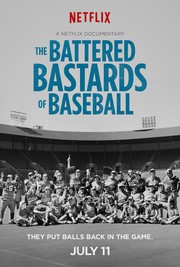
batteredbastards

Year: 2014

Audience Score: 95%

Need to know: This is a Netflix original documentary about the only independent baseball team in 1973 out of Oregon. From Netflix: Their spirit was contagious, and during their short reign, the Mavericks — a restaurant owner turned manager, left-handed catcher, and blackballed pitcher among them — brought independence back to baseball and embodied what it was all about: the love of the game.

Encapsulating comment:  While probably better appreciated by people already invested in this world, it still offers underdog-rooting fun for the rest of us. Clearly a heartfelt look at a relatively interesting part of American sports history? May work better as an actual narrative. – Matt G

Ballplayer: Pelotero

ballplayer

Year: 2012

Audience Score: 88%

Need to know: Narrated by John Leguizamo and including an executive producer title for Bobby Valentine, this documentary looks at MLB training camps in the Dominican Republic.

Encapsulating comment: Kinda the Hoop Dreams for baseball in the Dominican Republic. MLB does not come off looking good in this. Recommended for baseball fans. – dteller1

Home Run
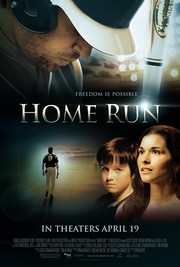
homerun

Year: 2013

Audience Score: 82%

Need to know: Big-time baseball player gets a DUI, agent sends him back to the small town he grew up in to coach the youth baseball team. Doc Hollywood meets a jock strap.

Encapsulating comment: It’s not as if the director and cast don’t possess The Natural quality. All involved perform their best at Stealing Home and that’s no Bull Durham. Still, every moviegoer knows the Angle in the Outfield here. Hell, when parodied in the hilarious HBO comedy Eastbound and Down, it sadly rings truer. Getting literally preached at from the pulpit, however, never feels like a great night at the movies. – Jeff Boam

The Bad News Bears
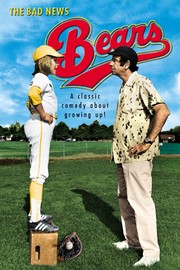
badnewsbears

Year: 1976

Audience Score: 80%

Need to know: After high school I played slow-pitch softball for about 12 years. For half that time, I had long, blonde hair, down to about my shoulders. I pretty much tried to be the adult version of Tanner. I even played shortstop. If you need to know what this movie is about, you shouldn’t be reading this post.

Encapsulating comment: This set the standard for countless sports movies, and, while it’s not so revelatory now, I’m sure it was quite shocking/refreshing to have a kids movie have such an edge to it what with the swearing and politically incorrect nature. It’s less vulgar than the remake, but while it’s more family oriented, it’s still got some racial epithets that wouldn’t fly now a days if said by white characters. – Chris Weber

BASEketball

BASEketball

Year: 1998

Audience Score: 74%

Need to know: Starring the Southpark guys, BASEketball tells the tale of three slackers who make up a new, pure and innocent sport in their driveway, only to find it turned into a major corporate and wildly popular professional league.

Encapsulating comment: Well it was watchable. – Wahida K

The Perfect Game
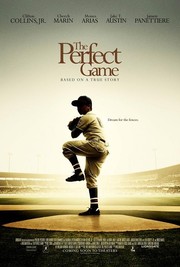
perfectgame

Year: 2011

Audience Score: 68%

Need to know: Cheech Marin is in it. A true story about the 1957 Monterrey, Mexico boys team that overcame poverty and limited resources to reach the Little League World Series. Also, Cheech Marin is in it.

Encapsulating comment: The Perfect Game is harmless and good hearted but it feels too cliche and unmemorable to be an effective sports film. – Bradley Wright

The Benchwarmers
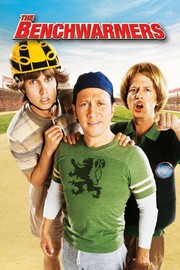
benchwarmers

Year: 2006

Audience Score: 64%

Need to know: This looks awful. To be honest, I’ve never seen it. I just can’t look at David Spade’s haircut. Somehow it got a decent audience score. Which now makes me question my use over the critics, who HATED THIS (11%).

Encapsulating comment: The worst “comedy” that I ever saw these days. – Lucas Martins

The Yankles
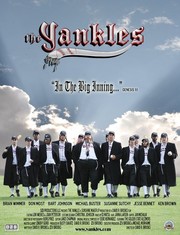
yankles

Year: 2012

Audience Score: 63%

Need to know: A former MLBer’s career ended due to alcoholism, his wife left him and he went to prison following his third DUI. Sounds fun, huh? He ends up coaching the baseball team of an Orthodox Jewish school as part of his parole, mainly because no one else wanted him around their kids.

Encapsulating comment: The best kosher baseball movie out there, I love watching sports movies especially baseball ones, you can never have enough of them, and this ones totally kosher, so don’t be a putz or a smuck and watch it. Ralph from Happy Days is in, flashback, is pretty good, as the dad, Donny gives his Most in this part. – mike hawke

A Mile in His Shoes
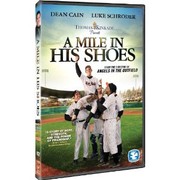
amileinhisshoes

Year: 2012

Audience Score: 59%

Need to know: We have a Dean Cain sighting, people. The story of Mickey Tussler, a young man with a type of autism who is recruited by a passionate coach to pitch for his minor league team.

Encapsulating comment: Based on the novel, The Legend of Micky Tussler by Frank Nappi, comes the Canadian film, A Mile In His Shoes. While the basic story remains the same, the film was significantly different than the novel. The new story transfers much better to film, but takes far too much away from the original novel. – Todd Smith

One Hit From Home
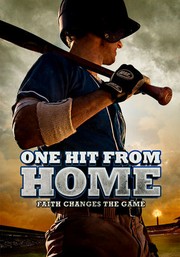
onehitfromhome

Year: 2014

Audience Score: 57%

Need to know: Hey Hollywood – stop writing scripts about a former star that leads a crappy team to glory. IT’S BEEN DONE. This one isn’t any different. At least this guy isn’t an alcoholic like half of the other movies on this list (that I can tell).

Encapsulating comment: There are no reviews. If you’re going to watch it, make sure you’re doing laundry, or something else productive.

The Pitcher and the Pin-Up

thepitcherandpinup

Year: 2005

Audience Score: 55%

Need to know: It’s a romantic comedy. Kill two birds with one stone and cross this one off your baseball movies list while scoring brownie points with your woman friend for suggesting a movie with romance.

Encapsulating comment: This was a bad movie Sunday selection by myself, but it could have been a lot worse. Acting was pretty bad and she is still pretty hot, even though this was made many years after her prime… – Ed M

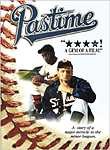
Pastime
pastime

Year: 1991

Audience Score: 54%

Need to know: Jeffrey Tambor (Arrested Development) and Ernie Banks appear in this story about two minor league players, both outcasts in the clubhouse, who develop a common bond over the love of the game.

Encapsulating comment: This is like one of those movies you stumble upon at 3am, sitting on your couch, flipping through channels. For some reason, it takes me back to my high school days of baseball. Good times. – kinadeon

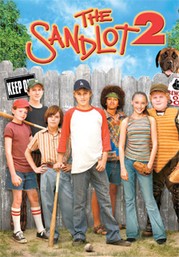
The Sandlot 2
sandlot2

Year: 2005

Audience Score: 41%

Need to know: I had no idea that this existed. Unfortunately for James Earl Jones, he signed on for the sequel.

Encapsulating comment: This movie is probably the worst movie I’ve ever seen in my life. This movie pretty much tries to re-make the original classic, but they fail miserably. – Japes.

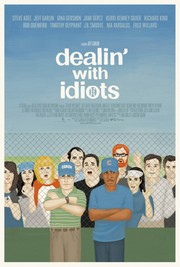
Dealin’ With Idiots
dealinwithidiots

Year: 2013

Audience Score: 33%

Need to know: As IFC Films noted, a hilarious satire about the culture surrounding youth baseball leagues in Los Angeles, this fully improvised film also features a who’s who of notable comedians and actors including Christopher Guest (Waiting for Guffman), Fred Willard (Modern Family), Bob Odenkirk (Breaking Bad), J.B. Smoove (Curb Your Enthusiasm), Gina Gershon (How to Make It in America), Kerri Kenney-Silver (The New Normal), Jami Gertz (The Neighbors), Timothy Olyphant (Justified), Richard Kind (Argo), Steve Agee (The New Girl), David Sheridan (The Love Boat), Nia Vardalos (My Big Fat Greek Wedding).

Yet it still sucked. Critics hated it, too (37% Tomatometer).

Encapuslating comment: funny people, but not a funny movie. a few chuckles but almost all of it misses. – Cody C

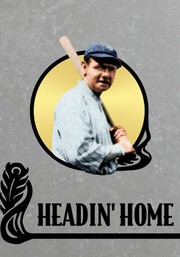
Headin’ Home
headinhome

Year: 1920

Audience Score: Just six ratings, so not enough to get a score. The average rating, out of 5, was 2.8.

Need to know: The sole purpose of this picture was to make money exploiting the “King of Swat,” Babe Ruth, in his motion picture debut.

Encapsulating comment: The first movie of Babe Ruth’s not-so-illustrious acting career is this wheezy silent about a small-town lad becoming a big-time slugger. Ruth portrays someone named “Babe,” but the character’s cornball backstory has little to do with Ruth’s own history. This Babe is no troubled orphan, but a polite mama’s boy with a homemade bat and a spunky younger sister named — get this — “Pigtails.” Ruth flashes none of the wisecracking charisma you’ll hope to see, and there isn’t even any notable footage of him playing ball. Meanwhile, the title cards izz all written inna contrived, po-folks dialect that culdn’t bee mo’ condescendin’ to th’ movie’s target audience. Fer heaven’s sake, th’ Babe deserved better than this. – Eric B

30 For 30 stuff

Netflix also has some ESPN documentaries to watch, which may be far more interesting than 75 percent of the list above.

You Don’t Know Bo: The Legend of Bo Jackson

Four Days in October – Red Sox propaganda

Jordan Rides the Bus

The Day the Series Stopped

Knuckleball! (Not a 30 For 30 production)

David Ortiz in the Moment

Silly Little Game – Charts the origins of fantasy sports games from a small lunchtime group known as the rotisserie league to the multi-million dollar industry it is today. The show also explores how none of the founders made money or even play the game anymore.

The House of Steinbrenner

Fernando Nation

Little Big Men – The story of Cody Webster, Kirkland, WA, Little League, and the biggest upset in the history of Little League.

The Baseball Chronicles

Deadball (Deddoboru)

Made out of Japan in 2011, this….looks…awesome. Per IMDB:

Baseball prodigy Jubeh Yakyu (Tak Sakaguchi) is the most feared and dangerous juvenile delinquent in all of Japan. After accidentally causing the death of his father with a super-powered, deadly fireball pitch, Jubeh swore off baseball and became a criminal and now, at 17, has been sent to the Pterodactyl Juvenile Reformatory for hardened criminals. Headmistress Ishihara, the granddaughter of a World War II Nazi collaborator, runs the institution with an iron fist and the enthusiastic help of her sadistic assistant, Ilsa. After arriving at the hellhole, Jubeh soon learns from governor Mifune that his long-lost, younger brother Musashi had also done time there after a murder spree, but had since died mysteriously.

We need a viewing party.