Motus Global and Zepp announced new additions to their existing lineup of baseball-specific wearable devices at this week’s Consumer Electronics Show in Las Vegas.
Motus Global’s system, called motusBASEBALL, is driven by a single IMU sensor. The new system can be used in a compression sleeve to track pitching, comparable to the mThrow, their existing offering. But the motusBASEBALL system can also be clipped on to a batting glove, providing feedback on a player’s swing.
“Our unique approach to the space, rooted in years of biomechanics services for MLB teams, along with the most powerful sports sensor on the market, gives our users the best chance at improving their mechanics and monitoring workloads on their joints,” said vice president for application development Ryan Holstad.
Preliminary information about the system is available on Motus Global’s website. The pitching metrics offered are very similar to the mThrow: both include throw limits based on workload, elbow and shoulder kinematics based on the single IMU worn over the ulnar collateral ligament, and a “bullpen mode” to help pitchers train.
The webpage also suggests that six metrics will be tracked for hitters: bat speed, hand speed, swing time, swing length (in inches), attack angle, and vertical angle. Metrics will be calculated separately for each region of the strike zone, to help hitters identify “hot” and “cold” regions. (Pitch locations will presumably be entered manually.)
To this point, not much has been revealed about the sensor driving the new system, other than that it has been “upgraded” over the current mThrow sensor. We can say for sure that the new sensor is less rounded than the current one. There is also a micro USB port for charging the sensor, a change from the induction charging previously used. More details will be revealed in the weeks leading up to the device launch (currently scheduled for February).
The company emphasized that motusBASEBALL was a consumer system, contrasting it with the motusPRO system unveiled during last month’s Winter Meetings. A full-body, five-sensor system, the motusPRO also transmits data via Bluetooth to a mobile phone or tablet for analysis. The system describes hitting and pitching motions through a wide range of angles, forces, rotations, and timing parameters. The motusPRO is currently available only to professional organizations, but Motus Global plans to roll the device out to select training facilities in the future.
Also this week, Zepp announced the next evolution of their bat sensor: an as yet unnamed offering embedded directly into the handle of the bat. As seen in the image above, the sensor will lock into a retention sleeve, which in turn will be fitted into the hollowed-out knob of a bat. Current offerings, which fit into flexible sleeves that slide over the knob, can move around or be knocked off by especially violent swings. Moving the sensor inside the bat should mitigate this problem.
The new design is still in the prototype phase, and no price point or release date have yet been announced. But Zepp claims to be in talks with a number of bat manufacturers to make a commercial version. In addition, Zepp announced a partnernship with New Balance, who unveiled a new digital sport division at CES.
Meanwhile, Zepp also has representatives at the annual convention of the American Baseball Coaches Association in Nashville. The goal there is to advance Zepp’s new design as an “open-source” industry standard for wearable sensors. To that end, the company will be hosting a roundtable discussion on this topic Friday.
Currently, devices like Motus Global’s and Zepp’s are not approved by MLB for in-game use. But MLB has said they are updating their wearables policy before the 2016 season. Until then, these devices can be used in practices and specific events: Zepp’s existing sensor has been used during game action at Perfect Game showcases, and an early version of the mThrow was used during 2014 fall instructs.
If you’re following the rise of player tracking technology, most of what’s being discussed are in-game systems. Whether the system is camera-based, like SportVu in the NBA or Statcast in MLB, or sensor-based, like Zebra’s RFID tracking of NFL players or the Sportvision’s partnership with the NHL, the goal is similar: track how pro athletes in the heat of competition, with the hope of gaining a competitive advantage by the shaving of a fraction of a second here or optimizing a route there.
But there’s another way for teams to use technology to gain an edge: by keeping their best players healthy and in those big games. This requires a separate system, especially on large squads like football teams where it would be impractical to collect and process the amount of optical data needed to capture everyone’s movements across all activities. As a result, systems based on global positioning system (GPS) technology are used in practices and rehab by a wide range of teams across all major sports.
Most of the designs center around a sports-bra looking harness worn by the athlete under his or her shirt. The harness holds a device containing a GPS chip, along with additional components like accelerometers, gyroscopes, and magnetometers, to track how and where an athlete moves. The GPS device is often paired with a heart rate monitor, allowing the system to estimate exertion.
Because the device relies on satellites to track the athletes, most companies that market a GPS system also market a complementary indoor system, typically based off a technology such as RFID that is better suited to the indoor environment. If a basketball or hockey team is working with one of these companies, chances are that they’re using indoor technology.
For now, these devices are predominantly used in practices, as none of the major leagues currently allow on-field wearable sensors for safety reasons. But FIFA just relaxed their ban, following successful runs at the Women’s World Cup and Under-23 World Cup over the summer. National federations are expected to follow suit shortly, and other sports leagues (such as MLB) are drawing up procedures to approve devices for in-game use.
Most readers are familiar with activity trackers like FitBit, which typically include a GPS component. But monitoring companies say that they aren’t designed to provide enough information to accurately track an athlete’s performance during competition or training.
“They offer very little insight into athlete’s performance,” said Richard Byrne, STATSports’s Business Administrator. “FitBit themselves are the first to admit they will show you patterns relating to your fitness levels as oppose to wholly accurate data.”
It might seem surprising to hear that teams are investing in GPS technology as camera-based systems proliferate across pro sports. STATS’ SportVu cameras are positioned in all 30 NBA arenas, and soccer teams have tracked distance traveled with systems like Matrics for years. But GPS companies argue their devices provide more in-depth information than camera-based systems.
“Camera systems essentially turn a match into moving dots on a screen,” said Catapult director of marketing Boden Westover. “You get speed and distance metrics, but they’re a tiny piece of the athlete tracking pie.”
There are a number of companies that offer similar GPS systems. For this introduction, I spoke with representatives from three — Catapult, STATSports, and VX Sport — but others (including GPSports and Zephyr) are also currently being used by pro organizations.
Catapult
With over 440 clients in 40 countries listed on their website, Catapult is the best-known and most prolific GPS company. Based in Australia, their OptimEye S5 (and the goalkeeper-specific G5) use GNSS, a combination of the American GPS system and the Russian GLONASS system. The result, according to Catapult, is a system accurate to within 50 cm; an older system that uses GPS only has a stated accuracy of 100 cm. The OptimEye devices include an inertial measurement analysis (IMA) chip, an accelerometer/gyroscope combination that measures an athlete’s finer movements. For indoor clients, Catapult produces ClearSky, an RFID-based system.
Westover said that Catapult’s distinguishing characteristic was independent validation of the technology published in peer-reviewed journals.
“There are around 100 such articles that have been published on Catapult, which prove that our technology measures what we say it does,” he said. “Other systems out there being used by teams have never been scientifically proven.”
STATSports
Headquartered in Ireland, STATSports’ offering is the Viper Pod, a combination GPS and MARG device with a stated accuracy of at least one meter. The inclusion of accelerometer, gyroscope, and magnetometer components allows the Viper Pod to track accelerations and decelerations, along with athlete direction and turning. The MARG components also contribute to the scrum analysis used by their rugby clients.
Although their current indoor solution works off accelerometry data, STATSports’ upcoming Viper 3 system (due out this year) will incorporate ultra-wideband technology for accuracy up to 10 cm. The new system will also use low-energy Bluetooth to connect to other devices like heart rate monitors.
Business administrator Richard Byrne said that STATSports prides itself on its software platform in addition to accuracy.
“Our customers tell us our software is light years ahead of anything else they have experienced,” Byrne said. “We have a host of innovative metrics which allow coaches who use our system an incredibly in-depth look at their athlete’s performance.”
VX Sport
VX Sport, a New Zealand-based company, is focusing its efforts on collegiate sports teams. VX Sport’s system combines three satellite systems — GPS, GLONASS, and an analogous Chinese system — but unlike other companies, doesn’t claim that the additional satellites produces increased accuracy. Instead, managing director Richard Snow claimed that the “dark art” of GPS accuracy relied more on high-quality components and intense post-processing.
“It’s a bit like talking about a pro digital camera vs. a consumer model,” Snow said. “If you picked up a pro Nikon from ten years ago, it’s always gonna be better than the 20 megapixel thing that you buy for $75 from an electronics store. And that’s the reality with GPS.”
VX Sport also offers an IMU-based indoor tracking system that caters to volleyball and basketball clients. Incorporating an accelerometer, gyroscope, and magnetometer, the device can track leg and hip biometrics based on the steps an athlete takes. The system includes software to summarize these biometrics into injury predictors.
Given the gameday motion capture systems currently in place, these GPS-based systems might seem superfluous. But Snow emphasized the importance of his system as a way to quantify players’ effort during the daily grind of training sessions.
“It used to be someone talking with the athletes in the morning, working out how are you feeling, what’s your readiness,” Snow said. “And then at the end of the training, how did you rate that? The only way they’re going to change that is with proper monitoring.”
As the World Series approaches– quick question: does StatCast display in metric for Blue Jays fans?– and sports dreams become reality, the tech beat, in which robot dreams become reality, marches on. What follows are some of the sports-tech stories from the past week that we found interesting.
First Gatorade, now head safety. The University of Florida football program has its priorities in chronological order, announcing this week that it is the first (collegiate, we suspect) team to test HITS sensors in its helmets. HITS stands for Head Impact Telemetry System, and the idea is to develop a better picture of the cranial contact football players receive during games for the purpose of improving safety.
Speaking of robot hats, IBM is turning the attention of its Watson computer to a number of sports-related applications, including player safety, through wearable technology monitoring; golf, though a “personal caddy” app that provides swing feedback; and hockey, through a program being used by the Pittsburgh Penguins to analyze fan data to improve the fan experience at home games. Still no word on that song Watson and Dylan are supposed to write together, though.
Feeling overwhelmed by all of these new wearable sports tech products? We’re only on the third story of this roundup! The NFL Players Association understands, though. Yesterday, the union filed a grievance against the NFL, claiming that use of sleep-monitoring sensors on players by “several” teams– including the Seahawks and Eagles– violates the collective bargaining agreement, because the technology is used outside of practices and games. This grievance is but the latest chapter in what is likely to be an ongoing battle over the scope of wearable biometric technology in professional sports.
In good news for the environment and most smartphone users, a significant segment of the secondary sports ticket market is going paperless. SeatGeek has introduced a mobile app through which the site will deliver a barcode for scanning when you enter the venue. Unfortunately, it does not have a ticket-sharing feature, but the company says that’s in the works.
It has been a somewhat contentious week in the world of online sports media. First, Deadspin and SB Nation resumed sports-GIF tweeting following account suspensions in response to Digital Millenium Copyright Act claims against them by the NFL (and not the MLB, as some initially suspected, based on a recently announced GIF-sharing crackdown by that league). The media entities appear to be preparing for a more combative approach in the future, arguing that their GIFs and Vines constitute constitutionally-protected speech. Meanwhile, ESPN and YouTube seem to be squabbling over YouTube’s new premium service, YouTube Red, which allows users to watch videos advertisement-free, in exchange for a ten-dollar monthly payment. ESPN shut down many of its YouTube channels, but it is too early to tell with certainty whether that decision was the result of a disagreement with YouTube policies or concerns over the legal rights to the sports footage often incorporated in ESPN videos.
Finally, still more drama in the e-sports world, where the coach and two members of a South Korea-based professional StarCraft2 team have been arrested on match-fixing charges. Authorities believe those involved manipulated the results of five matches this year, for which they received between $4,400 and $17,600. (If you want an even smaller amount to ogle, a professional League of Legends player was fined $556 for flipping the bird at one of his competitors. (Also, if you haven’t checked lately, take a look at that dollar-Euro exchange rate.)) Here, the magnitude of the government’s response, rather than the sum at stake, speaks to the growing global interest in competitive video game competitions.
That’s it for this week. Shake it off this weekend, and be excellent to each other.
On September 12, David Ortiz led off the top of the fifth inning by turning on a Matt Moore curveball, depositing it into the Tropicana Field bleachers for his second home run of the day and the 500th of his career. Ortiz became the 27th MLB hitter to reach the 500-homer milestone, and (at 39 years and 298 days) the fifth-oldest.
Ortiz didn’t get regular at bats until his age 24 season with Minnesota, and when he first came to the Red Sox, he shared the DH role with the immortal Jeremy Giambi. Contrast that with fellow Dominican and 500-homer man Albert Pujols, who had already played three full seasons by that age and collected 114 home runs as the Cardinals’ everyday left fielder. How has Ortiz managed to overcome this late start and defy the aging curve to hit dingers long after other sluggers have seen their power decline?
We can glean some extra insights from Ortiz’s relationship with Zepp’s baseball sensor. Because Ortiz is one of nine MLB players who endorse the Zepp baseball sensor, Zepp includes data and video from a couple of his swings with their app. And even when compared to the other professionals they’ve worked with, Ortiz’s swing impresses the Zepp scientists.
“Most of the athletes we work with are 25 years old, in the prime of their career,” Trevor Stocking, Zepp’s product manager for baseball and softball, said. “For him to have the kind of bat speed he does at age 38, 39, 40, it’s really special.”
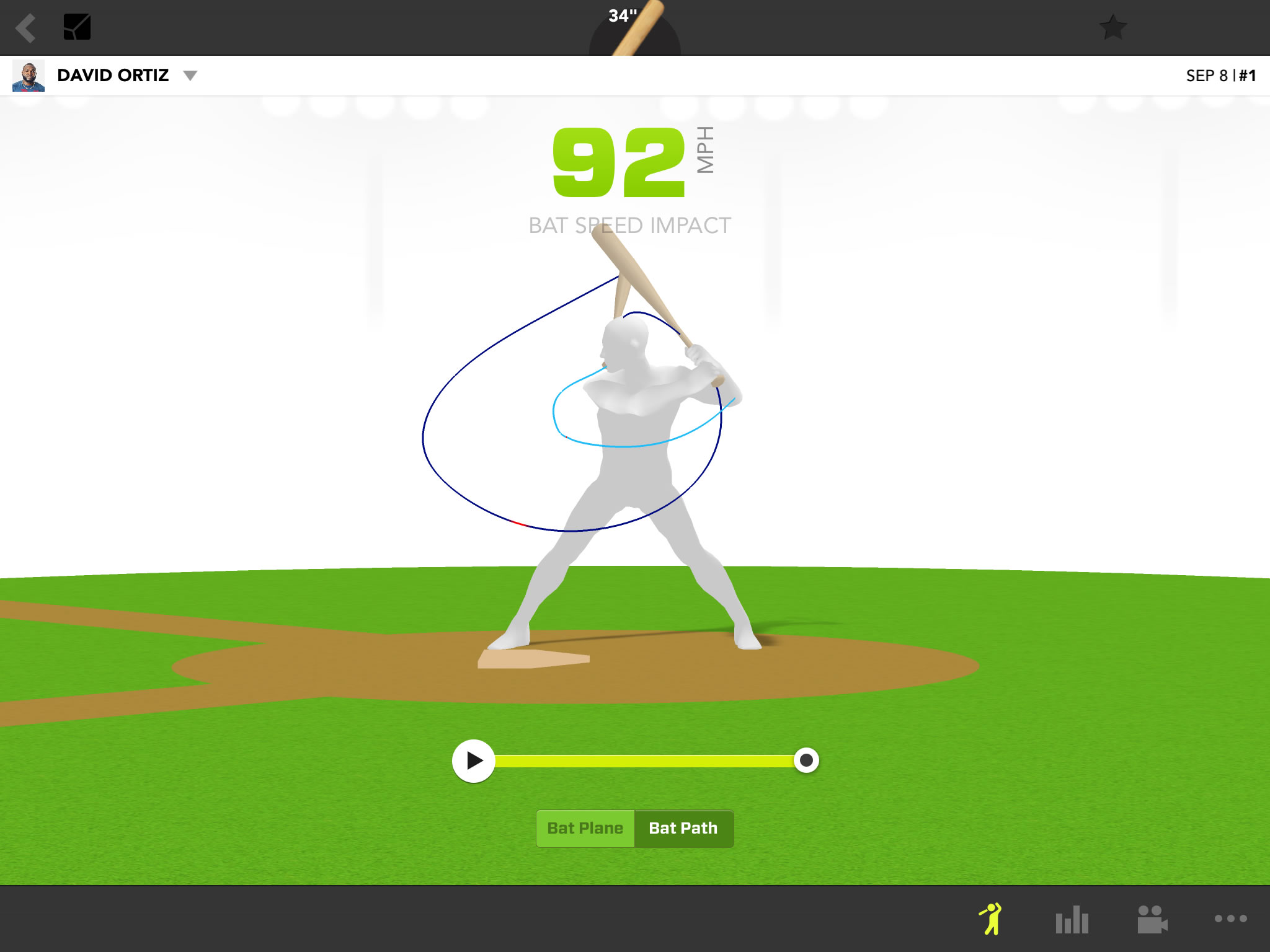
Looking at his swing data (pictured above), we see Ortiz’s swing speed is in line with other Zepp athletes like Giancarlo Stanton, Mike Trout, and Hunter Pence. Ortiz’s time to impact (how early before contact the hitter starts his swing) is just above league-average. According to Zepp, most professional hitters’ time to impact is between .14 and .18 seconds; Ortiz was clocked at .138 seconds.
Viewing his swing path in the three-dimensional representation above, we see that Ortiz focuses on keeping his hands close to his body, ensuring the bat stays on a direct path to the ball with a minimal amount of wasted energy. This helps keep his bat fast and his swing quick.
But Ortiz is a giant of a man, listed at 6’4″ and 230 pounds. For younger players who use this technology to compare their swings to that of their heroes, it might not be a great idea (or even possible) to mimic his strategy without his strength. But Stocking says there are still lessons to be learned from his data.
“What you come away with each time you work with David Ortiz is a respect for how hard he works,” Stocking said. “He understands his swing and has a plan when he gets in the batter’s box. That’s something we can all strive to do.”
Apart from Ortiz’s successes, Zepp has had a few accomplishments of their own this summer. The company inked deals with the Angels, Diamondbacks, Padres, and Rays to provide sensors and data to hitters throughout those organizations. CEO Jason Fass said the four teams are additions to Zepp’s existing stable of MLB organizations, but declined to divulge how many or which teams, citing non-disclosure agreements.
Zepp also strengthened their existing relationship with Perfect Game, providing sensors for in-game use at this summer’s showcase events like the PG All-American Classic. The in-game data from such high-level talent provided a novel database for Zepp’s research.
“It’s the first time ever this kind of data has been recorded with pro-level talent,” Stocking said.
The Perfect Game data also hinted at a relationship between attack angle (or swing plane) and success. In the admittedly small sample gathered at the showcase, the average hit was associated with a slight uppercut, an attack angle of 12 degrees. Most outs, on the other hand, were produced by a nearly flat or slightly downward swing, having an average attack angle of -2 degrees.
“This would back up a lot of our MLB data that tells us most line drives occur when the attack angle is between five and 20 degrees,” Stocking said.
The Zepp sensor is a square, neon green device held in place by a flexible strap that goes over the knob of the bat. The sensor contains two accelerometers and one gyroscope, allowing Zepp to track the bat’s path through six degrees of freedom. Having two accelerometers allows the sensor to track the large, high-frequency accelerations that happen around impact while still accurately tracking the lower-frequency accelerations as the bat moves through the zone. The sensor connects via Bluetooth to an Android or iOS phone or tablet, where swing data (and simultaneous video) can be captured, stored, and compared to friends and professionals like Ortiz, Stanton, Trout, and others.
The Easton Power Sensor, produced through the partnership between wearable sensor manufacturer Blast Motion and baseball equipment manufacturer Easton, was recently released. The sensor was the result of a collaboration first announced in January 2014, and has been in the works since before the official launch of the Blast Baseball Replay.
The product, which will go on the market this fall, is largely a re-branding of the existing Blast Baseball Replay sensor. For the first time, however, Blast will expand its offerings to support Android devices. Donovan Prostrollo, Blast Motion’s senior director of marketing, says that current users will also benefit from future software changes that will come out of this partnership.
“There has been a lot of infrastructure work that has gone on behind the scenes,” Prostrollo said. “We will be providing a free software upgrade to Blast Baseball Replay customers, allowing them to gain all the benefits of the Easton Power Sensor and the new features that are on the way.”
Now that the sensor has been officially released, Easton plans to incorporate it into its traveling Hit Lab, which combines video capture and Trackman radar systems to help players learn more about their swings.
“[The Hit Lab] offers an unmatched opportunity for players to experience the science of hitting,” said Henry Fitzgerald, a member of Easton’s performance sports group. “The Easton Power Sensor will have a central role in this.”
Plans to further improve sensor performance are currently being discussed, but Fitzgerald was understandably reluctant to divulge specific improvements.
“Our R&D department is always searching for ways to improve our bats and any relevant technology,” Fitzgerald said.
The announcement coincided with the start of the 2015 Little League World Series, which ended this past Sunday. As the official equipment sponsor of the event, Easton brought the Power Sensor to Williamsport (shown above) to demonstrate its capabilities for the second straight year.
“It’s exciting to see the kids when they get their hands on the sensor and see their metrics,” Prostrollo said. “By combining the science of hitting with innovative technology, we’re able to give players of all ages and skill levels the insights they need to improve their swing.”
Like Major League Baseball, Little League Baseball currently does not allow wearable senors like the Easton Power Sensor on the field during competitions. But Fitzpatrick says Easton has been lobbying for these groups to lift this ban.
“The sensor as it is today does not offer any sort of performance advantage,” he said. “It’s simply an attachment.”
Like the Blast Baseball Replay, the Easton Power sensor is driven by a “tactical-grade” inertial measurement unit (IMU), which combines more precise sensors, more processing power, and on-the-fly calibration to improves the device’s accuracy and consistency. Both the Blast and Easton apps revolve around video, typically captured by setting the device on a tripod and automatically clipped so that only the events of interest are included. Users can view their swings in adaptive slow-motion, which automatically adjusts the playback speed around key moments in the swing. In an earlier interview, Prostrollo said Blast Motion’s focus on video allows Blast’s Baseball Replay — now re-branded as the Easton Power Sensor — to give users insights into more than just bat path alone.
“Because we approached it from the natural motion capture side, we knew that it was going to be a lot more about what is your entire body doing,” Prostrollo said. “The metrics are really only half the story. You really need to put that in context, you need to make it personal.”
Nobody has ever really disputed this, but over the last decade, it has become increasingly apparent that repetitive head injuries, seen particularly often in football, can lead to significant long-term medical effects.
The “concussion debate” has largely taken place on the professional stage, from the controversies generated by League of Denial to Will Smith’s forthcoming feature film Concussion and beyond. Yet the true impact is being felt across the nation, as schools and innovators work to protect the more than 1,000,000 young adults who play college and high school football each season.
This fall, new devices large and small are being tested to reduce the frequency and effect of football-related concussions.
The Dartmouth Dummy
Five years ago, the Dartmouth Big Green football program eliminated athlete-on-athlete tackling during practices. Cutting out these collisions in favor of tackle sleds and dummies cuts down on injuries and concussions–which makes sense–but made it harder to actually practice tackling against a moving target–which also makes sense.
Enter the MVP–the “Mobile Virtual Player”.
Designed by two Dartmouth engineering students, the MVP is a remote-controlled, human-sized dummy that resembles a cross between the Headless Horseman and a Weeble. Less bone-crushing than an actual human, the MVP allows for relatively realistic tackling simulations while significantly decreasing the risk of head and neck injuries.
Two MVPs were deployed in August, with a third on the way, and the experiment has received the attention of major media, tech blogs–and, reportedly, a few NFL teams.
New Helmets InSite
This doesn’t do much to prevent contact during games–and, as long as there’s tackling in football, there’s only so much you can do–but some new tools are being developed to limit the effects of major hits when they do happen.
The sporting company Riddell is in the process of bringing a new line of helmets to high schools aroundthecountry. The SpeedFlex helmets, equipped with Riddell’s InSite Impact Response System, use six built-in accelerometers to measure the individual and combined force of every impact a player receives. This data is sent live to a laptop on the sidelines, where trainers and staff can monitor players for potential danger signs.
As programs continue to adopt the system, one trainer says, this data will itself be useful for better understanding what leads to football brain injuries.
Watch Your Mouth
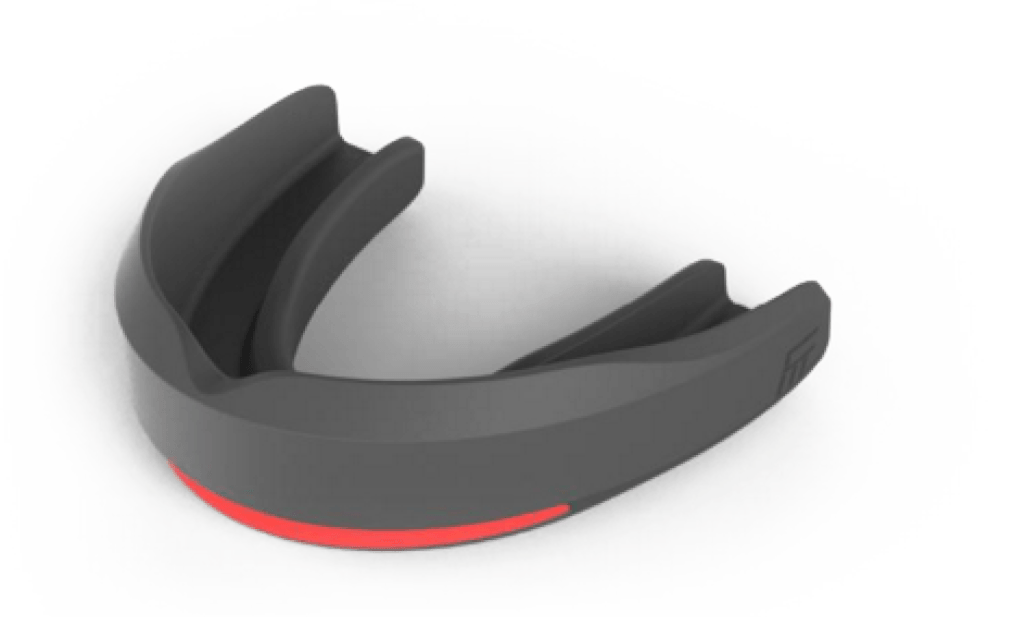
In fact, before long it might not even take a special helmet to easily detect potential concussions. Smithsonian reports on FITGuard, a mouth guard co-created by two Arizona State grads–one a veteran of the rugby team.
Like InSite, FITGuard uses sensors to measure hits to the head and can transfer data to a nearby computer. If FITGuard sees any signs of danger, though, it simply lights up the player’s mouth using LEDs. FITGuard is scheduled for release in early 2016.
Image courtesy of fitguard.me
These tools aren’t without their caveats. A recent Stanford study, for example, found that some currently existing concussion-measuring devices (particularly helmets) can significantly mismeasure the actual force of impact.
Nevertheless, with room for improvement and no end to the concussion crisis in sight, technology like this can still have great potential to help protect our next generation of football players.
Courtside of the NBA finals sits Phil from Cleveland, draped in a stained bath robe with more holes than Pebble Beach. Football practice for New York Jets quarterback Geno Smith, despite his broken face. A Cincinnati Reds fan dug in against Aroldis Chapman and his impending 102 mile-per-hour heater while wearing shorts, sandals and a faded Senor Frogs tank top from spring break ’98. A college recruiting trip inside the coach’s home, arena and practice facility of a top SEC football program – cheerleaders included. With virtual reality, each of these can be an actuality. Some are already possibilities. And others could happen before the next President is sworn in to office.
If there was one take away from the Consumer Electronics Show in January – other than the realization that the wearable market is almost as saturated as homemade craft shops on Etsy – it’s that virtual reality (VR) is coming. That winter in Game of Thrones is like a snowflake compared to the hyped fallout from the Las Vegas trade show. VR is coming hard, it’s coming fast and it will own our souls. That is, if the reality matches the hype.
Oculus, the most recognizable VR hardware, had a booth for the first time at CES. Articles, blogs and videos of the VR experiences flooded the Internet with tales of the unimaginable, the unfathomable and the just plain cool. Scott Stein of CNET.com called VR the eye-catching showstopper and noted Oculus headsets everywhere. Last month the company announced that the Rift will ship to consumers in the first quarter of 2016. As it builds on the Crescent Bay prototype, which many raved about, and is backed by Facebook following the $2 billion acquisition last year, it will be the Rift pressured with bringing VR in to the homes of the masses.
Today, the post-CES buzz has muffled though the anticipation of consumer VR hasn’t ceased. Now, it’s just a matter of when, not if, early adopters will have consistent, quality content to utilize current and future VR rigs. Sports, along with entertainment and pornography, is a leader in technological innovation. Broadcast companies, video game creators, sports leagues and teams all have chips in the proverbial VR pot as they fight for fan engagement, sales and television ratings. While some are calculating their bets, others are all in.
TechGraphs takes a look at what is out, what is coming and potential challenges that face VR’s invasion of sports. Will it be another 3D television? Or will we all wonder how we lived without it in ten years?
Gaming
While VR initially evokes an image of a video game experience for most, its origins are much different. In Pygmalion’s Spectacles, a science fiction short story published in 1935, author Stanley G. Weinbaum detailed a VR system that used goggles with holographic recording of fictional experiences that included smell and touch. In 1957, Morton Heilig, the “father of virtual reality,” invented the Sensorama, which received a patent in 1962. It used 3D motion picture with smell, stereo sound, seat vibrations and wind to create the VR experience. Heilig, a cinematographer, also created a 3D camera for the project. The evolution of the computer harvested an organic relationship between VR and gaming. A relationship that blossomed in to the gaming indstusry as the leader of VR implemenation. A relationship that, according to mobile internet/VR/games and digital client consultant Digi-Capital, could generate $30 billion by 2020.
Except when it comes to sports games.
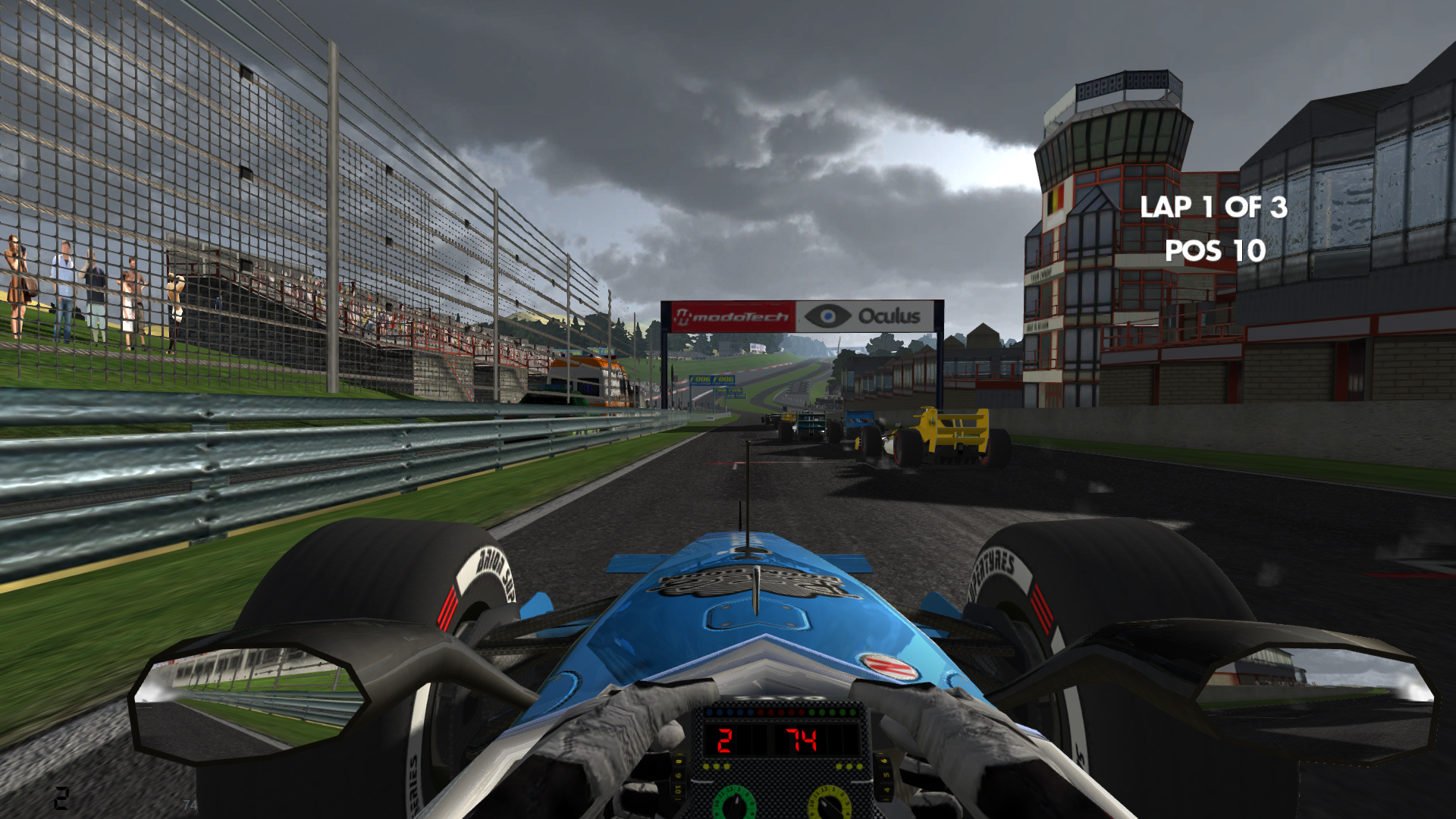
In January, video game developer Ghost Machine launched the first VR sports game from Steam, the popular online game distributor. Motorsport Revolution is a physics-based PC racing game compatible with the Oculus Rift DK2 headset. The single-player racing game featured multiple 3D tracks tracks, including famed California Speedway, and an action feel filled with an aggressive AI and fantastic crash scenarios. VR Sports Challenge was announced at E3 to launch with the consumer version of the Oculus Rift. Think of it as a Wii Sports-type title. Google search virtual reality sports games and you’ll find little else.
Ghost Machine’s CEO Neal Nellans told me earlier this year that big video game developers will sit on the sidelines with a wait-and-see attitude. Today, it seems the big boys moved from the sidelines to the luxury box to munch on appetizers, sip aged scotch and watch a different game on a massive flat screen, all the while checking in on the VR game on the field below to see if it gets interesting.
Peter Moore, chief operating officer at Electronic Arts, told Gamespotthat his company will jump in to the VR marketplace “if and when virtual reality becomes a ‘high-demand’ activity.” Moore wants the gear on the heads of consumers first.
What keeps sports out of the virtual reality conversation is the size – or lack thereof – of the market. There is no current sports simulation title available on Wii U. I realize people attribute that to some dark deal Electronic Arts demanded and Nintendo refused, but the fact remains there’s still no NBA 2K no WWE 2K — no Pro Evolution Soccer, for God’s sake — on Wii U either.
These are iterative titles with codebases literally stretching back to the Dreamcast days. If they can’t readily adapt that work to make the Wii U controller’s second screen necessary, or even meaningful, it is going to take an even greater overhaul — if not a complete work from scratch — to create virtual reality edition.
And that’s after all of the league licensing costs — which are a huge brake on innovation, — are figured into the discussion.
“It’s an incredibly immersive experience, but it’s you,” Moore said. “You’re inside this world and you’re oblivious and of course, you can’t see. You hope it doesn’t get what I’ll call the Segway effect: incredible technology that kinda looks dorky. Or the Google Glass effect, which is the dork factor that goes with that.”
But that’s not to say that there aren’t big boys moving forward. Last month, Gaming Respawn reported that Ubisoft, the publisher behind uber popular titles Just Dance, Assassin’s Creed and Rainbow Six, is working on multiple games to launch once Oculus and Playstation’s Project Morpheus reach consumers.
“We are working on the different brands we have to see how we can take advantage of those new possibilities,” CEO Yves Guillemot said during an earning’s call last month, “but making sure also we don’t suffer from what comes with it, which is the difficulty to play a long time with those games. We are very bullish about the potential. We think it is going to bring more players to the universe of video games, and we are going to come with our brands.
But again, where are the VR sports games?
Ryan Batcheller is a 3D environment artist for JumpStart, a game designer, and creator of Virtual Screams, which hosts virtual haunt experiences using the Oculus Rift and aims to develop the content to run on the Samsung Gear VR. I first heard about Oculus from Batcheller at a party for a friend two years ago. His stories seized my imagination, flipped it inside out and tied a cherry stem around it. I felt woozy with excitement. It was too good to be true, I thought, as the cost of this tech would be too much for mass distribution. Batcheller’s exposure to VR began when he played a How to Train Your Dragon demo developed by Dreamworks. He tested the Oculus at work and bought both developer kits. He sees different challenges facing developers of VR sports titles.
“Sports games using VR will require a lot of testing with how the game play would work,” Batcheller said. “With the Wii you had people acting out motions in their home and hitting people, knocking over things and hurting themselves. That was with them being able to see and just being absorbed in the game. With VR they can’t see their surroundings. So with sports games I think the real trick is going to be designing game play that is fun and safe for the user who is immersed in the experience.”
In addition to the Oculus Rift launch in early 2016, Sony’s Project Morpheus will be a key to mass VR introduction. The PlayStation product is expected to be available by June of next year. Morpheus simply plugs in to the PS4, which has sold 22.3 million units to date. The marketplace already exists. With a Full HD 1920 x 1080 and 5.7-inch display with 100-degree field of vision and a refresh rate claimed to be higher than the Oculus Rift and HTC Vive (120Hz compared to 60Hz and 90Hz, respectively), Morpheus will contend for the top VR headset.
One rumor prices the Morpheus at $450, which will certainly hinder early adoption, even if it does include a full kit. Among the 21 announced titles, however, only one fits the sports genre. Project CARS, a motorsports game already available for the next gen consoles, is the lone sports title.
And what about Xbox? According to TechRadar, Microsoft’s VR headset development kits are in the hands of some game developers. But this was before the June 11 revelation that Microsoft has partnered with Oculus. Via Windows 10, Xbox One games will stream to the Rift headset as part of the virtual cinema Oculus has created.
The gear is coming.
“The new Oculus is completely mind-blowing, but while I’m bullish on the potential of VR to transform multiple industries, not least entertainment, it won’t be until 2016 that it truly starts becoming a viable consumer success,” said Mind Candy’s creative director Michael Action Smith to Vice.
Consumers just need the content when it comes to sports gaming in VR.
Part Two will discuss the upcoming gear, and how they can infiltrate the broadcast and athletic training spaces.
The United States women’s national team won their third World Cup title this summer in Canada. That same Women’s World Cup, along with this summer’s Under 20 World Cup in New Zealand, marked the first time FIFA allowed players to wear tracking devices during game action. The success of the devices during these events led FIFA to greenlight the use of wearables in future competitions, subject to the approval of individual leagues.
Part of the team’s success was the players’ dedication to the training plans developed by strength and fitness coach Dawn Scott.
“I think it’s a testament to the players that they trusted us and stuck to the program, and did what they needed to even when they had their commitments with their [club] teams,” Scott said in a previous interview.
An earlier Wired article discussed the USWNT’s relationship with Polar Global devices. When reached for comment, Polar Global’s Josh Simonsen confirmed that the players were wearing the H7 heart rate monitor on the pitch, and using M400 GPS watches in training sessions. Simonsen, the company’s national training resource specialist for the U.S., said the Finnish company had worked with Scott and the USWNT since 2010.
“What that gave Dawn was the ability to track speed, distance, and activity of the athlete while they’re away,” Simonsen said. “And they were able to send it her in a much easier environment than the previous models.”
The H7, the heart rate monitor worn during the games, consists of a strap worn across the chest and a small transmitter a few inches wide. The strap contains an electrode that collects the ECG signal from the athlete; after some basic processing, the transmitter then sends out a Bluetooth signal. The system reports heart rate on a per-second basis, using only basic peak-to-peak measurements, which are less susceptible to the kind of movement artifacts you would expect with an athlete wearing the device during competitions.
Polar’s top-of-the-line system, the Team Pro, also includes a GPS and IMU sensor. Switching to Bluetooth Smart also allows the transmitters to communicate directly with a tablet. But Simonsen said the USWNT was still using the older Team2 solution this summer.
“They didn’t want to transition prior to the World Cup,” he said.
The company has a long history with heart rate sensors, having built the first monitor for an athlete in 1977. But it was not until the early 2000s that Polar began developing systems for whole teams, rather than for individuals.
“Essentially the coach would log into the software and each player would have their own page, but they really weren’t able to compare the team as a whole,” Simonsen said. “We couldn’t look at the big picture.”
This functionality would not become available until Polar’s Team2 system was introduced in 2009. Unlike their previous offerings, Team2 allowed coaches to collect and analyze data in much less time. The addition of Bluetooth transmitters also allowed coaches to monitor their players in real time.
“[Team2] was like a 50 percent cut in time that it took to do everything,” Simonsen said. “Everything was exponentially faster.”
The Team2 system is currently used by “about 450 teams” in the U.S., and Simonsen said new coaches are typically surprised by the feedback provided by the data.
“A lot of the time they’re just blown away at how long things were or how hard things truly are,” he said. “Or that their easy day really wasn’t that easy, or that their hard day was a lot harder than they really thought it was.”
Simonsen argues that this experience in the field is what separates Polar Global from the plethora of other companies offering heart rate monitors.
“We created heart rate,” Simonsen said. “And with us using HR from the beginning, accuracy is always our number one thing.”
The United States women’s national team went into the 2015 FIFA Women’s World Cup with a chip on their shoulder, trying to avenge a heartbreaking finals loss in 2011. But eagle-eyed viewers might have also noticed the chips the women wore under their shirts as well, as Will Carroll pointed out on Twitter.
Alex Morgan is wearing some sort of monitor on her chest. Think some if not all are but clearest shot I've seen. pic.twitter.com/qOkqffYZNZ
The objects were Polar Global’s H7 heart rate sensors as suggested by this Wired article and confirmed by Polar Global. The USWNT is also listed as a client of Catapult, an Australian-based company that combines GPS and inertial measurement units (IMU) into a single sensor.
Strength and fitness coach Dawn Scott confirmed that her team uses heart rate sensors and GPS systems to monitor player performance. However, because the team does not have a formal relationship with either company, she could not discuss the specific devices she uses in detail. Nevertheless, she was still happy to answer general questions about how she and the rest of the American coaching staff used the devices.
The GPS system and heart rate monitor produce a wide range of metrics. Head coach Jill Ellis and her staff were mostly interested in measures of intensity, rather than total distance covered. Scott specifically discussed the percentage of high-speed running (running faster than 11 mph) and distance covered during high-speed running.
“For me they’re the main factors that then show how much a player’s involved in the high-intensity activities,” Scott said. “[That means] overlapping for your midfield player, making high-intensity runs into the box. For defenders, [it means] having to recover.”
But not every position calls for such high-intensity bursts. For those players, the coaching staff relies on meterage — a player’s average speed in meters per minute.
“So say a Lauren Holiday, who isn’t necessarily doing a lot of sprints when she’s in a holding midfield position, but she’s one of the ones who does the highest meterage, so for her, that is more of a marker of her work rate,” Scott said. “In one of the games where she was pushed into the attacking midfield role, she suddenly had a lot of max sprints.”
The games presented an additional set of challenges. Although this tournament marked the first time FIFA allowed players to wear monitoring devices on the pitch, FIFA retained the regulations prohibiting the use of technology on the sidelines. This prevented the coaching staff from using these systems to guide their in-game decision making.
“I don’t always see the purpose of real time [monitoring],” Scott said. “Sometimes in training we’ll take out the real time system, but for me that’s only if we want to get a certain physical output from a fitness point of view.”
Making matters more difficult, several of the stadiums in this summer’s World Cup were domed (like Montreal’s Olympic Stadium) or had large roofs overhanging the field (like Vancouver’s BC Place). This meant the team’s GPS-based systems were much less accurate during games.
“The interpretation of that data is crucial, especially when you’re giving that back to players and the coaches who are interested in that feedback,” Scott said.
Scott doesn’t rely on a single number to judge player performance, instead adjusting her expectations and the numbers she looks at based on the game plan for that particular match.
“It’s knowing your team, your opposition, it’s knowing your own players, and what their physical capabilities are as well,” Scott said. “Carli Lloyd’s numbers were very different in the first three games from the final three games when her role was very different.”
But unlike a coach for a club team, who can monitor their players’ workouts year round, Scott had the added challenge of making things as simple as possible for her players after their training session ended. That meant shelving the more complicated GPS monitors and giving each player a wrist-worn heart rate sensor to wear during training. To their credit, though, the players diligently stuck to the team’s training plan — and just as diligently sent the data back to Scott.
“The players were very good at giving us updates in terms of their heart rate loads,” Scott said. “And they also logged into an online training diary or physical monitoring system, where every single day they would log in, answer five questions about how they feel physically, and so I can then log in and see where a player’s physical state is.”
Scott traveled across the country, working with coaches for every National Women’s Soccer League (NWSL) team to come up with a plan that kept the national squad healthy without hindering their club’s chances of winning. Scott was quick to praise her NWSL counterparts for their cooperation.
“The clubs were given guidelines in terms of when we want to train, when we want the players to have a day off, and also ideally how long the training session should be with the player,” Scott said “And to be fair to the clubs, in that crucial period in the leadup to the World Cup, they stuck to the programs we sent.”
Off the field, Scott is working towards a doctorate from the University of Western Sydney. Unsurprisingly, Scott’s research focuses on the physical demands and training loads of elite female athletes, with a focus on soccer players. Scott’s research relies on the hundreds of hours of game data she has collected from USWNT athletes since 2012.
“The main focus is going to be to develop a training model, so looking at what are the physical demands of women’s football,” Scott said. “And then with that, we look at what is the training intervention is to prepare the players physically for those demands,” Scott said.
But not all Scott’s methods are quite so high-tech. During March’s Algarve Cup in Portugal, players complained about stiff necks and poor sleep. So before this summer’s Women’s World Cup, each player was given an allowance to buy their own pillow to take on the road with them. The result, Scott said, the team was better rest and improved performance.
“When I first suggested it, people looked at me like I’d gone mad,” Scott said. “But the players appreciated it, because it just meant something they had at every single hotel.”
Like many of us, NFL defensive end Jason Pierre-Paul spent last weekend launching fireworks in the course of celebrating America’s birthday. Unlike most of us, hopefully, Pierre-Paul injured himself in the course of his combustible activities. While the extent of his injury, reported to be to one of his hands, initially was unknown, that quickly changed on Wednesday afternoon, when ESPN’s Adam Schefter posted a photograph purporting to be of a Pierre-Paul medical record, which indicated, among other things, that doctors had amputated one of the football player’s fingers.
The news of Pierre-Paul’s digital truncation would have come out before long– it’s difficult for linemen to hide severe hand injuries– even if Schefter’s source didn’t leak it, but in an era of ostensible medical privacy, Schefter’s tweet still was a bit stunning to see. Though laws such as the Health Insurance Portability and Accountability Act do not apply to journalists, Schefter’s actions still cross a line of decency and ethics.
One of the central concepts here is authorization, and as we move away from a time in which the bulk of athlete health information exists in conventional medical records and into a reality in which people, including those involved with sports teams, are embracing wearable athletic technology with the capability of pervasively gathering vast amounts of biometric data, authorization may become a moot issue for the monitored athletes. Seeing Pierre-Paul’s records pop up on Twitter struck some as “creepy” and “invasive,” but we may not be far from a situation in which athletes are indirectly pressured or directly asked to authorize broad disclosure of their health information.
In examining the “explosion of data and data collection” in the NBA for an ESPN The Magazine last fall, Pablo S. Torre and Tom Haberstroh wrote that
The boom officially began during work hours. Before last season, all 30 arenas installed sets of six military-grade cameras, built by a firm called SportVU, to record the x- and y-coordinates of every person on the court at a rate of 25 times a second . . . .
But to follow this logic to its conclusion is to understand why the scope of this monitoring is expanding, and faster than the public knows. Teams have always intuited that on-court productivity could be undermined by off-court choices — how a player exhausts himself after hours, for instance, or what he eats and drinks. Now the race is on to comprehensively surveil and quantify that behavior. NBA executives have discovered how to leverage new, ever-shrinking technologies to supervise a player’s sleeping habits, record his physical movements, appraise his diet and test his blood. . . .
“We need to be able to have impact on these players in their private time,” says Kings general manager Pete D’Alessandro. “It doesn’t have to be us vs. you. It can be a partnership.”
A lovely sentiment, at least in theory. But how long will it be until biometric details impact contract negotiations? How long until graphs of off-court behavior are leaked to other teams or the press? How long until employment hinges on embracing technology that some find invasive?
Baseball fans benefit from the deepening analysis of the sport by writers at places like FanGraphs, who can easily query in-game data troves like PITCH/fx and Statcast to support their work, and recent workonthis site highlights the leading edge of wearable technology designed for baseball applications. Will data from players’ heart-rate monitors and FitBits ever be publicly searchable on BaseballSavant? Probably not. Will they be leaked when the player is in the midst of contract negotiations, as Pierre-Paul is, like drug test results and Wonderlic scores already are? The mere existence of the data certainly allows for that possibility.
Reports indicate that Pierre-Paul still plans to play football this season, although it’s unclear whether he will do so as a New York Giant. Even a strong season, wherever he winds up playing, is unlikely to make him the most accomplished nine-fingered performer in recent memory. As we sit on the cusp of the “explosion of data and data collection” in sports, though, we nevertheless may remember the leak of Pierre-Paul’s medical records as marking an important transition point on the path toward the more all-encompassing biometric-data-gathering world. And also the part about blowing off his finger with fireworks.