Archive for Golf

TechGraphs News Roundup: 9/25/2015

Before the drones assume full command of our last vestiges of leisure, we wanted to provide you with this News Roundup, which highlights the sports-tech stories from the past week that we found interesting.

First, with dispatches from the very cutting edge, our own Brice Russ was in New York City Tuesday for the On Deck Sports and Technology Conference, scoping out upcoming developments in fan-oriented technology, including MLB’s StatCast, NBA in-arena tech, localized sports networking, and more. Look for additional reports on this event from Brice in the coming days.

It’s late September, which means MLB rosters have expanded in anticipation of the playoffs. Managers’ toolkits are expanding too, as teams now are permitted to use iPads (and other companies’ tablets, presumably) in the dugout during games. The unsurprising catch is that the tablets cannot be connected to a network, and all data– such as batter spray charts and pitcher video– stored on them must be downloaded to the devices no later than three hours before game time. Also, while the devices are allowed in dugouts, bullpens currently remain off-limits, probably because bored relievers are highly susceptible to gaming addiction. So far, reports indicate the Reds and Cardinals are using iPads to some extent in their dugouts. MLB previously restricted use of Apple Watches in dugouts, and the blanket ban on cell phones remains in place. That doesn’t apply to us fans, though, which is neat because a company called Scoutee is developing an app that will turn your smartphone into baseball radar gun.

“Cord-cutting”– the process of disentangling oneself from the expensive morass of packaged cable and satellite television services– is a popular subject around these parts. While new media technology is making this beneficial transition a reality for more and more consumers, the shift is not without its human costs. As people are learning, one of the priciest television channels is ESPN, which, alone, accounts for more than $6.00 of cable and satellite subscribers’ monthly bills, regardless of whether they watch the channel. With cord-cutting on the rise, however, the Worldwide Leader may not be able to sustain its operation by spreading its costs across a broad pool of cable and satellite customers. According to a recent report, ESPN is losing “millions” of subscribers and, in light of the billions of dollars it has committed to broadcast rights for live sporting events, “is gearing up to lay off hundreds of employees to trim costs.” The move away from traditional television services isn’t a total job-killer, though: the linked story quotes John Brillhart, a Minnesota man who works full-time as a “cord-cutting consultant,” and whose name may be the secret identity of Minnesota resident and TechGraphs Managing Editor David G. Temple.

We love science at TechGraphs, and here we find a report on work by some Swedish researchers who set out to discover whether athletic success breeds further success. The study examined professional golfers and compared the performances of the last person to make the cut and the first one to miss the cut at a particular tournament– two very similar golfers– in subsequent tournaments: “In other words, they were asking, if you just happen, largely by chance, to make the cut in tournament A, does that change your odds of making the cut in tournament B?” The result was a strong “yes,” as the researchers found that the golfer who just made the cut in tournament A was much more likely to make the cut in tournament B.

I’ve long contended that the NBA offseason is more exciting than the NBA season itself, and while that contention may merely be a reflection of my personal taste, there’s no doubt that the fairly public tug of war between the Dallas Mavericks and Los Angeles Clippers over DeAndre Jordan was one of the wildest basketball stories since the release of the last AND1 Mixtape. The modern twist on this saga was that the public largely was able to follow the developing story in real time thanks to an emoji battle on Twitter set off by Dallas’ Chandler Parsons. Now comes news that the whole thing was an accident, and that Parsons’ opening salvo actually had nothing to do with Jordan at all. Whatever you think about emojis, or even if you just read that word for the first time in your life, this story clearly illustrates the relative practical merit of New Criticism over traditional authorial intent.

In the least surprising news of the week, the NFL’s got drones now. This letter from the FAA proves it.

Yesterday, we told you that daily fantasy sports site DraftKings has expanded its offerings to include esports (i.e., competitive video game playing). Not to be left in the e-dust, DraftKings rival FanDuel responded simply by buying another site, AlphaDraft, that already offered daily fantasy contests for esports, for an undisclosed amount under $25 million. I’m as tired of the DraftKings and FanDuel advertisements as everyone else, though, so my request to the two competitors is that they not bother me until I can play daily fantasy sports daily fantasy contests. If I can bet on people playing a video game like League of Legends, I should be able to bet on somebody playing DraftKings or FanDuel.

On that metanote, we bid you a good weekend and respectfully request that you be excellent to each other.
Who Are These Golf Tracking Devices For?

There are basically two types of sports tracking technology, when you boil it all down. There’s the Big Data sector, which consists of things like StatCast, SportVu, and the like. These technologies grab gigabytes and gigabytes of data which can be then queried, filtered, paired with video, and massaged into useful points that can be digested by both players and team-employed statisticians.

But the other sector, while perhaps getting a little less press, is growing at a great pace. This is, of course, the private, small-data, consumer space. These are the things we strap to both our sports equipment and ourselves. Fitness bands have been around for some time (in the context of this technology, at least), but lately there has been a big push into the realm of stuff we clip on to our stuff — our skateboards, our tennis rackets, and our golf clubs.

Companies that make golf tracking devices have an upper hand in that people fricking love spending money on golf. It’s an expensive game by itself, but it also has the inherent advantage of being incredibly difficult to play. Ergo, people spend hundreds of dollars on swing trainers, books, videos, new clubs, and any other gizmo or gadget that they think will help their game. I am no different. Is this money better spent on good old fashioned lessons? Most certainly, but that’s for another article. The truth is, most people don’t improve their handicaps. They reach a certain level and stay the same, or even get worse. This makes these golf tracking technologies somewhat perplexing. It doesn’t have to do with the fact that they purport to help you better your game. It has to do with the methods involved.

Some of these devices help more in the general sense. The Microsoft Band’s new updates for golf a fairly straight forward. It helps you keep track of your shots (replacing that archaic pencil and paper method, I guess) and tells you how far you walked on the course and how many calories you burned golfing. It also gives you notes on how much time you spent in the fairway and how you did on the greens. The best part is, after loading the course on your Band, the technology is hands off. No need to grab the smartphone or tag clubs. It’s a passive golf aid. While I don’t have experience with it yet, I plan to sometime this season.

Many other golf aids/trackers offer more features, but many features aren’t always a good thing for everyone. Take trackers like Game Golf or Arccos. Both feature the same type of technology. Sensors are attached to the end of your clubs, and are paired either with a device worn on the belt (Game) or your smartphone (Arccos). Course GPS data is loaded into the respective devices and the club sensors track where on the course you are when you hit your shots and what clubs you swung. Some simple math is done and when the data is all uploaded, the software tells you how far you hit your clubs, how many greens you reached in regulation, and what your sand save percentage was, among other things.

The company PIQ offers the same thing, but in a sensor that clips to your golf glove. PIQ takes it one step further, allowing wearers to see more advanced metrics like swing speed, tempo, and clubhead path. One of their bigger advantages is showing golfers distances to the front, middle, and backs of greens. Game and Arccos don’t offer this feature (though Microsoft Band does).

All of these things are well and good, assuming the average golfer knows what to do with them. Frankly, they don’t. Say you’re a high or even mid-handicapper. You are on a longer par 4 and need a six-iron to reach the green. You fan it into the woods and the ball ends up going 120 yards total. If you tracked the shot, that goes against your average six-iron distance when you upload your round. Shank your long irons? That’s getting added to the distance average, too. Now, what was supposed to be a point of knowledge has become a point of confusion. If you muff a chip, that shot counts. But all the data is telling you is that you muffed the chip, it doesn’t tell you why.

(Note: I’ve used Game Golf in the past, and the putt tracking technology is actually helpful. When I see my putts-per-round spike, I know it’s time to hit the practice green again, because putting is one of the things I can work on and actually get better at.)

Knowing your swing speed and clubhead path can be beneficial, as long as you know what your ideal swing speed and clubhead path should be. Should you be swinging 85 or 90 miles per hour? Should you be concentrating on more of an inside takeaway or an outside takeaway? Only those with specific instructions or an intimate knowledge of their swing will be able to answer this.

Anyone looking to gain an advantage from these kinds of technologies would either be a good golfer in their own right, or taking instruction from one. That doesn’t mean that this kind of tech is useless — far from it. But in the hands of the uninitiated, it’s no better than a butt-load of SportsVu data being dumped on a GM’s desk without anyone there to help him parse through it.

All these companies have some really cool tech — tech that could help a good or coached golfer improve. They are capturing metrics that are important to understand if one wants to lower scores. But on their own, they’re a key without a lock. Golfers need to know the puzzle before they try solving it. Once they understand the important keystones of their improvement, these kinds of technologies can help be the coach away from the lessons.

(Image via PIQ)


Blast Motion Sensor Augments Metrics with Adaptive Video

The first thing to keep in mind about Blast Motion’s sensor is that it’s not just designed for baseball. Yes, like the Diamond Kinetics SwingTracker, you can attach the sensor to the end of a bat to track swing speed and direction. And like the Zepp sensor, the Blast sensor can also be used to track a golf swing. But Blast’s approach revolved around designing a high-quality, general purpose sensor, and then building specific applications for baseball, basketball, golf, action sports, and athletic performance around it.

“We didn’t approach this as trying to design a swing sensor or a specific sport product,” senior director of marketing Donovan Prostrollo said. “What we designed it to do was to be a natural motion capture product, and then we applied that to different sports, so it doesn’t pigeonhole our product.”

At the heart of the Blast sensor are inertial measurement units (IMUs), the combination of accelerometers, gyroscopes, and magnetometers that have become ubiquitous in devices like smartphones and tablets. But Blast has made two improvements to make the device more accurate. First, Blast Motion uses multiple IMU chips (although they wouldn’t disclose how many) to capture a wider range of movements. Second, the Blast sensor was also designed to use what founder Mike Bentley referred to as “tactical-grade” technology, a combination of more precise sensors, more processing power, and on-the-fly calibration that improves the device’s accuracy and consistency from one movement to the next.

But despite the intense technological focus, both Bentley and Prostrollo stressed the importance of keeping their outputs simple for the end user.

“You’ll find other solutions out there really overwhelm users with numbers, which is both good and bad, because if users don’t know which number to focus on, you’re not really helping them, you’re actually potentially making it worse,” Prostrollo said.

“At the end of the day, [the athletes] would love the technology to just completely disappear,” Bentley added. “And that’s one of the goals of Blast is how do we make the device disappear.”

When compared to other bat sensor apps, Blast lacks the three-dimensional rendering of the swing. Instead, the Blast app revolves around video, typically captured by setting the device on a tripod and automatically clipped so that only the events of interest are included. Prostrollo argued that the focus on video gave Blast an edge in capturing the entire movement, not just key metrics.

“We decided from the beginning to capture video and do it natively as part of the app so it’s really integrated into our DNA,” Prostrollo said. “And the cool thing about that is when you pair video and you compare the level of consistency out of our product it really does an amazing job.”

And Blast recently announced an adaptive slow-motion feature that adjusts the playback speed around the event.

“Basically, we know exactly when the impact occurred, when the swing started, and when the swing ended, and based on that we can speed up and slow down the video,” Prostrollo said. “We can also take the metrics and overlay them on top to get this dynamic fill, so it’s not just a metric in isolation.”

Blast verified the accuracy of its metrics using motion capture systems. As an example, Prostrollo said the system was within 1 mph of the motion capture system “85 percent of the time” and Bentley claimed that the Blast system “outperforms our optical system when you talk about rotational velocity” as verified by higher-end devices more commonly used to test aeronautical and military-grade IMUs.

Bentley and Prostrollo stressed not only the device’s accuracy but also the device’s consistency, so that identical swings or jumps would produce identical sensor readings. They attributed this consistency to improvements in their manufacturing process, and claimed it made a big difference to the professional athletes they collaborated with.

“The challenge is pro athletes absolutely can recognize that day one, the amateur athletes won’t necessarily realize that a product’s not as accurate as they want until it’s too late: they’ve purchased it, they’ve gone out, they’ve tried it, and they wonder why their swing speed varies by 6 mph when it’s all the same,” Prostrollo said.

Despite being a relatively new company, the founders of Blast Motion have been in the inertial sensor business for a quarter of a century. Before entering the sports world, their focus included military and medical products.

“This is not the first sensor we’ve ever manufactured,” Bentley said. “When we originally designed the sensors, it wasn’t for a single application. We wanted to be able to use the sensor and cross-pollinate across all applications.”

As Blast Motion began adapting its offerings for new markets, it worked with coaches, professionals, and other subject matter experts to design useful applications. But Bentley said there was a lot of overlap between the biomechanical elements underlying the different sports. Even more surprising, he said, was the overlap between social circles across different sports.

“What’s pretty unique about when you do get into the inertial world of working with different professional teams, how many baseball players work with professional golfers, and how many golfers play with hockey players,” Bentley said. “So the world is pretty small, and when you get a pretty exciting product, the word travels pretty fast in those worlds.”

The company currently works with a number of action sports ambassadors including Mike “Hucker” Clark and Greg Lutzka, as well as some NBA and MLB players they declined to name, citing confidentiality. And Blast Motion is working closely with bat manufacturer Easton as it gears up to release the Easton Power Sensor this summer. Little information is currently available about the project, but judging from the screenshots in the iTunes App Store, the interface at least will be very similar to Blast’s Baseball Replay app.

Looking to the future, Prostrollo said the biggest change would be not on the technological side but rather on the adoption side, as wearable sensors like Blast become more and more ubiquitous among both amateurs and pros.

“We’re at the point now where the average consumer has access to this technology, it’s no longer the pro athlete,” Prostrollo said. “What you’re going to see is a whole new generation of athletes leveraging the data and the technology, having a history to go back on, and really be able to do something very meaningful and different with that.”


EA Games Announces Updates to Its Sports Franchises

E3 – the gaming industry’s biggest yearly conference, kicked off today, and as usual, a lot of big announcements were made. While sports games weren’t at the forefront of the biggest proclamations today, they are most certainly being worked on and updated. EA was kind enough to spill the beans on how the [INSERT SPORTS LEAGUE] 16 games would look and feel.

EA’s biggest franchise, Madden, gets updates every year — some more impressive than others. For Madden 16, elements of fantasy football have been brought into the fold. Gamers will have an option to tweak their chosen team using rounds of fantasy-based drafts. These super teams can then be used to compete against each other or an AI opponent.

As senior EA producer Sean Graddy told Polygon:

“We limit the number of picks that you have so that those decisions are hard […] You’re not going to fill every position on your team. How do we create this draft experience, but take it one step further? With fantasy football you pick a team and you passively watch it. In our game you pick a team and you can play with it on the field. It makes it a bit more special.”

Changes to passing and receiving are also coming, with quarterbacks getting options regarding speed and height of passes, and receivers will be given options to attempt fancy, stylish catches or more traditional ones. These should be nice updates to a game that everyone is going to buy anyway. It comes out August 25th.

Making the logical segue from football to golf, the return of an EA golf video game is imminent. Due to a mixture of personal issues and general ineffectiveness on the course, Tiger Woods has become a persona non grata at EA. Rory McIlroy is the new face of the series, and with him come some other major changes. EA didn’t release a golf game last year, as they worked on revamping the series.

Rory McIlroy PGA Tour is EA’s first sports game that will utilize its Frostbite engine — the same engine that powers games like Battlefield and Dragon Inquisition. The inclusion of the engine allows the game to load an entire course at startup, rather than just one hole at a time. This should drastically cut down on total game time, a welcome addition. I mean, do they really expect us to take a whole hour to play a round of golf?!

Tour will include three different modes of play — Arcade, Classic, and Tour — which each offer their own set of advantages. A new course map feature seems pretty slick, as it gives the player multiple distances to different spots of the course, much like those little booklets you see caddies carrying around. The game drops July 14th.

NHL 16  is not only bringing back many of the online features it cut from this year’s version, but is also making a small change that could make a huge difference. In the past, any time a player wanted to accept a pass, the skater glided until he had possession of the puck. This isn’t how hockey works however. Players take passes while skating the other way, in a complete stop, or in a full sprint. NHL 16 is reportedly adding the ability to accept passes this way. This should enhance the gameplay, which is already very smooth.

Updates to the Be a Pro and Be a GM features are also coming, with wannabe GMs having to deal with things like player morale and clubhouse chemistry. If you play the Be a Pro mode, expect to get more and better feedback from coaches as you sweat and bleed your way to Lord Stanley’s Cup. Look for this game in September.

Soccer is also a sport and FIFA 16 is also a video game. One of the more important updates — the addition of women’s soccer — was already announced. But EA is also mentioning smarter AI defense, more realistic slide tackling, and some more dribbling fanciness.

Passing is also getting an overhaul. Per Polygon:

Perhaps of even more significance is that players are given more control over the pace of their passes. Previously, long passes (hold down the button) were a matter of telling the game to move the ball a long way. Now, they simply say, “kick it hard.” This means that players can ping short, hard passes to one another, a useful antidote to the defense’s greater alertness. Or they can drift long passes across the park with a greater degree of control.

For a long time, sports games have relied on graphics to try and make them seem more realistic. Now, with more advanced hardware and software at their disposal, developers are working to make the games look and play more like the real thing. This is a welcome change and will ensure the line between real and digital will become more imperceptible each year. Where some sports series seem to be a little stagnate (cough, MLB the Show, cough), EA is making strides keep their offerings fresh. Whether it pans out or not remains to be seen. We’ll have to hang our hope on promises for now.

(Header image via Pop Culture Geek)

TechGraphs News Roundup: 6/12/2015

It’s the return of the News Roundup. Here are some of the sports-tech stories we found interesting this week.

ESPN is issuing its first magazine cover featuring eSports. In fairness, it also features running back Marshawn Lynch, as he’s had his likeness added to the upcoming Call of Duty: Black Ops III. We’re not quite to the point where League of Legends players are gracing the front cover, but it’s a start.

The Wall Street Journal has a fascinating look into how the people of Cuba are watching their favorite American television. Basketball, baseball, even HBO — it’s all broadcast not by satellite, but by sneaker.

As a dedicated lazy person and as a golfer that spends a lot of his time criss-crossing the fairways, the GolfBoard might be right in my wheelhouse.

You know all that cool 3D/interactive/holographic stuff that teams and facilities are installing? Soon, all that tech might come from part incubator, part tax write-off known as the Mark Cuban Center for Sports Media and Technology. Say what you will about the man, but sports and technology seem to be two of his stronger suits.

This is technically from last week, but if you didn’t get a chance to see American Pharoah race Secretariat, you should. It’s amazing what a little archival footage and some video syncing can do.

For some reason, people think it’s fun to mock pitcher Alex Torres for wanting to protect his melon. Strides are being taken to maintain protection while making hats look a little less puffy, and perhaps a similar product being adopted by a prominent soccer player will help people wanting to avoid head injuries seem a little more commonplace.

That’s it for this week. Have a great weekend. Be excellent to each other.


Could the PGA Tour Be the Model for Technology Inclusion in Sports?

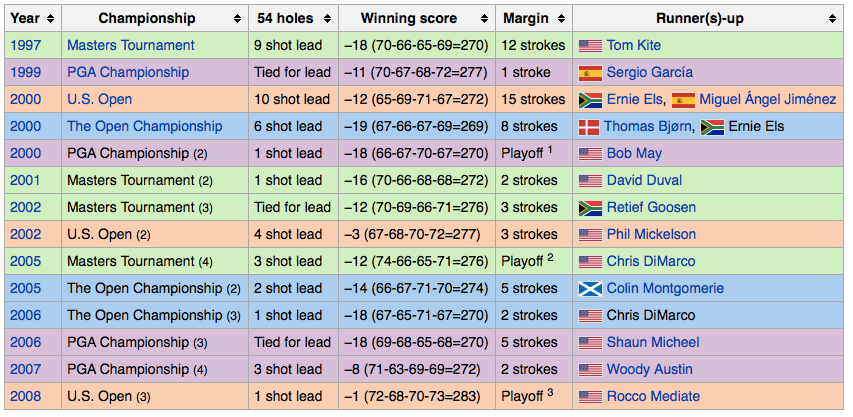
I think it’s safe to say that the Tiger Woods Era is over in golf. Sure, he may find his swing (or a swing), again. We may see him in contention at a major tournament here and there. Hell, he may even win a couple. But personal problems, age, and a slew of injuries has put an end to what can and should be considered one of the most dominating runs in sports history. Although it’s actually been a while, it doesn’t seem that long ago that he was basically unstoppable.

Tiger Woods' Major championship wins, per Wikipedia
Tiger Woods’ Major championship wins, per Wikipedia

And with the rise of Tiger Woods, golf as a sport saw a rise in popularity. Woods’ presence created must-see TV for even the most casual of golf fans. Woods inspired droves of kids to pick up the sport. EA jumped on the chance to use his likeness in video games. A rising tide lifts all boats, and as Woods lifted trophy after trophy, the PGA Tour’s boat came with.

But now, golf is in trouble. Or at least people think it is. The crash of the real estate market has lead to countless golf course closings. Concerns over environmental sustainability of courses are being raised. Less people are playing, less people are watching. Golf isn’t dead, it’s just less alive than it used to be. I doubt we’ll ever see a talent like Tiger Woods in our lifetime, so it’s safe to assume that golf won’t see another surge in popularity any time soon. But that doesn’t mean they’re not trying. In fact, the PGA Tour is investing big money in technology in hopes to heighten the fan experience.

One of the biggest pushes being made is in the realm of statistics. Baseball fans may be salivating at the thought of what kind of data StatCast can bring to MLB, but the PGA Tour has been utilizing ShotLink technology for some time now. ShotLink brings everything to golf that StatCast promises for baseball. Using a laser system, ShotLink can track hyper-accurate distance and location data for every shot on the course. After these numbers are crunched, essentially any type of stat can be generated and consumed. And the PGA Tour does a magnificent job of this on their own stats page. With a few clicks, fans can find out which player hits the most greens in regulation from 190-200 yards away, who’s best at avoiding three putts from 40 feet away, and who is best at avoiding or finding the rough on the right or left side of the fairway. Baseball lends itself well to statistics due to its individualistic nature. Well, it doesn’t get much more individualistic than golf, and the PGA Tour and ShotLink are showing that seemingly every aspect of the game can be measured, compared, and analyzed.

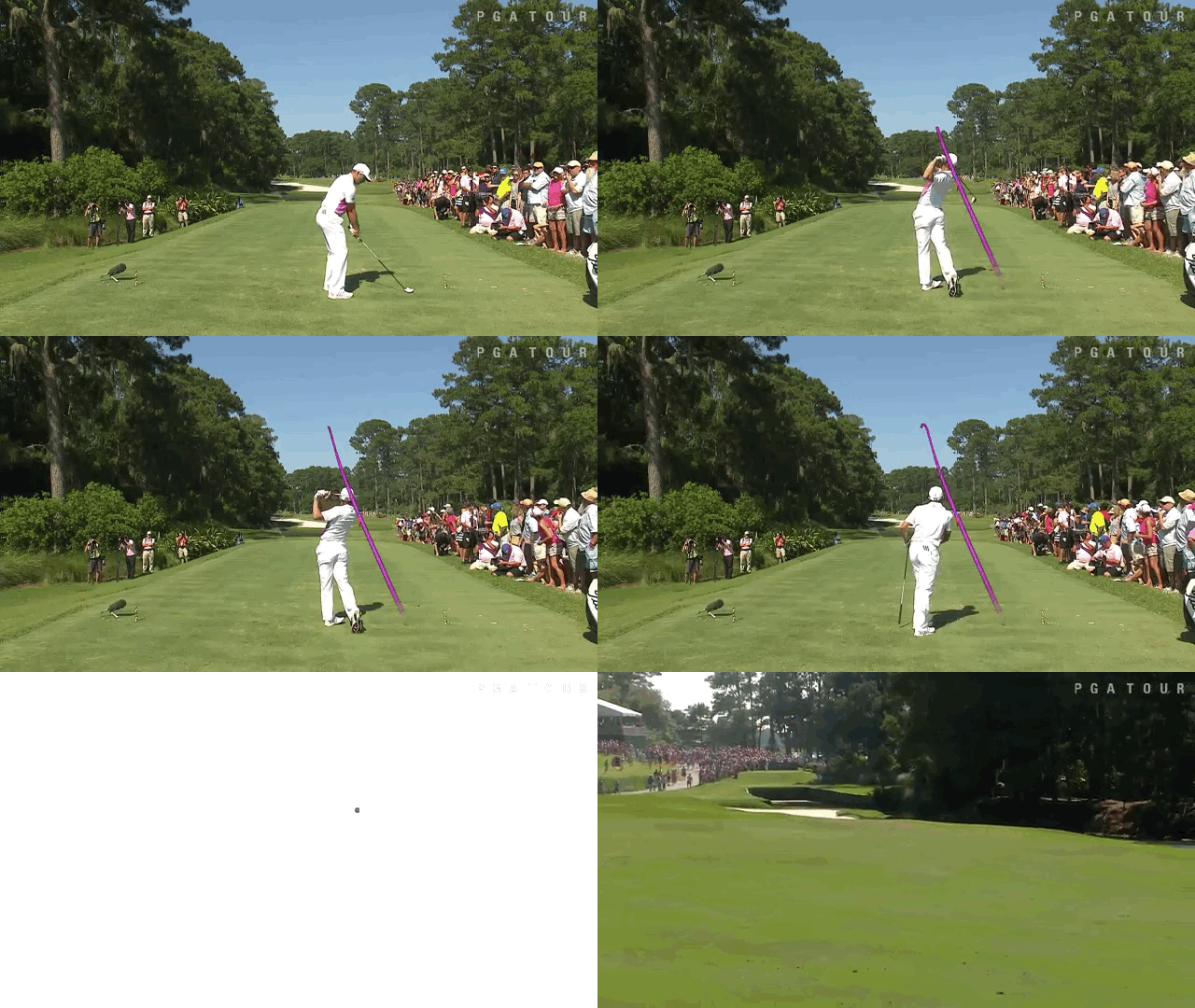
Another big tech advancement has come with the inclusion of Protracer in TV broadcasts. Through what I can only assume is some version of witchcraft, Protracer hardware and software is able to track a golf ball throughout its flight and graphically display its trajectory. The PGA doesn’t do this for every event, but bigger tournaments — like this past weekend’s Players Championship — utilize the technology. This not only lets viewers see how the path of Sergio Garcia’s 3-wood,

garciaprotacer

but it can also be combined to show the aggregate of how all players faired on getting their drives to the hair-raising island green of the 17th hole at TPC Sawgrass.

TPCPar17

The use of Protracer is not only cool as hell, it appeals to the majority of the PGA’s fans — recreational golfers. This is where the PGA Tour has a huge advantage.

Professional golf is one of those rare sports where fans actually participate in the same sport themselves. Sure football fans might have a backyard game every now and then, and there is certainly no shortage of beer-league softball, but golf is different. We can play with (pretty much) the same equipment as the pros. We can play a lot of the same courses (if we shell out enough dough). While most golf fans can’t match the pros from the tee, all of us know the feeling of sticking an approach shot two feet from the pin or draining a 20-foot putt. Golf fans can do a lot of the things pros can do, just not nearly as often. We know what the trajectory of a perfect drive should look like, and seeing it on our TV screens time after time only solidifies our ideas of just how good these guys are. Football fans know that Aaron Rodgers is good. Golf fans know first hand just how stupid-hard a good golf swing is to make.

With accurate and in-depth metrics, we can know exactly how much better than us they are. We can see shot trajectories that have us yearning for a better swing of our own. If the PGA Tour has their way, these things will keep us coming back for more and more. No, numbers and shiny graphics won’t bring in the same amount of viewers as Tiger Woods once did. But it might be able to reach fans on a more personal level, which just might rekindle or intensify some viewers’ interest in the game. Until another Tiger comes along, that’s probably the best the PGA Tour can ask for.


The PGA Partners with MLBAM to Stream Early Rounds

At this point, we should be talking about what businesses aren’t working with MLB Advanced Media to handle their video streaming needs. Nevertheless, we can now add the PGA to the ever-growing list of organizations and companies piggybacking on MLBAM’s logistics and infrastructure for broadcasting live video over the Internet.

During a press conference at this week’s WGC Match Play Championship, PGA Tour commissioner Tim Finchem announced that MLBAM will be working with the PGA to broadcast Thursday and Friday rounds of certain events over the Internet. This is not meant to usurp traditional TV coverage that kicks in later in the afternoon, but to supplement it by allowing fans to check in on the action before scheduled broadcasting begins.

PGA Tour Live, as they’re calling it, will charge on a per-event fee, and is expected to cost less than $10 per event. There are still some things left to speculation, but the new service is expected to launch sometime later in the summer. Fans can sign up to be notified when the service is available to the public.

MLBAM has already had their fingers in streaming the NCAA Tournament for Turner as well as WrestleMania using their expertise. Oh, and they also worked on a little something called HBO Now. MLBAM is blowing up, as they say, and their hold on the streaming industry is only getting stronger.

(Image via Ryan Schreiber)

Your Guide to Streaming The Masters This Week

All of us here at TechGraphs are baseball nerds at heart, but at least one humble editor is also a bit of a links-head. Is that a real term? Certainly not. But while Opening Week captures the hearts and minds of most, let us not forget about the tradition of the Masters. I’m going to go out on a limb and say it’s a tradition unlike any other. The first golf major of the year begins this week, and while I certainly am not qualified to give you a preview in the terms of actual competition, I can at least tell you how you can watch the dang thing. I will do so below.

Though streaming sports on the web can be a bit of a pain, it’s actually pretty straight forward with the Masters. You basically have three options:

TV

If you’re not planning to leave the couch, you can catch competition on ESPN Thursday and Friday, and CBS on Saturday and Sunday. The Par 3 Contest can also be caught on ESPN on Wednesday.

Your Computer

Starting Thursday, you can follow along online at Masters.com. You will have access to multiple feeds from the driving range, to featured groups, to Amen Corner. It does not appear that the straight-up ESPN broadcast will be available through Masters.com nor WatchESPN, but the other feeds should tide you over while you’re at work. The weekend CBS feed will be mirrored online if you’re big into Jim Nantz whispers.

Note: It does now appear that you can watch the ESPN feed through WatchESPN.

Your Phone/Tablet

The Masters has an app for both iOS and Android. The apps mirror much of the same functionality as the standard site plus a few bells and whistles like shot tracking, course overviews, and an audio-only feed. You can apparently stream the ESPN feed on Thursday and Friday, but only on the iPad, which seems strange. The CBS feeds can be accessed on either platform, and the alternate feeds should be available for the whole event.

I won’t bore you with all the broadcast times, but you can find them here should you desire. Now you can watch a little golf while sitting in the bleachers of a baseball game. Spring is here, everyone. Enjoy.


(Header image via Dan Perry)

OptiShot2 Allows Golfers to Play Year-Round

Winter is finally starting to release its grip on the U.S., but temperatures are still below average and there are several feet of snow on the ground across the northeast. However, golfers can still work on their game without trudging through the snow thanks to simulators like the OptiShot2.

OptiShot is a small company based out of Traverse City, Michigan (2015 snowfall: 89 inches). Their golf simulator allows users to play a full round indoors using every club in their bag*. Even in the summer, the simulator can still come in handy: since there’s no walking or hunting for balls, users can play a full 18 holes in under an hour.

* – While you can use real golf balls with the OptiShot, you might want to consider using their foam practice balls — or no balls — if you’re actually playing inside.

The heart of the OptiShot system is a row of sixteen infrared sensors embedded in a practice mat. The sensors track the club tens of thousands of times per second, sending data via a USB cable to a laptop. There, the OptiShot software computes the speed of the club head, club face angle, and swing path. Of course, the system also computes the trajectory of the shot, projecting it onto three-dimensional replicas of famous courses from around the world. For added realism, the software also includes penalties that limit the range of shots out of the bunker and rough.

But OptiShot CEO Russell Edens says the company’s user base is what sets the OptiShot apart.

“We have the largest user base on the planet,” Edens said. “You can play against other golfers around the world online, and we hold events for people to play against each other.”

To keep its customers happy, OptiShot is constantly digitizing new courses, releasing the Riviera Country Club simulation (pictured above) last month. The device ships with 15 courses, replicas of the courses that host the U.S. Open, PGA Championship, and Ryder Cup; additional course simulations are available for purchase online. OptiShot’s course designers rely on high-resolution photos and detailed three-dimensional data “that maps every contour, dip, and bump” of the famous courses, Edens said.

OptiShot trained its system using launch monitors (like TrackMan) that track a shot’s speed and trajectory, and Edens is proud of the system’s accuracy.

“Frankly, the accuracy of OptiShot for the price point is shocking,” Edens said. “When it come to sidespin, we are often better than most simulators on the market.”

Edens said the touring and teaching professionals OptiShot has worked with to design and test the system were impressed by the system’s ability to capture their game.

“The reaction is nearly always the same,” Edens said. “They hit a shot, nod their head and say, ‘Yup, that’s my shot.'”


The Sports and Fitness Apps We Know Are Coming to Apple Watch

Apple once again took the tech news industry hostage today, as their Spring Forward event promised to bring new insights into a few of their current products as well as the much anticipated Apple Watch. They announced an HBO partnership with the (now cheaper) Apple TV, an incredibly thin new MacBook, and also previewed ResearchKit — a new way for health professionals to crowd source medical research. But the biggest buzz leading up to the event was Apple’s new wearable, and the folks from Cupertino certainly made that a highlight of the presentation. We don’t know all the specifics yet, but sports fans and fitness nerds should have at least a few things to look forward to.

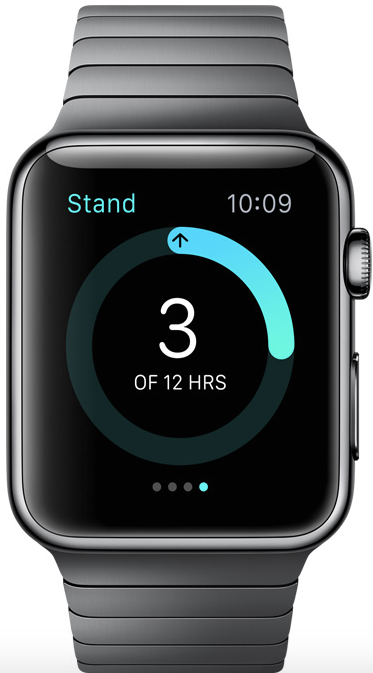
The biggest fitness app really isn’t an app at all, but a built-in feature to the watch. Apple Watch is chock full of fitness and activity tracking options including a workout app, basic step and burned-calorie counters, and will even feature reminders alerting you when it’s time to stand up and walk around a little.

applewatchstand

Third-party apps will also be available for tracking fitness. Offerings from Nike+ Running, Strava, and Runtastic are also being featured on Apple’s web site. Data from Watch will be synced with these services, allowing users more access to and control over their data.

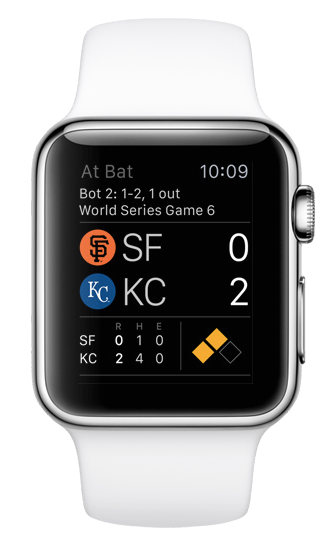
So far, only two apps for sports fans have been announced — MLB At Bat and ESPN. Both will feature team-/game-based notifications and general scoreboard functions, while the At Bat app promises player stats, news, and even highlights. I have to admit, watching highlights on a watch would be pretty cool.

applewatchmlbatbat

Apple has released the iOS update that features the Apple Watch app, but as of this writing access to the Watch App Store was not available. Nevertheless, the Watch API has been out for some time, so it’s easy to assume there will be plenty more offerings above what has been announced today. We’ll keep you updated as soon as we get any more info.

The Apple Watch will be available for preorder on April 10th, with units becoming available on April 24th.