Archive for google

New Tech Partnerships Prove the NBA is King of Fan Engagement

The NBA is really good at making their brand as visible as possible on the Internet. They have been for some time, actually. Whenever I have discussions online or in person about what sports leagues can do to make online engagement better, I have long used the NBA as the high watermark. It’s probably true that basketball as a sport is slightly more akin to displaying highlights, in general. Dunks and half-court threes and buzzer-beaters only take a handful of seconds compared to a a touchdown pass or even an impressive deke leading to a goal. Nevertheless, the NBA hasn’t been resting on its sport’s inherent excitement. It’s making big pushes to engage current fans and win over new ones.

Leagues like the NFL have always held a firm grip on their property when it comes to things like highlights, and the MLB has currently upped their actions against people posting GIFs of what they consider to be their property. The NBA, conversely, gives fans and creators carte blanche when it comes to posting videos online. The NBA has their own YouTube channel where it posts plenty of highlights and videos itself, but one can also find tons of dunk compilations, replays of old All-Star games, or even the goofy one-off things that happen in any given game.

But they’re not stopping there. They just recently partnered with a company called AVGEN. And AVGEN’s software does some really cool things. From The Verge:

On a basic level, AVGEN is software that automates the video editing process that creates highlight reels. According to Aviv Arnon, WSC’s VP of business development, “We analyze the video itself to figure out where the players are on the court, where movement is, [and] do audio analysis to figure out the perfect ins and outs for every moment.” That means analyzing fans screaming in the stands and color commentary, as well as player stats to determine what plays meant for the game as a whole. Most importantly, the software uses image recognition to also identify players and the types of plays being made. So if an outlet wanted to create a highlight reel of DeAndre Jordan’s slam dunks, they’d simply need to specify those terms in AVGEN before getting a clip minutes later. That clip can then be shared to the waiting eyes on YouTube, Facebook, or Twitter on the fly, ready for easy consumption. Which is great, since the NBA has 3 billion cumulative views on YouTube alone.

This process takes away the labor and time needed for interns to comb through video, edit it down, and post it online. It’s been streamlined and automated, as it should be. AVGEN’s process takes away the biggest problem of MLB’s recent GIF crackdown. MLB says it doesn’t want people posting GIFs or videos of cool highlights on Twitter because that highlight is property of MLB. But MLB has a long history of, well, taking a good amount of time to actually post that material online. It’s way less fun to share something when it happened 20 minutes ago. The NBA never cared about highlight sharing the way MLB did, but event then they made the process smoother by letting a machine do the posting for them. They cut out the middle man that no one was avoiding in the first place. That’s progressive thinking.

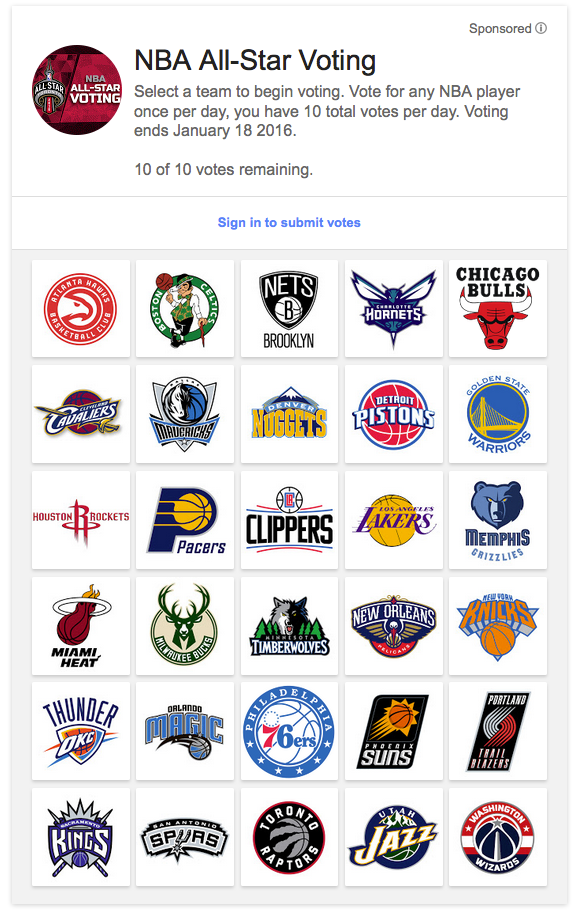
Now that they’ve made consumption easier, the NBA has turned to increasing the ease in which fans can actually contribute — most notably in terms of All-Star voting. Certainly, the NBA has long allowed fans to vote for their favorite players online and via mobile, All-Star voting has now been ported to a platform that people have already baked into their daily online activities — searching crap on Google. The NBA and Google have entered a partnership in which fans can vote for the All-Star game right from Google in their desktop or mobile browser. All one needs is a Google account and the ability to search for “NBA All Star voting.” They’re then presented with an embeded voting platform right in their current screen.
googleallstar
Google’s All-Star Voting Screen

Again, the middle man is being cut out here. The barrier of entry is lowered. Nobody knows that actual URL to vote for the All-Star game, so they’re just going to Google it anyway. With this new partnership, fans don’t even need to leave their search engine to do what they sought out. No Tweets are necessary, no SMS messages need to be sent.

The NBA isn’t reinventing the way fans engage with its league online. They are simply making it easier and more convenient. These are incremental improvements — improvements that any other league could easily make. The NBA — like any other league — is not without its problems. But they are hands down leading the charge when it comes to proliferating their brand online. And when sports are competing with a seemingly infinite amount of other entertainment streams on the web, every little bit helps.
Who Will Save GoPro?

Hey, remember GoPros? You might have one sitting in a closet or a drawer somewhere. Perhaps some well-meaning friend or family member got you one as a gift thanks to a great Black Friday deal, or you did the same for someone on your gift list. I have one. I can see it right now from where I’m sitting. It has footage of golf and curling and probably my dogs on it, but I wouldn’t know. To know, I’d have to unload the video files off the SD card onto my computer. And then what would I do with it? Shove it onto a hard drive somewhere? Back it up to the cloud where it will live a sad and lonely existence? Put it on YouTube? Much like the footage I’ve shot with my camera, GoPro is being left for dead.

Herein lies the problem with GoPro. It’s a great piece of hardware that provides output of limited value. It’s like if Gutenberg invented the printing press, but it was only capable of producing copies of Fifty Shades of Grey. A GoPro is one of things that seems like a good idea when you get it, like a wok or a pair of snowshoes. Any maybe you do use it for a time, but the novelty eventually wears off. It’s not GoPro’s fault. Its draw is the same as a wok or some snowshoes — GoPro isn’t just selling a product, it’s selling the idea of what your life could be like with that product. I’m gonna get my snowboard out of the garage and hook this thing up to it! I’m gonna strap this to my bike helmet and finally try navigating those trails! This is some Don Draper-level stuff. And then, like so many things in life, our hobbies of fantasy are put on the shelf. And the sales drop off. And that’s where GoPro sits. On your shelf, and on the sales lists of investors.

Sure, some people use GoPros for legitimate and genuinely great stuff. Some use them in very creative and engaging ways. And those people are really the core market of GoPro. But that market is niche and limited. The rest of use schlubs barely use the things. Even if we do, the cameras are so durable that we hardly have a need to replace or upgrade the models we currently own. GoPro has become a victim of its own success, it seems. And this is why the market is so bearish on them. GoPro might have hit its maximum saturation already. Throw in a new lawsuit and things start to get even more dicey.

But we should not mourn GoPro just yet. They have one very important thing going for them right now — they make really solid products. Startups are a dime a dozen these days, but one thing remains true; hardware is hard. With all due respect to software developers — seriously, many of them do amazing things — an app or a website can be set up with, all things considered, somewhat-minimal investment. A few laptops and a server instance can lead to great things in software. Hardware, on the other hand, takes a good deal more capital. There’s R&D. There’s prototyping. There’s contracts to be hashed out with manufacturers overseas and quality control and component sourcing. So when a company can break through all those barriers and produce a quality product, it’s a big deal. GoPro has already done that. They’re just having a hard time convincing the market to buy more of them. All the legit and wannabe thrill seekers have already procured GoPro cameras. GoPro needs a new gig, a new way to inject themselves into our lives. That’s where another company with deep pockets can come in and utilize the superior hardware into a new application.

So, who has the resources and possible need for such a thing? Here are a few ideas.

It should go without saying, but this is pure speculation on the author’s part and does not constitute advanced knowledge of the situation nor investment advice.

Google

This one seems like cheating since Google has enough money to acquire almost any company, but there could be a fit. Since Google spun off into a subsidiary of Alphabet, it’s clear that they’re not just in the search/advertising game any more. They are branching out. They already have a hardware company under their umbrella in Nest, and they own the biggest platform for GoPro content in the form of YouTube. Perhaps Google can package the cameras with a free software suite that allows GoPro footage uploads to be faster and easier. Maybe footage shot with GoPros can hit higher in the search ranks or be featured in promoted content. Could Google figure out a good solution to actually use a GoPro as a webcam? They have the engineering talent. Maybe selling these cameras as the all-in-one solution to create user content is how it comes into the hands of consumers again. And don’t forget that Google and GoPro have already collaborated on a new rig that will allow 360-degree filming for VR purposes.

Facebook/Oculus

Facebook made a big and somewhat unexpected splash when it entered the hardware market by acquiring Oculus. Oculus may be best known for making VR gaming hardware and software, but there is no reason it can’t get into the content-producing game. Much like the Google offering, Oculus could concoct a filming rig to produce content for their upcoming headsets, making it easier (and perhaps cheaper) for creators to create a VR environment. Why stop at gaming when the future of news and entertainment could hinge on the VR world?

Some other camera company

The analog company Fossil just got into the wearables game when it acquired Misfit. What’s to say an old-school camera company can’t make a similar push into the video field with GoPro? Canon and Nikon already are neck deep in the digital photography and video world. There are good reasons for bringing GoPro into the fold, either to bring the durable cameras into their product line or integrate GoPro tech to make SLR cameras more feature-rich. A hyper-durable SLR that can shoot HD video with the push of a button? Not a bad market to get into.

Samsung

Samsung has been trying to introduce their own ecosystem to rival Apple’s with limited success. They have their own VR division, of course, and everything they make seems to tie into the Galaxy family of products. If they could offer a piece of dedicated hardware that paired with both the consumption and production of VR content and have it specifically tie into the Galaxy line of products, they could bring another bargaining chip to the table when trying to covert iPhone users. Yeah, the iPhone camera might be good, but check out what you can make when you pair a Galaxy GoPro with a a Galaxy phone! Samsung has the capital and engineering chops to make a partnership like this work, if they chose to.

I don’t see the GoPro going extinct any time soon. I do see it becoming a product offering for another company, however. GoPro did all the heavy lifting here. It made the rock-solid product that’s easy and fun to use. They just need a little help from another entity to make a better use case for their cameras. It may be one of the companies mentioned above, it could be another entirely. But hardware is still hard. When an outlier like GoPro comes along, it doesn’t die a quick death. Like their cameras, GoPro can take a beating and still end up in great shape. Exactly who ends up with the final say in that shape they will take remains to be seen.


YouTube’s Live-Streaming Potential for Sports is Growing

After representing Middle Earth in the Lord of the Rings films, New Zealand is once again the epicenter for fantasy and hopes sprung to life. Yesterday, YouTube secured broadcasting rights to the Bundesliga and will begin showing its soccer matches on Friday in real time from Germany. Time zone differences will be awfully tough on the Kiwis as a 2:30 Friday afternoon game goes live at 12:30 am in New Zealand. Ruined sleep patterns aside, merely seeing Google take live streaming so seriously could open up a new competition for sports broadcasting rights.

The Latest_Bundesliga Twitter account was among the first to break the cord cutter friendly news:

Sports Business Daily (subscription required) noted YouTube — and by extension Google — is also allowed to show additional games and highlights from the league, but as replays and not live.

YouTube previously streamed the opening match of Bundesliga season here in the United States, a matchup between three-time reigning champ Bayern Munich and Hamburg last Friday. With Fox Soccer owning the broadcast rights here, the game was streamed via their soccer page.

It’s hard to imagine YouTube not being interesting in the broadcast world, as they’ve been in the live streaming business for some time now, really kicking things off with their stream of the 2012 London Olympics. With events ranging from traditional sports to extreme and esports, as well as general content creators also getting in on the live broadcast game, YouTube already has a massive user base, huge infrastructure behind it, as well as name recognition and familiarity.

Further emphasis has been placed on YT’s trend of embracing esports as they streamed Dota 2’s largest yearly tournament, The International 5. At TI5, 16 qualified teams from around the world competed for a prize pool of over $18.4 million, with more than $6.6 million going to the winning team. Factor in the soon to be released YouTube Gaming platform, an aptly named area specifically for the broadcast of esports, speed runs, Let’s plays and more, clearly Google has taken a keen interest in bringing live content to people. Google securing the rights in New Zealand with their ~5 million residents could be a guinea pig or stepping stone of sorts for bigger things on the horizon here in the US. According to their second quarter 2015 report, Google increased revenue to $17.7 billion and revenue growth of 11 percent year-over-year. Ruth Porat, Google CFO commented on the revenue, specifically noting YouTube, said:

Our strong Q2 results reflect continued growth across the breadth of our products, most notably core search, where mobile stood out, as well as YouTube and programmatic advertising. We are focused every day on developing big new opportunities across a wide range of businesses. We will do so with great care regarding resource allocation.

Unfortunately it’s impossible to distinctly separate YouTube’s revenue stream from Google’s numerous other ventures, however it isn’t hard to imagine YouTube comparing similarly to traditional networks. Given that other broadcasting network reports don’t separate their revenue streams channel by channel, these numbers for sports networks should be taken with a grain of salt. CBS’s Q2 2015 report disclosed a $3.2 billion, increasing 1 percent compared to last year. Disney, owners of sports giants ESPN and ABC amongst other channels, reported Q2 earnings at $2.1 billion this season. Time Warner, controllers of TNT, and TBS et al. posted $7.3 billion, up 8 percent compared to 2014.

With plenty of money, a desired market for more streamed sports and clear goals moving towards streaming live broadcasts, Google and YouTube could once again transform the way the every person consumes their favorite sports, news and other media.


Will Google Save Us From Strict Data Plans?

The tale of two mobile carriers could be at an end. For years Verizon and AT&T have flip-flopped between the being the largest domestic carrier, though not for lack of competition. Soon, perhaps today, Google will announce they’re joining the ranks, but it seems they will be partnered with existing carriers T-Mobile and Sprint. For now it seems as though the Google service will have data priced based on pure usage rather than paying for a set data plan. Still just a rumor at this point and limited to the Nexus 6 phone on T-Mobile and Sprint, Google appears set to dip their toes in the wireless provider market.

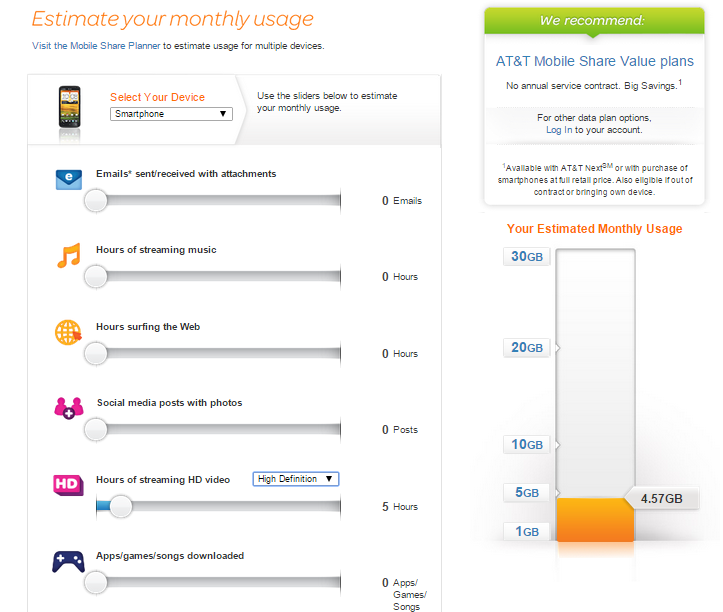
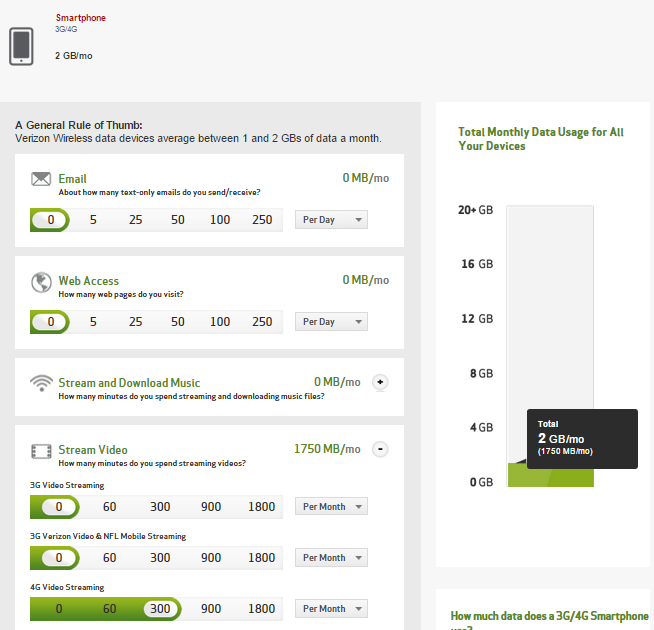
For example, the alleged data plan would not require agreeing to anything resembling current 3GB data plans where if you were to go over said agreed data plan, you’d be hit with overages. Both AT&T and Verizon offer data calculators, however  watching five hours of video (maybe two baseball games) with no emails, tweets etc. account for almost 2 GB. Verizon is partnered with NFL Mobile, but on their calculator the same 300 minutes of streaming the NFL Mobile is counted at 625 MB, barely one third the data usage of the 1750 MB 300 minutes of 4G usage tallies.

planatt plansverizon

In select AT&T and Verizon plans a $15 overage for as little as 250 MB can be applied to your monthly bill. If price is a concern in for your next phone, and it is for just about everyone these days, you may want to avoid Verizon as they don’t even want your business. According to Bloomberg and chief financial officer Francis Shammo, Verizon lost about 138,000 postpaid accounts — a standard account and not prepaid — over the past three months, but Shammo didn’t pull any punches on his thoughts during the quarterly earnings call:

“If the customer who is just price-sensitive and does not care about the quality of the network—or is sufficient with just paying a lower price—that’s probably the customer we’re not going to be able to keep.”

Give how well poorly Verizon’s attempt at a tech blog went, the big red telcom could be out of touch with much of its user base. Perhaps if robots were penning the stories, something Verizon apparently wanted due to strict limitations of news coverage, the site would still be up. Whether they’re alienating their consumers or not, as recently as Q4 2013 Verizon was the biggest carrier in the US, though the latest numbers have them tied with AT&T at 34% of the market each. The table below, powered by Statista, displays carrier market share as far back as the first quarter of 2011.

phoneshare
Google is pushing, or more accurately in some cases dragging, the web as their extensions will soon no longer be compatible with older website designs and now YouTube apps are no longer compatible with many older devices. The advances Google is bounding forward on in web development will hopefully be mirrored on the wireless phone service side of things.


Changes to Google Chrome Could Create Problems for Sports Streamers

Yesterday the Google Chrome team launched Chrome 42. The latest version of the popular browser has made some noteworthy changes to the behind-the-scenes things we take for granted. Arguably the biggest change is what will work with Chrome 42 in the near future, as Google plans to phase out old Netscape Plugin Application Programs Interfaces (NPAPI) such as Java and Silverlight extension compatibility entirely by September of this year.

Back in 2013 Google whitelisted many existing NPAPI extensions, meaning they continued usage and compatibility, though they did drop the whitelist of approved NPAPI’s in January of this year. While not blocked yet, the older NPAPI’s were no longer on by default in Chrome. To quote Google:

“In fact, many modern web platform features—including video and audio support—first saw mainstream deployment through NPAPI-based plug-ins. But the web has evolved. Today’s browsers are speedier, safer, and more capable than their ancestors. Meanwhile, NPAPI’s 90s-era architecture has become a leading cause of hangs, crashes, security incidents, and code complexity. Because of this, Chrome will be phasing out NPAPI support over the coming year.”

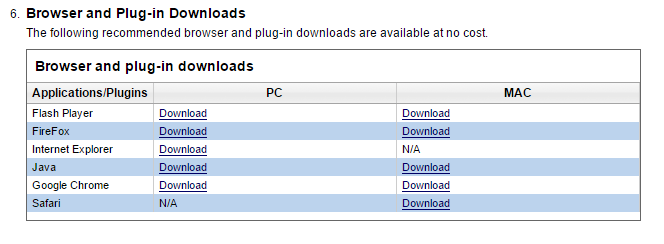
Google is a company that takes change seriously, as they have a developer timeline and clearly want to stick to it . Unfortunately for the consumer, many major websites still require use of Java or Silverlight for graphics or videos. For example the NBA website specifically recommends Internet Explorer, Safari or Firefox.

nba

MLB is no different as it lists Java as a needed plugin, however at least baseball does cite Chrome in its recommended browsers.

mlb

Similarly, the NFL initially lists only Explorer and Foxfire for their Game Rewind subscription service, though some digging did reveal Chrome 12 is listed as a minimum requirement.

nfl

Even watching a movie or show on Amazon Prime’s streaming service pops up a recommendation to stop using Chrome and switch browsers.

amazon

Google is recommending users and developers switch over to a HTML5 or proprietary system such as their Native Client to load graphics packages. As previously noted, HTML5 is far superior to GIFs in quality and size, as well as loading time. Additionally, HTML 5 is friendly on mobile operating system browsers such as Android,  Safari on iOS, Silk on Fire OS and more. While it does seem like Google is bullying websites and consumers alike, it is being done in the name of progress. The ends don’t justify the means, but the rapidly changing pace of technology requires companies, developers and consumers to push forward. A specific quote from Brad Pitt while portraying Billy Beane in Moneyball comes to mind.

(Header image via Wikipedia)

The Doctor is On

Injuries are an unfortunate byproduct of sports. Be it the growing concern of concussions, Tommy John surgery or the more normal strains and pulls, every professional and collegiate — and most high school — sporting event has medical staff on the sidelines. Even routine issues such as sore throats, flu-like symptoms or general knee pain diagnoses could be changed as Google is looking to expand its reach by video chatting with doctors.

Credit to reddit user jasonahoule for posting this (via imgur) of a simple “knee pain” screenshot on Friday afternoon:

knee pain

Tech website Engadget independently verified Google is in fact exploring a “Helpouts-style” option to video chat from any location with doctors. Google Helpouts currently offers a video connection with experts in a wide range of fields from culinary help to computer setup, though medical assistance could be on the way.

Unfortunately a search done around 5:30 pm eastern yesterday afternoon, Google has seemingly pulled back their live chat trial. The exact same search of “knee pain” in the mobile versions of Chrome and Safari as well as Silk failed to yield any “Talk with a doctor now” options.

knee2knee3knee1

Chatting with a medical professional will have certain limits, as things such as MRIs, CAT scans etc. are all things that currently cannot be done with a mouse or a touch screen. That being said, there could be a day — perhaps sooner rather than later — where on-field diagnosis for pains, strains and sprains become a part of our everyday lives.

(Header image via NEC)