Archive for concussion

Preventing Concussions in the Next Generation of Football Players

Concussions are bad.

Nobody has ever really disputed this, but over the last decade, it has become increasingly apparent that repetitive head injuries, seen particularly often in football, can lead to significant long-term medical effects.

The “concussion debate” has largely taken place on the professional stage, from the controversies generated by League of Denial to Will Smith’s forthcoming feature film Concussion and beyond. Yet the true impact is being felt across the nation, as schools and innovators work to protect the more than 1,000,000 young adults who play college and high school football each season.

This fall, new devices large and small are being tested to reduce the frequency and effect of football-related concussions.

The Dartmouth Dummy

Five years ago, the Dartmouth Big Green football program eliminated athlete-on-athlete tackling during practices. Cutting out these collisions in favor of tackle sleds and dummies cuts down on injuries and concussions–which makes sense–but made it harder to actually practice tackling against a moving target–which also makes sense.

Enter the MVP–the “Mobile Virtual Player”.

Designed by two Dartmouth engineering students, the MVP is a remote-controlled, human-sized dummy that resembles a cross between the Headless Horseman and a Weeble. Less bone-crushing than an actual human, the MVP allows for relatively realistic tackling simulations while significantly decreasing the risk of head and neck injuries.

Two MVPs were deployed in August, with a third on the way, and the experiment has received the attention of major media, tech blogs–and, reportedly, a few NFL teams.

New Helmets InSite

This doesn’t do much to prevent contact during games–and, as long as there’s tackling in football, there’s only so much you can do–but some new tools are being developed to limit the effects of major hits when they do happen.

The sporting company Riddell is in the process of bringing a new line of helmets to high schools around the country. The SpeedFlex helmets, equipped with Riddell’s InSite Impact Response System, use six built-in accelerometers to measure the individual and combined force of every impact a player receives. This data is sent live to a laptop on the sidelines, where trainers and staff can monitor players for potential danger signs.

As programs continue to adopt the system, one trainer says, this data will itself be useful for better understanding what leads to football brain injuries.

Watch Your Mouth

In fact, before long it might not even take a special helmet to easily detect potential concussions. Smithsonian reports on FITGuard, a mouth guard co-created by two Arizona State grads–one a veteran of the rugby team.

Like InSite, FITGuard uses sensors to measure hits to the head and can transfer data to a nearby computer. If FITGuard sees any signs of danger, though, it simply lights up the player’s mouth using LEDs. FITGuard is scheduled for release in early 2016.
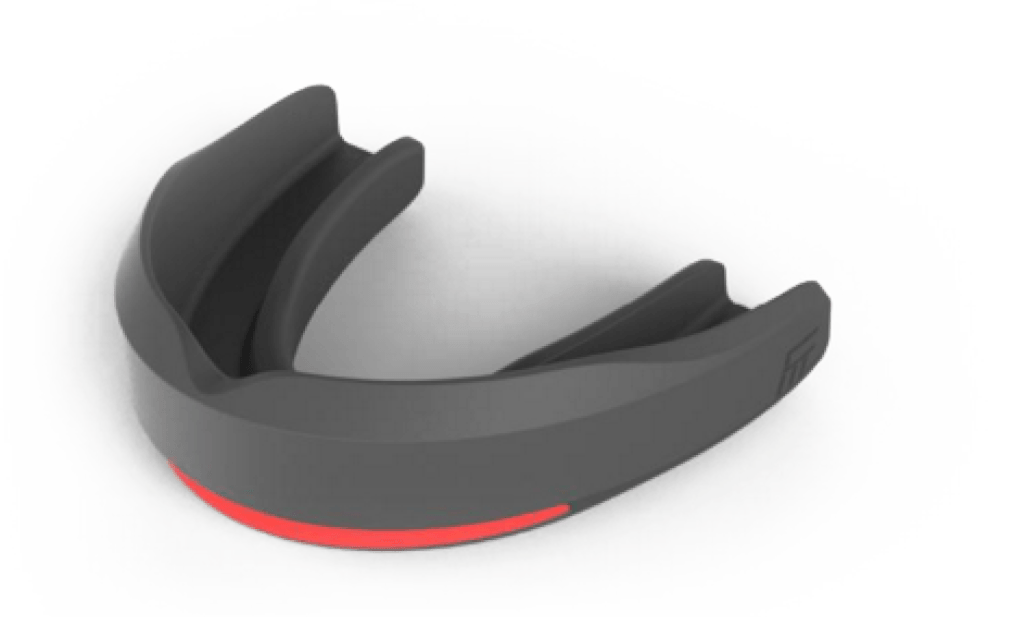
Image courtesy of fitguard.me

These tools aren’t without their caveats. A recent Stanford study, for example, found that some currently existing concussion-measuring devices (particularly helmets) can significantly mismeasure the actual force of impact.

Nevertheless, with room for improvement and no end to the concussion crisis in sight, technology like this can still have great potential to help protect our next generation of football players.

(Featured Image via Dartmouth)


Another Ugly Side of High School Concussions

On top of the obvious ill-effects of traumatic brain injuries, we can add class-action lawsuits to the list. The Illinois High School Association is facing a lawsuit of their own, one also involving concussions, and a legal suit they’ve been involved in since November of last year. The suit against a high school organization is the first of its kind, as previously only collegiate and professional football have been faced with legal action. Where the National Football League will soon be forced to pay hundreds of millions of dollars to former players due to long-term concussion effects, not every governing body or football organization is capable of doing so.

Via the Chicago Tribune, word broke the IHSA filed their first response to the lawsuit, hoping the suit will be dismissed, calling it “a misguided effort that threatens high school football.” The lawsuit does not seek any monetary compensation to previous victims, but rather one to force better prevention and immediate medical care for both games and practices. The closest thing money chasing in the suit is the plaintiff including a provision within the suit for the IHSA to pay for medical testing of previous high school football players going to back to 2002. The suit doesn’t make demands such as the Mayo Clinic recommended CT scan, just to take action in both prevention and treatment. Even if it something as basic as the NFL’s sideline Baseline Test, action is clearly required.

Centered around the IHSA’s desire to see the suit thrown out is the cost of the medical staff and testing. IHSA Director Marty Hickman believes the cost would hurt the less-well off schools in the state, and was quoted saying the sport would turn into “haves and have nots.” Another argument on behalf of the IHSA is in their words within the response “would be unwieldy.” The response goes to to say “If a high school … fails to have a court-ordered medical professional at a football practice, how will such a violation of the Court’s injunction be remedied? Sanction the IHSA? The local school board? The principal? The athletic director? The coaches? All of the above?”

Perhaps no argument is lazier than the “slippery slope” that the IHSA is bringing to the table. The good news is they aren’t claiming or feigning ignorance on the matter of concussions, just crying poor. While showing any semblance of favoritism towards a particular sport isn’t ideal either — someone can get a concussion on the track, the volleyball court, etc. — this suit is particular in its desire to see better attention in the football realm. The IHSA reports having an annual budget of $10 million for over 40 sports and activities across all levels of high schools and claim court mandated would essentially break the bank. For an organization with a television broadcast deal with Comcast/CSN Chicago, the lack of available funds seems to be a weak defense. If the money truly isn’t available for additional medical staff or improved helmets, perhaps a better mouth guard, one already partnered with multiple collegiate teams, is the first step in the right direction. The first hearing is set for 10 days from now.

(Header image via IHSA)

New Sensor Detects Concussions Not in the Helmet, but the Head

A company based in Washington state, i1 Biometrics, is taking a different approach to using sensor tech to detect concussions in football players. Other companies that work in this space, like The Shockbox, rely on sensors placed in the helmet. As Information Week reports, i1 Biometrics is cutting out the middle man, so to speak, and looking to gather data right from the source. They are working on a device that will track collisions from the head itself by using another piece of already-used equipment — the mouthguard.

The reasoning behind this is fairly straightforward. According to CEO Jesse Harper (via Information Week):

“We’re not the first sensor company to enter the space,” […] “One of our main differences is accuracy.” Because the mouthguard is in contact with the skull, “everywhere your upper jaw goes, the mouthpiece goes.”

By comparison, he said, sensors attached to helmets measure the impact to the helmet, not the head.

It’s certainly an interesting idea, and their reasoning for using a different approach not only differentiates them from competitors, but has the potential to do more accurate tracking. i1’s product also utilizes a different communication method to relay the information to the devices that collect the data. i1 doesn’t trust SMS or Bluetooth to be 100% reliable in a stadium full of fans with their own mobile devices. To avoid coverage outages or missed communications, the mouthguard leverages a proprietary radio signal. If the signal is lost, the mouthguard stores the data locally until the link can be restored.

With the increased scrutiny sports like football and hockey are under to ensure player’s safety, technology that captures head trauma data is big business these days. i1 isn’t the only company looking to make players safer while making a profit at the same time. While taking any steps to studying and preventing brain injuries is a good thing, the entire market could come down to which product is most accurate. By getting as close to the brain as possible (without sci-fi implants at least), i1 is trying to get data right from the source.

(Header image via Erik Drost)