Archive for apps

NBCSports Teams Up With AppleTV and Roku

The landscape of television programming availability is constantly shifting. Though some networks and cable providers have been giving end users a difficult time, NBC is shifting more freedom towards their cable subscribers. The broadcast giant has now made their NBC Sports Live Extra app available on both AppleTV and Roku boxes, allowing those with qualified cable plans to view NBC covered sports ranging from the PGA Tour to English Premier League action.

Allison Moore, general manager and executive vice-president of TV Everywhere (NBC Universal) was quoted:

“This launch demonstrates NBC Sports’ ongoing commitment to provide added value to loyal fans who can now have more access to the live sporting events they love. Customers love our Apps on iPhone and iPad and we can’t wait for them to experience what we can offer on Apple TV.”

On the Roku side of things, Moore went on to say:

“As we have seen with the success of the NFL and the Olympic Games, real-time sports programming with a cross-device reach is a crown jewel in NBCUniversal’s ever-expanding TV Everywhere initiative.”

While these moves fail to address cord cutters, at least a major content provider is paying attention to the desires of their existing customers. It may not bring anyone who has already parted ways with their cable bill, but it just might keep a few more sports fans in the NBC fold. With other traditional content companies attempting to embrace new broadcast media, namely Cablevision’s recent partnerships with Hulu and HBO Now, it appears as though the old dogs are trying to learn new tricks.

(Header image via Roku)

Will Google Save Us From Strict Data Plans?

The tale of two mobile carriers could be at an end. For years Verizon and AT&T have flip-flopped between the being the largest domestic carrier, though not for lack of competition. Soon, perhaps today, Google will announce they’re joining the ranks, but it seems they will be partnered with existing carriers T-Mobile and Sprint. For now it seems as though the Google service will have data priced based on pure usage rather than paying for a set data plan. Still just a rumor at this point and limited to the Nexus 6 phone on T-Mobile and Sprint, Google appears set to dip their toes in the wireless provider market.

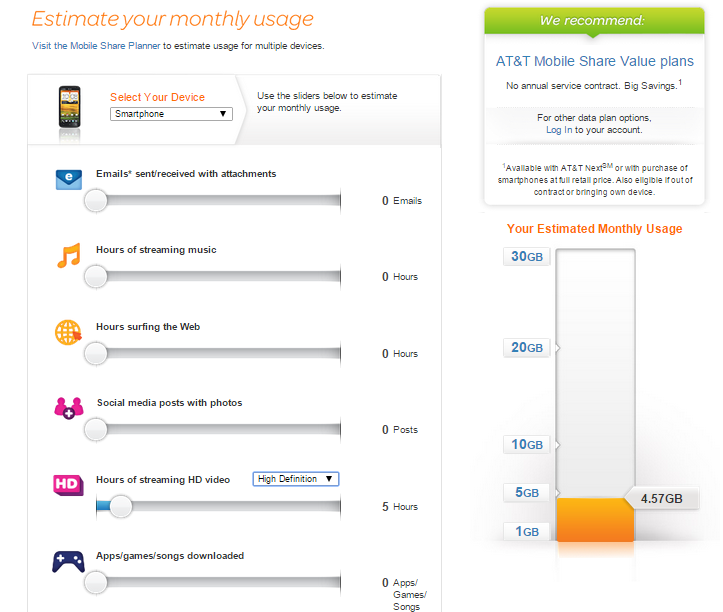
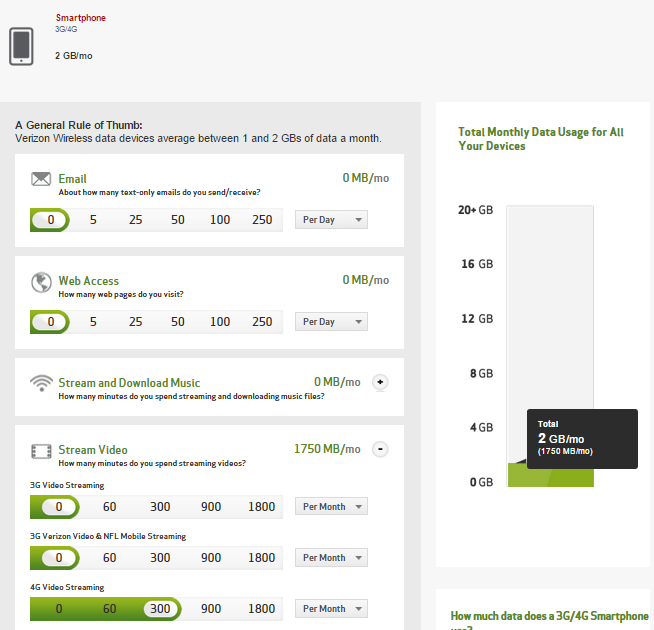
For example, the alleged data plan would not require agreeing to anything resembling current 3GB data plans where if you were to go over said agreed data plan, you’d be hit with overages. Both AT&T and Verizon offer data calculators, however  watching five hours of video (maybe two baseball games) with no emails, tweets etc. account for almost 2 GB. Verizon is partnered with NFL Mobile, but on their calculator the same 300 minutes of streaming the NFL Mobile is counted at 625 MB, barely one third the data usage of the 1750 MB 300 minutes of 4G usage tallies.

planatt plansverizon

In select AT&T and Verizon plans a $15 overage for as little as 250 MB can be applied to your monthly bill. If price is a concern in for your next phone, and it is for just about everyone these days, you may want to avoid Verizon as they don’t even want your business. According to Bloomberg and chief financial officer Francis Shammo, Verizon lost about 138,000 postpaid accounts — a standard account and not prepaid — over the past three months, but Shammo didn’t pull any punches on his thoughts during the quarterly earnings call:

“If the customer who is just price-sensitive and does not care about the quality of the network—or is sufficient with just paying a lower price—that’s probably the customer we’re not going to be able to keep.”

Give how well poorly Verizon’s attempt at a tech blog went, the big red telcom could be out of touch with much of its user base. Perhaps if robots were penning the stories, something Verizon apparently wanted due to strict limitations of news coverage, the site would still be up. Whether they’re alienating their consumers or not, as recently as Q4 2013 Verizon was the biggest carrier in the US, though the latest numbers have them tied with AT&T at 34% of the market each. The table below, powered by Statista, displays carrier market share as far back as the first quarter of 2011.

phoneshare
Google is pushing, or more accurately in some cases dragging, the web as their extensions will soon no longer be compatible with older website designs and now YouTube apps are no longer compatible with many older devices. The advances Google is bounding forward on in web development will hopefully be mirrored on the wireless phone service side of things.


HBO Now Doesn’t Know What It, Or Its Customers, Want

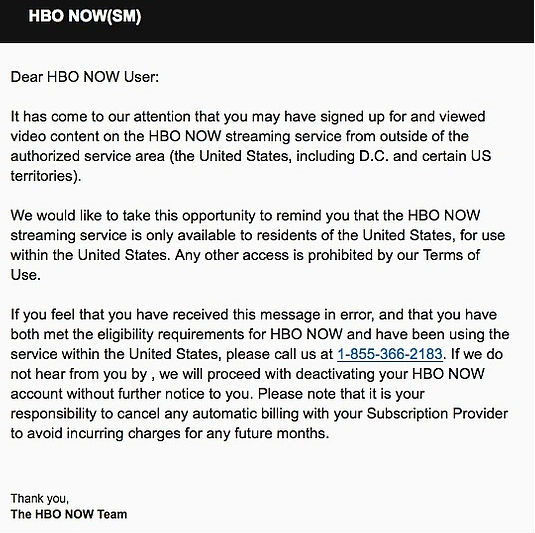
HBO, despite attempts to draw a larger consumer base via the still-new HBO Now streaming platform, seem set on alienating some of those very same new consumers. As stated in the terms of service, HBO NOW is available and designed strictly for United States residents, though numerous Canadians, European countries and Australia have circumvented the geo-locking HBO has placed on their product. At least until a few days ago, when The Sydney Morning Herald reported receiving emails from HBO warning of the potential for service to be cut off as soon as tomorrow. Rather than get payment in exchange for a service — a pretty basic concept — HBO seems to prefer receiving nothing.

From the above link, the following is an email sent to an Australian HBO Now user:

hboemail

Using a virtual private network (VPN) to trick the HBO NOW service into believing the the customer is located within the U.S. is apparently akin to pirating. If HBO is threatening to punish people who already pay for their service, it is curious to see them complain about online leaks when they take away a viable option for people to lawfully watch their shows.

On the opposite end of the spectrum is Netflix, who also has strict terms of service regarding location, but is yet to actively target consumers. The streaming giant did limit the mobile — specifically Android — based geo-locking tricks, however Netflix spokesman Cliff Edwards said as long as the consumer can be verified in the correct location, they company will not block legitimate VPN usage. In an email Edwards wrote “There’s been no change to our VPN policy.” In a separate appearance, Edwards claimed “Detecting VPN usage is like playing a game of whack-a-mole.By their very nature, it’s difficult to tell how many people are bypassing geofilters.”

HBO NOW’s launch was disappointing even before this with their initial exclusive Apple partnership, but to see them go after paying customers, despite being out of the country, is shocking. If a foreign cord cutter isn’t allowed to pay for the standalone HBO programming, only one option remains and it involves the consumer getting what they want with HBO receiving zero payment.

(Image via HBO)

Changes to Google Chrome Could Create Problems for Sports Streamers

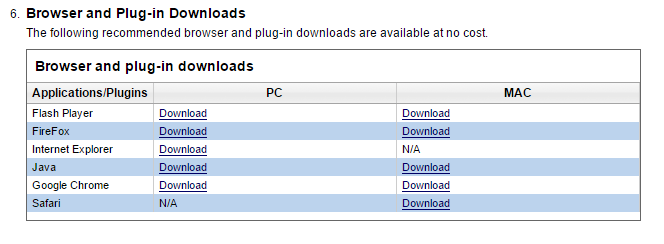
Yesterday the Google Chrome team launched Chrome 42. The latest version of the popular browser has made some noteworthy changes to the behind-the-scenes things we take for granted. Arguably the biggest change is what will work with Chrome 42 in the near future, as Google plans to phase out old Netscape Plugin Application Programs Interfaces (NPAPI) such as Java and Silverlight extension compatibility entirely by September of this year.

Back in 2013 Google whitelisted many existing NPAPI extensions, meaning they continued usage and compatibility, though they did drop the whitelist of approved NPAPI’s in January of this year. While not blocked yet, the older NPAPI’s were no longer on by default in Chrome. To quote Google:

“In fact, many modern web platform features—including video and audio support—first saw mainstream deployment through NPAPI-based plug-ins. But the web has evolved. Today’s browsers are speedier, safer, and more capable than their ancestors. Meanwhile, NPAPI’s 90s-era architecture has become a leading cause of hangs, crashes, security incidents, and code complexity. Because of this, Chrome will be phasing out NPAPI support over the coming year.”

Google is a company that takes change seriously, as they have a developer timeline and clearly want to stick to it . Unfortunately for the consumer, many major websites still require use of Java or Silverlight for graphics or videos. For example the NBA website specifically recommends Internet Explorer, Safari or Firefox.

nba

MLB is no different as it lists Java as a needed plugin, however at least baseball does cite Chrome in its recommended browsers.

mlb

Similarly, the NFL initially lists only Explorer and Foxfire for their Game Rewind subscription service, though some digging did reveal Chrome 12 is listed as a minimum requirement.

nfl

Even watching a movie or show on Amazon Prime’s streaming service pops up a recommendation to stop using Chrome and switch browsers.

amazon

Google is recommending users and developers switch over to a HTML5 or proprietary system such as their Native Client to load graphics packages. As previously noted, HTML5 is far superior to GIFs in quality and size, as well as loading time. Additionally, HTML 5 is friendly on mobile operating system browsers such as Android,  Safari on iOS, Silk on Fire OS and more. While it does seem like Google is bullying websites and consumers alike, it is being done in the name of progress. The ends don’t justify the means, but the rapidly changing pace of technology requires companies, developers and consumers to push forward. A specific quote from Brad Pitt while portraying Billy Beane in Moneyball comes to mind.

(Header image via Wikipedia)

My MLB Second Screening Apps of Choice

To celebrate the return of baseball, all this week TechGraph writers will be highlighting their favorite apps, tools, tricks, and more related to our national pastime.

I feel as though I’ve reached the critical mass of baseball fandom. Watching a game on TV — or more accurately via my computer and casted to my TV — isn’t enough anymore. I fully recognized I’m in the minority of what I want out of a baseball broadcast, which is about the nicest way of saying I like the nerd statistics. The perpetually running hamster wheel that is my brain tends to require additional numbers and context when a broadcaster may casually mention what a hot start a player is off to. Or maybe something so extraordinary occurs that a GIF, picture or video must be captured. Thus, here is a list of the apps I find myself turning to when I feel the need to second screen while watching a game.

MLB.com At Bat
Let’s get the obvious one out of the way here. Why watch one game when you can watch four on one screen? Or, watch one game on TV, another on the laptop, with your tablet also running. To be fair, I’ve only been guilty of the triple screen a handful of times.

Twitter
Ain’t no party like a Twitter baseball party! From #WeirdBaseball to #HotTakes, the things baseball people are capable of making catch on is impressive. Sharing the good times and bad across thousands of miles add another level to the baseball viewing experience. I’d be hard pressed to find an app I use more frequently than Twitter while watching a game.

GifBoom
For those moments that have to be immortalized on the interwebs via GIF, GIFBoom, in my opinion, should be the go-to option for Android users. Since switching back to Android — and thus losing my beloved Echograph — GifBoom is a more than adequate replacement. Sporting a timer, a surprisingly solid zoom feature and the ability to convert existing video to GIF form, all for free, there isn’t much to disagree with.

Chromecast
Without this little HDMI dongle, my second screening would be a lot tougher. By pushing my MLB.TV to the television, I can use my laptop (or phone or tablet) for any number of other things. While Chromecast does say it requires a universal plug-n-play router, you can get around that fairly easily.

Google Docs and Sheets
Me, a baseball nerd utilizes a ton of spreadsheets? Shocking, I know. I keep a table of starting pitchers, relief pitchers and position players. Add in historic top-50s and single season records, if I’m ever stranded in the middle of nowhere and my battery isn’t dead, I can find out who holds the single season record for HBP, I can. For what it’s worth, the answer is Hughie Jennings in 1896 with 51 times being plunked. On the documents side of things, I tend to make notes as the game progresses. Rather than maintain a traditional score book — or app equivalent — I use Docs to jot down in-game events I find interesting.

Shazam
I love walk-up music for hitters and entrance music for closers. The whole thing is so campy I can’t help but love it. Unfortunately, sometimes it’s tough to tell exactly which song is being played and thus, enter Shazam! It isn’t always perfect, but does the job well enough for me to keep it on my phone.


MLB.TV Offering Two-Day Free Trial

Major League Baseball’s MLB.TV is the longest running streaming sports platform of its kind. The mobile version, MLB At-Bat has been tasked with keeping up with new versions of Windows, Macs, and most types of mobile operating systems (sorry Windows Mobile users). It is no easy feat and MLB Advanced Media deserves some recognition. The streaming service has had its flaws, but MLBAM just sent out an update to their apps, including compatibility with the upcoming Apple Watch. Released yesterday, MLBAM was gracious enough to give a free two day trial on the Android, Fire OS, iPad, iPhone and iPod Touch platforms. No signup or auto-renewing fee, just a simple choice of which game(s) you’d like to watch.

The features new to this year’s version are things such as pre-game lineup notifications — strictly on the iPhone for now though — which is great for daily fantasy players, as well as a much needed revamp of the Android and Fire widgets. The full list of updates and additions can be found directly on the MLB website, however another feature worth highlighting is for 7-inch Android or Fire tablet owners being able to feature your favorite team. By selecting a specific club the app will showcase scores, news and video. If any of you are fans of multiple teams, the condensed game option is also available during the trial so you can catch up on each game’s signature events.

For those on the fence about purchasing MLB.TV for the first time — or even renewing it as last season there were major bugs early on — this is the perfect opportunity to preview the system at no charge. Each operating system’s apps are compatible with Google’s Chromecast,  Amazon’s FireTV and Fire Stick for straight forward broadcasts from your device to the television. With 24 games to choose from and zero sign up required, watching live baseball has never been easier.

(Header image via MLB)


Vine Improves To High Definition

As incredible as GIF(V)s and HTML5 videos are at capturing highlights, sometimes video alone does not do a moment justice. When an occasion calls for audio and video, Vine has filled that niche very well. Until today all Vines were recorded in 480p, however now iOS devices are able to record in 720p. The blog states an Android app update will follow shortly, however no word on Windows devices just yet.

After partnering and covering the NBA so successfully — the NBA Vine account has over 381 million loops — with both regular season and All-Star game coverage, at least one league is embracing the technology. On the other hand, arguably the best soccer league in the world, the Premier League seems set against sharing goals and highlights. In an interview prior to the season, Dan Johnson, director of communications for the Premier League was quoted

“You can understand that fans see something, they can capture it, they can share it, but ultimately it is against the law. It’s a breach of copyright and we would discourage fans from doing it, we’re developing technologies like gif crawlers, Vine crawlers, working with Twitter to look to curtail this kind of activity. I know it sounds as if we’re killjoys but we have to protect our intellectual property.”

Killjoys indeed. It is worth noting while the Vine official blog post does have a Premier League goal in it, Chelsea versus Crystal Palace, it is from the 2013 season and takes place before Johnson’s remarks.

Despite 720p not being particularly earth shattering on mobile devices these days, seeing Vine working to improve their overall user experience, is good for everyone, particularly sports and esports fans.

(Header image via Facebook)

New Tablet and Second Screening Numbers Released

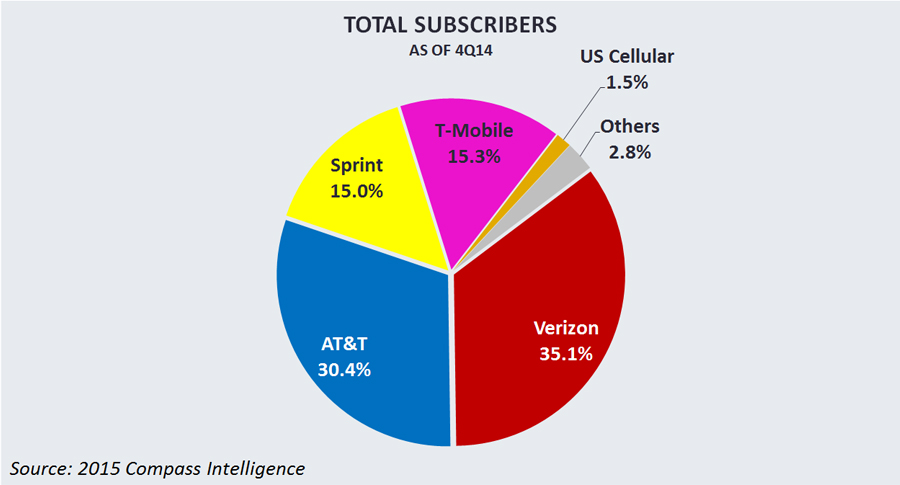
For tablets with data plans — and thus excluding Wi-Fi only variants — Compass Intelligence released numbers for the five largest wireless carriers from last year. More than 19 million tablets were sold with wireless activations in 2014 according to the information. For overall tablet numbers it should come as no surprise to see Verizon and AT&T lead the way, with 35.1% and 30.4% of the activations respectively. Sprint and T-Mobile are nearly tied, with U.S. Cellular and other companies rounding out the chart.

carrier-total-subs

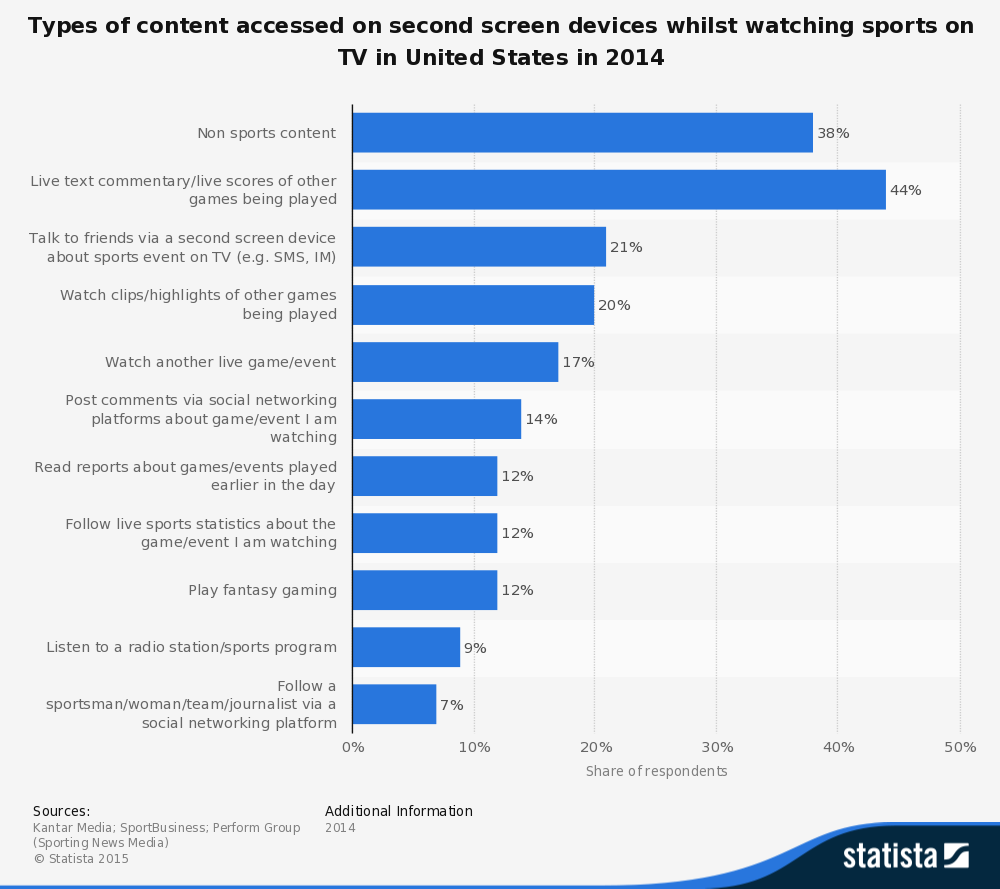
Tablets have certainly found more than just a niche fan base over the years and their sales as well as usage numbers have climbed. Sports leagues and networks have taken notice, particularly as the second screening experience grows more popular. Statista released a survey conducted about second screening in June of last year. A reported 44% of sports fans utilized another screen last year for live scores of other games currently being played, and 1-in-5 fans watched clips or highlights or was talking with a friend about the games. Somewhat surprisingly fewer than 1-in-7 claimed they utilized their screens for social networking or watching a separate live game.

statistic_id316658_types-of-content-on-second-screen-devices-whilst-watching-sports-on-tv-us-2014

Currently in the midst of March Madness, four games are slated today, however two games will overlap each other. Tip off times for 7:15 and 7:45 eastern as well as 9:45 and 10:17, thus ensuring those without multiple TV’s will be forced to either swap between channels or utilize a second screen. With baseball season just around the corner, games happen concurrently every day, though MLB.TV does allow watching four games at once with their picture-in-picture feature. Similarly, NFL Sunday Ticket allows the user to view eight games simultaneously

Presuming the tablet market continues to grow, something the trends suggest would be a safe assumption, count on seeing even more sports fans make the jump to second screening. Already broadcasts are inundated with suggested hashtags, plugs for apps and commercials displaying the best features of online subscriptions. Eventually sports broadcasts may reach the point where second screening is the norm.

(Header image via Digital Trends)

Wilson, SportIQ Team Up to Produce “Pro-Quality” Smart Basketball

Look close at Wilson’s Wx “connected basketball,” and it’s hard to tell what’s so different about it until you spot the Bluetooth logo by the inflation valve.

“That is not something we usually deal with,” Wilson’s Vice President of Innovation Bob Thurman chuckled.

The ball was presented, along with an accompanying mobile app, at last month’s Sloan Sports Analytics Conference in Boston. Wilson developed the basketball in partnership with SportIQ, a Finnish company whose player tracking solution combines wearable sensors with synchronized video to help coaches analyze their teams’ performance.

When asked, SportIQ CEO Harri Hohteri (pictured above) was reluctant to talk about the “secret sauce” behind his company’s basketball. But he was quick to differentiate it from other smart sensor basketballs like 94Fifty’s.

“[The 94Fifty ball] was designed around shooting mechanics as a training tool,” Hohteri said. “But the first thing for us is the consumer side of things. We wanted to develop a professional-quality basketball.”

Hohteri, who played four professional seasons in Finland’s Korisliiga, insisted the feel of the basketball was of the utmost importance to players. “I can’t tell the difference between this and a game ball,” he said.

The quality of the basketball is further underscored by SportIQ’s partnership with the Korisliiga. For the third straight season, Finnish players are wearing the company’s sensors (and using its basketball) in league games. The data is used to automatically tag events in a synchronized video that Hohteri says coaches are using to track the efficiency of their offensive sets. And because it relies on sensors, the system doesn’t need the extensive camera setup used by STATS’ SportVU tracking system.

“It’s about doing things more efficiently,” Hohteri said. “That’s the whole idea. We can do the whole thing in real time with less manpower than teams are using now.”

But for those of us who aren’t running a professional basketball league, Wilson’s connected basketball is launching this year. The demo at the conference included a smartphone app (projected onto a television) that showed players their accuracy from various distances on the floor. A machine learning algorithm in the app detects makes and misses without the need for an additional sensor attached to the net, unique among smart basketball systems. Each distance stripe was color-coded, according to the percentage of shots made from anywhere in that arc.

SportIQ’s partnership with Wilson started in August 2012, when SportIQ first began its relationship with Finnish basketball. Because Wilson is the official basketball of the league, Hohteri approached Wilson’s innovations department about developing a smart basketball.

“At the same time, our business director was asking us for a way to measure makes and misses in the driveway to keep kids in the game,” Thurman said. “So we agreed that we would help engage them on tracking the basketball, and they would help us with this make/miss aspect.”

Thurman hopes the partnership between their companies will combine SportIQ’s intelligence with Wilson’s broad user base to “gamify” practice and inspire the next generation of basketball players.

“We want to activate 12-15 year old kids, to get them off the video games, and get them back in the park, to be more active,” Thurman said.

ESPN’s Online Market Share

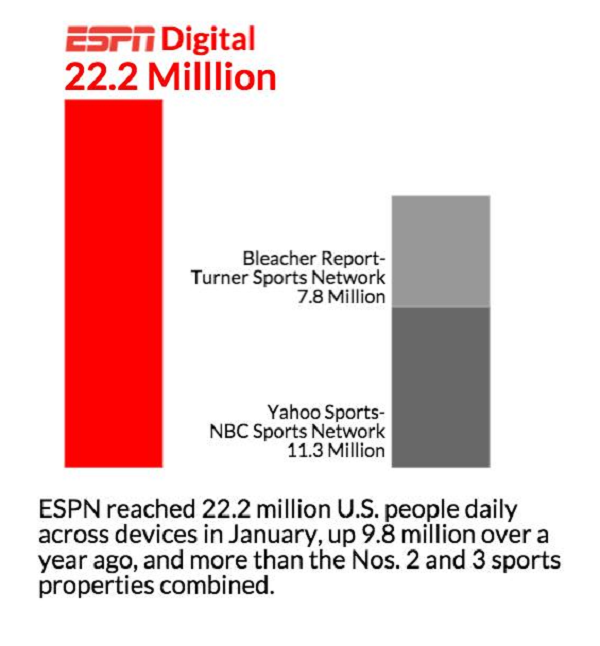
ESPN’s dominance of the digital market may not be up for debate anymore. Earlier today the company released numbers from their digital media division and ESPN boasted record highs in unique viewers, hours viewed and mobile viewers.

The press release credits the new NCAA football playoff system, NFL playoffs and the NBA specifically for the rise in traffic. ESPN claims their daily numbers beat out number two Yahoo! Sports (owned by NBC) and number three Bleacher Report even when combining the two companies’ viewership.

espn

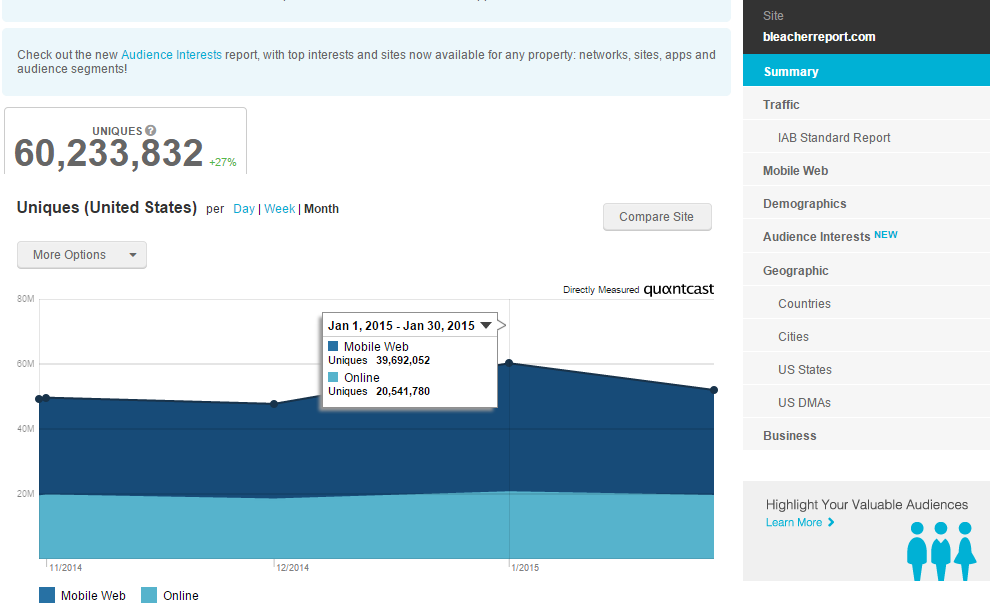
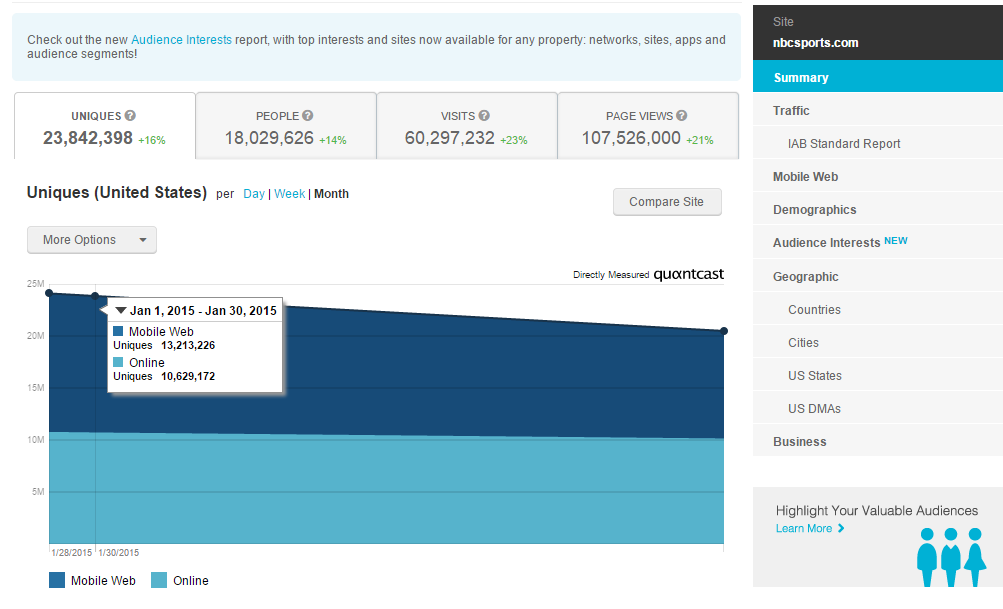
ESPN cites Adobe Analytics, Nielsen SocialGuide, Twitter and Instagram for their numbers, and notes 61% of their total pageviews were done via mobile. It marked the tenth consecutive month where ESPN visitors preferred to check the site via mobile.  A different web page analytic company, Quantcast shows different numbers for views on ESPN’s competition — Quantcast does not claim quantified numbers for ESPN — but the number still corroborate the preferred mobile method.

quantcastbleacher

quantcastnbcFor both Bleacher Report and NBC, mobile users accounted for more traffic than those on computers. Only in the esport area did PC users outpace the mobile traffic, but given the nature of the exclusive streaming done on Twitch —no article to read, etc. —  and the ensuing mobile data prices, there’s no surprise there.

quantcasttwitch
ESPN’s grasp on digital media consumption is decisive at the moment. One in three sports fans default to ESPN with not even one in seven going to second place NBC Sports. For now their title of “worldwide leader” remains accurate.

(Header image via Wikipedia)