Archive for Tennis

TechGraphs News Roundup: 9/11/2015

After a laborious break, the News Roundup is back with the football sports-tech stories we found interesting this week.

Tennis may be slower to embrace technology than other sports, but if the All England Club can get web-savvy, you know the game is catching up to the curve. For recent evidence of that, we look to Damien Saunder and mapping software company ESRI. Saunder has been using data from Hawk-Eye, the camera system in place for the purpose of line-call challenges, and other sources to develop data visualizations of entire tennis matches. With counting stats (e.g., “How many aces did Serena hit in her last match?”) still dominating the tennis analysis conversation, Saunder believes his visualizations, and the practical information derived from them, can provide qualitative context to the whens and wheres of events that drive results in a sport in which timing and location matter. (And speaking of Hawk-Eye, this new Wall Street Journal interactive site lets you go eye-to-eye in a line-call test with the Hawk itself.)

With the NFL regular season kicking off last night, a lot of us have had football on the brain. We’ve recently covered concussions, NFL Sunday Ticket alternatives, and television streaming devices. Now comes news that Fox will be streaming live NFL games this season through its Fox Sports Go app and online at FoxSportsGo.com. Although this is a good step for fans of NFC teams, it’s a small step for the network. Access still requires a paid television-provider subscription (Dish Network users currently don’t have access), and while this does permit mobile viewing on a tablet, smartphone viewing is not supported. Finally, coverage is restricted to the game your local Fox affiliate is carrying, so if you’re an NFC North fan living in the NFC South, you’re going to need a longer Ethernet cable.

Meanwhile, Comcast is trying to improve the television viewing experience– and maybe keep your eyes off some other, non-Comcast-connected device– with a new, on-screen football app that provides interactive statistical data about players and teams in action. Use of this app requires a Comcast X1 subscription.

CBS and ESPN have been testing “Pylon Cam,” which is what it sounds like, and probably very expensive, so stop using the pylons as golf clubs. (Also from that story, New York Giants head coach Tom Coughlin expresses skepticism about the utility of using drones at training camp, and all players’ shoulder pads will contain RFID tags for on-field movement tracking.)

Not to be left out, the NFL itself is expanding its digital offerings. For example, the league’s new video network, NFL Now, will be available on its redesigned mobile app, creatively dubbed NFL Mobile, as well as online and on a number of other popular platforms, all without a subscription. Additionally, all Verizon users can stream Thursday, Monday, and in-market Sunday afternoon games on connected Android and iOS smartphones, but not tablets, at no additional cost. (Sorry, BlackBerry PlayBook users.) Sure, the NFL may be turning into a mind-melting mixture of golden-age prizefighting and professional wrestling, but at least we have little excuse for missing a second of it.

It’s looking like there will be some fresh faces in the 2015 MLB playoffs, and with less than a month to go in the regular season, the race for those final postseason spots is hot. Also hot: all that internal data the Cardinals nabbed from the Astros. Remember that? Baseball is big business, and as big data becomes an increasingly important part of that big business, data industry actors are counseling baseball teams to behave more like sophisticated corporations with intellectual property worth stealing and protect themselves accordingly.

Finally, included in Apple’s live-action data dump community theater show Wednesday was news about a new MLB At Bat app for Apple TV. The app offers plenty of features, including split-screen viewing of two live games and on-screen statistics. An NHL app also is reported to be coming to Apple TV in 2016.

That’s all for this week. While you’re streaming football straight into your domes this weekend, don’t forget to be excellent to each other.


All England Club Dot Net: Wimbledon in the Royal Age of Technology

Generally regarded as the most formal of tennis’ Grand Slam tournaments, Wimbledon– pardon, The Championships, Wimbledon– famously features players tarnishing the courts’ grass surfaces in mandated all-white apparel and an only recently lifted requirement that the participants bow or curtsy in deferential acknowledgment of attending members of British royalty.

The 2015 tournament is underway, and so too is the eldest Slam’s grappling with technological developments. Perhaps most visible is the tournament’s improved website. The homepage, Wimbledon.com links to a live blog, which consists of a stream of updates including summarized match results, video and images from social media, and player comments. Live video and radio streams are available directly through the site, as is a video archive, and current weather, time, and ticket queue information appear on the face of the landing page. (Live video streaming also is available to cable subscribers from ESPN3/WatchESPN.)

wimb

Behind the scenes, longtime tournament partner IBM has driven these updates to Wimbledon.com and informational mobile apps (for iOS and Android users), which will have an offline mode to permit ongoing operation where wireless service is unavailable. IBM also is leveraging its Watson computing technology in an effort to deliver analytical information to fans with greater speed.

While official digital coverage of Wimbledon appears to be at an all-time high, fan-generated content is a different matter. Wimbledon’s tournament directors, including Alexandra Willis, Head of Digital and Content, have taken a more actively-hostile stance toward the use of mobile streaming services like Periscope, although Willis admitted that her team would be experimenting with the technology. Willis’ focus is less on the technology’s ability to sidestep conventional broadcast channels– like others, she does not view it as a viable threat in that regard– and more on protecting the live experience for attending fans and players. The prohibition on video streaming is a natural extension of the preexisting rule against mobile telephone use during matches, which, in case anyone thought this somehow would fly, includes selfie sticks too. And speaking of flying, drones aren’t allowed either. Police already have seized one and released a statement explaining the legal basis for their action.

What effect will these mobile technology restrictions have on spectators? Automotive manufacturer Jaguar may be able to deliver at least a partial answer. By equipping some fans with wearable biometric monitors (focused on heart-rate variability), installing atmospheric sensors around the courts, and tracking social media activity, their hope is to be able to measure emotion, excitement, mood, and energy. The results are charted in real time to an interactive graph on Wimbledon.com. What value, if any, this meta-analysis provides remains unknown, of course, but it is nice to see one of sports’ most buttoned-up events stride into the digital realm without infringing upon the simple elegance that makes Wimbledon a perennial classic.

(Header image via scohoust)

CES: Sony’s Smart Tennis Sensor is Coming

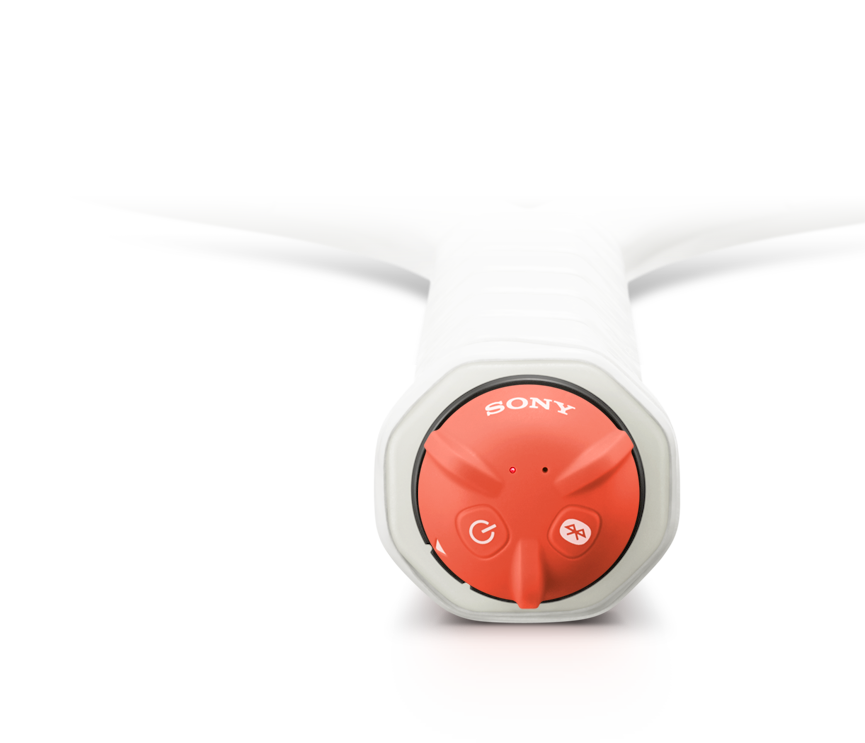
We’ve known for some time that Sony was releasing a sensor that attaches to tennis rackets, but we were able to learn more about the device at Sony’s CES booth.

The device is fairly straight forward and looks easy to attach. A clip mechanism is attached the butt end of the racket, and the sensor snaps into that clip. Sony representatives were able to confirm that users would be able to buy multiple clips to attach to multiple rackets. That way, a sensor could be easily switched from one racket to the other. The clips are compatible with select Wilson, Head, Prince, and Yonex rackets — all in all, over 100 rackets are compatible according to Sony.

smarttennis3

The sensor tracks a myriad of things like swing type, swing speed and ball spin. It even senses vibrations to locate where on the racket the ball was struck. The data can be streamed directly to a Sony smartwatch or a tablet/smartphone using Bluetooth, or the sensor can store the data locally to be dumped later. According to Sony, when streaming data, the sensor can last about 90 minutes on a charge while it can go three hours while in memory mode.

smarttennis2

Sony says the sensor is set to be released in the U.S. and Canada in the early part of this year for $200.


Video Training Tool Ubersense Now Available on Android

Those wanting access to video training and analysis tool Ubersense no longer have to switch platforms, as the company has announced that an Android version of their popular mobile app is now available. Ubersense uses your devices camera to capture high-speed video of your performance for later reviewing. It offers slow-motion playback and drawing tools to break down movement frame by frame and help understand body position and angles. Ubersense claims it’s had over 2.5 million downloads since its inception from athletes in over 50 sports. Ubersense has even been used by US Olympic bobsledders.

The sport independence of Ubersense was always its selling point. While specific tools and apps for golfers and tennis players have been around for some time, Ubsersense doesn’t differentiate. It can be used by baseball players, bowlers, track and field competitors, and even dancers. Anyone who wants to take a look at themselves or their students in a hyper-specific manner can use the app.

Now, Ubersense can also boast platform independence. The Android offering comes in lockstep with their acquisition by Hudl, a similar app that focuses more on the coaching side of the sport.

Ubersense is a free download on either the iOS or Android stores, with a monthly or yearly charge for Ubersense Elite, which offers the ability to upload videos to online storage and sync across multiple devices.

(Photo via Ubersence Facebook)

Use Tech to Improve Your Own Game

We can certainly marvel at the current gizmos and gadgets professional athletes can use to dissect their game. Between proprietary stats, game film, and in-house tools that are at a player’s disposal, they have a lot of opportunities to analyze themselves. But what about us common folk? We still like to play sports. What can we use to help us keep our games on point?

As it happens, two common recreational sports, tennis and golf, are being flooded with tools and apps that can help the weekend warriors get better. Nothing is a substitute for a good lesson with a good teaching pro, but that doesn’t mean we can’t supplement with some self instruction.

Tennis

Babolat Play Pure Drive Racquet

The Play Pure Drive doesn’t actually transform, but it is certainly more than meets the eye. Inside this innocuous racquet are a group of sensors, programmed to record your every swing. It collects your swing data, categorizes the types (serves, forehands, backhands, etc.), and beams it all to your smartphone or tablet. It can tell you where you on the strings you are hitting your shots, and provide tips for better swings. There is also a social aspect to it, where you can upload and compare your stats to others as well as work on leveling up your skills.

Price: $400

Sony Smart Tennis Sensor

sonytennis
Sony Smart Tennis Sensor

If you are set on hanging on to your own racquet, the Sony Smart Tennis Sensor might be more for you. Rather than a whole new racquet, a simple dongle is attached to the end of your current one. Though the product isn’t available quite yet, it does promise some exciting features for those looking to analyze their game. Like the Babolat, the sensor tracks number of shots and impact spots, but also grabs things like swing speed, ball speed, and spin. You have the option of streaming the data to your smartphone or saving it all in the dongle and uploading it at once. This could come in handy if your phone is almost dead, or you left it in your locker.

Price: $200


Golf


Golfshot GPS / Caddio

Caddio
Caddio

The players on the tour have the luxury of caddies with detailed score cards to help with club and shot selection. The average golfer, unless they play the same
course regularly, is often coming in blind. There are laser-guided distance finders available, but Golfshot GPS and Caddio look to add something extra. They take different approaches to course management. Golfshot comes loaded with over 40,000 golf courses, shows multiple distances (center of green, back of green, right fairway, etc.), allows you to track your shots and keep a scorecard. Caddio goes a different way, using crowdsourcing to find those pesky hazard areas and false green fronts you might not be able to see from the tee or fairway. They offer the insight of the players that have been around the course before. Caddio also encourages you to be social about your game. After all, the more people use it, the more data gets saved per course.

Price: Free (both)

Game Golf / Arccos


Arccos
Arccos

Game Golf and Arccos also take different approaches on the same concept: sensors on the end of your club. While Game Golf requires you to tap your club against a small device on your belt, Arccos encourages you to just swing away and let it do the work. With Game Golf, all the data is kept on the sensor. After a round, you unload the data via USB onto a computer (the horror!). Arccos requires that your smartphone be within Bluetooth range of your clubs (i.e. your pocket), but does not require a computer to unload stats. Both use GPS data to determine your location on the course during every hit, track your distances and number of shots, and give you digestible information about your round and your overall performance throughout the season. Ease and price play a factor, but either should give you more knowledge than you thought you needed about your game.

Price: $199 (Game Golf), $399 (Arccos)

Swingshot

Swingshot
Swingshot

Video analysis is a huge part of golf now, and Swingshot looks to provide that functionality for average golfers on the course. Designed to fit in a golf bag,
Swingshot is basically a camera on a stick. Just jam it in the ground, hit record, and swing. The video is saved and can be viewed later on a computer or mobile device. If you’re working on reducing the cupping of your wrist or avoiding the dreaded “chicken wing”, Swingshot will help you pinpoint exactly when you do it. Plus, if you fall down during a golf swing, it makes for easy uploads to YouTube.

Price: Starting at $199

(Header Photo via Michael Duxbury)