Archive for opinion

When Will UEFA Adopt Goal Line Technology?

The UEFA Champions League final will be set Wednesday as Real Madrid and Juventus square off to determine who will face Barcelona in the finals. Barcelona defeated Bayern Munich en route to their finals bid on a 5-3 aggregate score, but it could have easily been 5-4, and a one goal lead — technically two due to the away goals advantage — as a shot in the 39th minute nearly brought a bit of panic to the Barca side.

Bayern’s Robert Lewandowski received a pass near the penalty spot, turned and sent a strike that beat Barca’s keeper, Marc-Andre ter Stegen. From the game feed, as well as the reactions of the Bayern players, it looked as though it may have been a goal.

A different angle shows the entire ball did not cross the goal line, and thus the no goal call turned out to be correct.

While this second angle is no doubt an improvement over the game feed, it is still off-angle and not parallel with the goal line. The Champions League is one of the few leagues in Europe to not have some sort of goal-line technology (GLT) either planned or already in use. From the Dutch league to Italy’s Serie A to England’s Premier League, GLT is something that absolutely needs to be an industry standard.

Just two days ago GLT was the difference in the EPL as Swansea downed Arsenal 1-0 due to a no-goal call being overturned. Reddit user Poet-Laureate, via Gfycat, clearly showed the use of GLT to determine the game.

Both men’s and women’s World Cups as well as numerous domestic leagues have embraced the usage of GLT, though few international leagues have done so. Aside from the UEFA Champions League which pits clubs against each other, national teams in the 2015 Asian Cup nor the 2015 Africa Cup of Nations did not benefit from any form of goal-line technology. Similarly in North and South America the CONCACAF and CONMEBOL respectively have yet to implement GLT in any capacity. One of the reasons behind the lack of GLT is cost, as UEFA President Michel Platini deemed the technology too expensive in 2013, citing a preference to use the money “on youth programs and infrastructure.”

According to Statista, money paid to clubs in the 2012-13 season equated to €910 million.
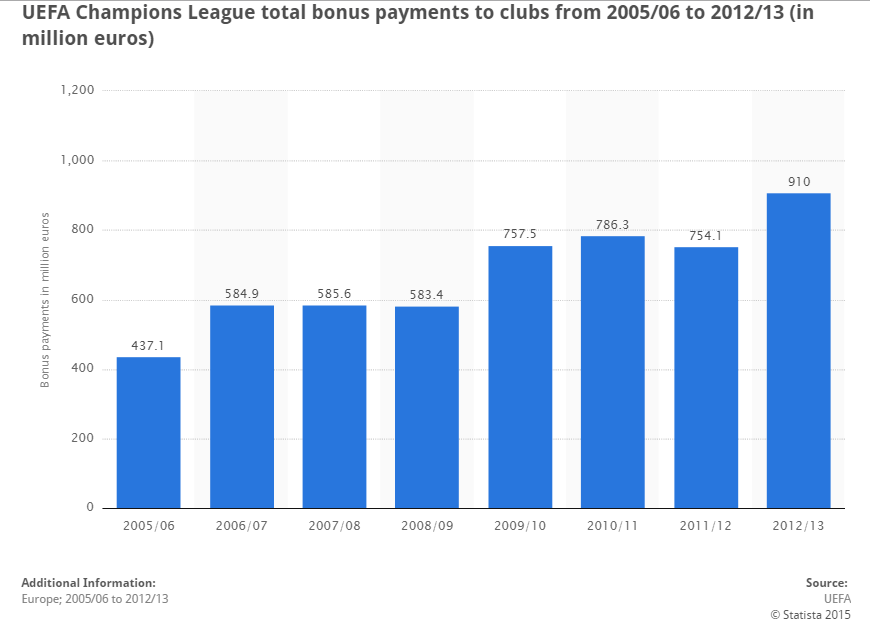
uefa

Given the UEFA distribution model, 75 percent of the total revenue goes to clubs with the remainder being kept by UEFA. Revenue above the €430 million mark will be split at 82 percent going to teams and 18 percent to the league. It’s hard to cry poor with that amount of money being  publicly disclosed. Soccer leagues are unfortunately notorious for a number of murky and handshake deals — not to mention outright awful human rights — but not utilizing goal-line technology due to something as easily dismissed as cost is absurd. If the finals game is decided by a questionable goal or no-goal call, then maybe UEFA and other international leagues will stop sitting on their hands.


In the World of Live-Streaming, Some Creators are In, Others are Out

The live-stream app Meerkat went live on the Android market today. It’s still in Beta form, so things may not be perfect just yet, however as TechGraphs overlord David Temple explained over a month ago, Meerkat — and Periscope — both offer a new way to broadcast video.

Meerkat’s rules page doesn’t clearly define what you can or can’t stream as it is more of an outline of features.

meerkat

Once you jump into the legal area of their terms of use one can see the company strictly prohibits broadcasting copyrighted material — as do the content creators. HBO has already sent out takedown notices to people streaming the new Game of Thrones season via Meerkat, though perhaps the company is in the takedown notice mood. Other creative minds have gone the opposite way and are embracing Meerkat. Entertainers such as Jimmy Fallon, Snoop Dogg and Jim Gaffigan are sprinkled among Meerkat’s leader-board in order for them to be easily found. If you are so inclined to follow them on Meerkat, expect a push notification when they begin a new broadcast.

Within each cast there is a chat room for interaction between viewers and the broadcaster. One of the pillars of Meerkat is the ability to cast in the here and now, however the company has also added ability to schedule a future broadcast. The quality of the available casts seems to be dependent on the the strength of the caster’s internet connection. In my brief experiences those doing in an office or home setting have had a quality better than Vines — even with their new 720p broadcasts — however what I assumed to be 4G/LTE connections stuttered and froze from to time. Part of it could be the app is still in Beta or it could be that the heavy bandwidth required to stream is too taxing on user’s non-WiFi networks.

These are urky broadcasting rights waters we’ve waded into. From takedown notices, muted streams on Twitch.tv due to music rights to being wary of narcs taking you down in person for an illegally stream boxing match, the gap between producers and end-users appears to be widening.

(Header image via Meerkat)

Quibbles With the Kentucky Derby

The Kentucky Derby will take place in two days, but in terms of broadcast availability and on-site consumer technology, it feels like an event from previous decades. Churchill Downs has already banned drones and so-called remote controlled aircraft and selfie-sticks, though most of us are probably happy about the latter. The race organizer’s safety ban list includes plucky and niche devices such as laptops, cameras with a 6” lens or longer and camcorders.

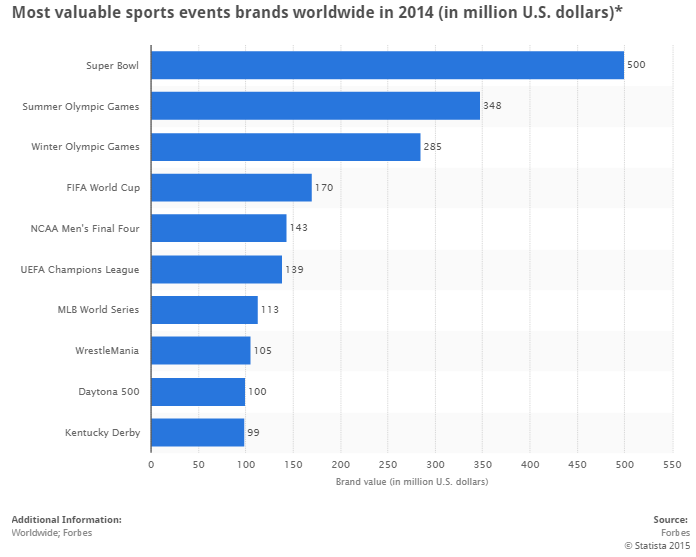
To their credit, mobile phones and tablets are allowed on the premises. There are most definitely legitimate safety concerns at any sporting event, but here you can bring a stroller with you, only if you have a child in attendance. If you bring that same child on a wagon, you’re out of luck though. Maybe I’m wrongfully criticizing the Kentucky Derby; they are by no means the only sport to to ban drones. It didn’t take an FAA act like the Super Bowl nor a county-wide ban like The Masters, however it’s hard for me to be lenient on a sporting event that ranked in the top-10 in brand value last year at $99 million.

brandvalue

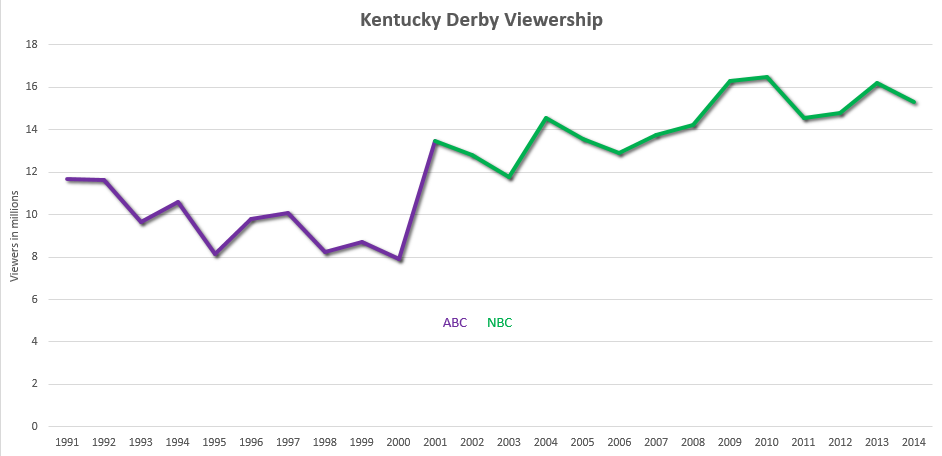
It’s tough to make excuses for the Derby when they’re not even making an attempt to embrace new technology like other race events. Despite my complaints — and animal treatment concerns — viewership for the Kentucky Derby is in a better place than both 10 and 20 years ago. Television views for the Derby have been up and down over the past few years, though they have seen a distinct uptick since NBC took over from ABC in 2001 (click to embiggen).

kentuckyderby

NBC does allow streaming of the race via their Sports Live Extra service, thought that option  demands a qualifying cable subscription. AppleTV and Roku users now have the option to view the race among other NBC Sports exclusives (again with a cable package), though Sling TV, Chromecast and FireTV cord cutters are still left with zero options.

(Header image via NBC)

Will Google Save Us From Strict Data Plans?

The tale of two mobile carriers could be at an end. For years Verizon and AT&T have flip-flopped between the being the largest domestic carrier, though not for lack of competition. Soon, perhaps today, Google will announce they’re joining the ranks, but it seems they will be partnered with existing carriers T-Mobile and Sprint. For now it seems as though the Google service will have data priced based on pure usage rather than paying for a set data plan. Still just a rumor at this point and limited to the Nexus 6 phone on T-Mobile and Sprint, Google appears set to dip their toes in the wireless provider market.

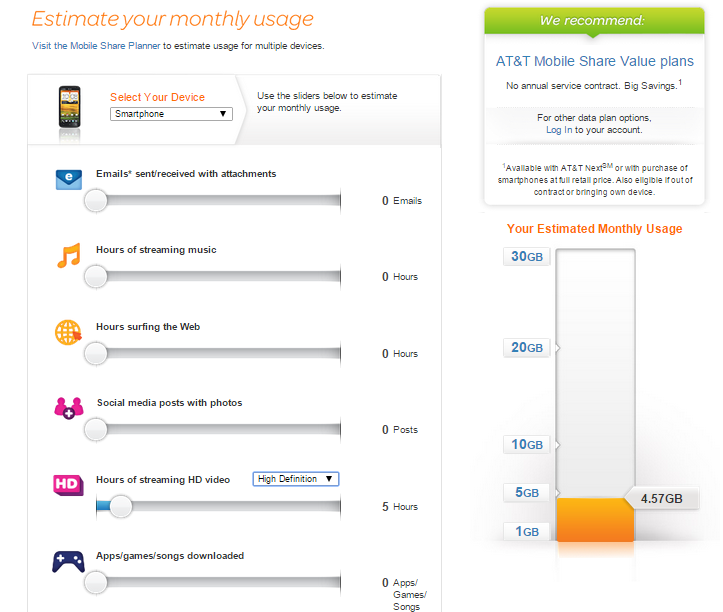
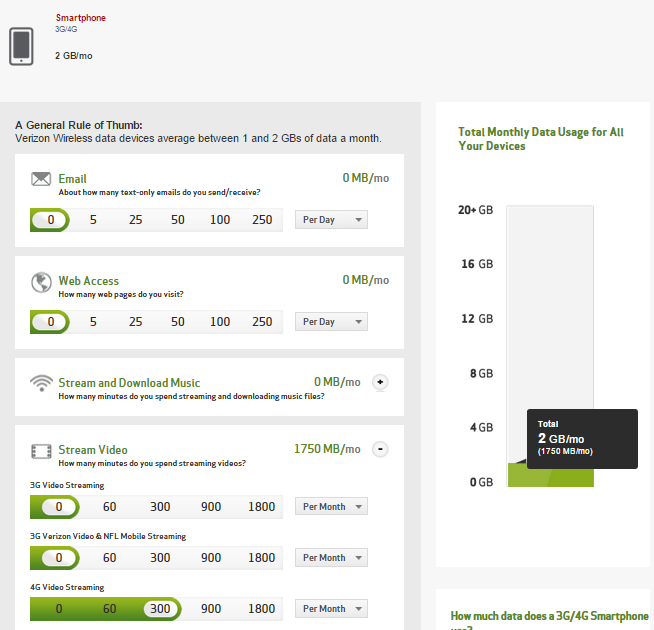
For example, the alleged data plan would not require agreeing to anything resembling current 3GB data plans where if you were to go over said agreed data plan, you’d be hit with overages. Both AT&T and Verizon offer data calculators, however  watching five hours of video (maybe two baseball games) with no emails, tweets etc. account for almost 2 GB. Verizon is partnered with NFL Mobile, but on their calculator the same 300 minutes of streaming the NFL Mobile is counted at 625 MB, barely one third the data usage of the 1750 MB 300 minutes of 4G usage tallies.

planatt plansverizon

In select AT&T and Verizon plans a $15 overage for as little as 250 MB can be applied to your monthly bill. If price is a concern in for your next phone, and it is for just about everyone these days, you may want to avoid Verizon as they don’t even want your business. According to Bloomberg and chief financial officer Francis Shammo, Verizon lost about 138,000 postpaid accounts — a standard account and not prepaid — over the past three months, but Shammo didn’t pull any punches on his thoughts during the quarterly earnings call:

“If the customer who is just price-sensitive and does not care about the quality of the network—or is sufficient with just paying a lower price—that’s probably the customer we’re not going to be able to keep.”

Give how well poorly Verizon’s attempt at a tech blog went, the big red telcom could be out of touch with much of its user base. Perhaps if robots were penning the stories, something Verizon apparently wanted due to strict limitations of news coverage, the site would still be up. Whether they’re alienating their consumers or not, as recently as Q4 2013 Verizon was the biggest carrier in the US, though the latest numbers have them tied with AT&T at 34% of the market each. The table below, powered by Statista, displays carrier market share as far back as the first quarter of 2011.

phoneshare
Google is pushing, or more accurately in some cases dragging, the web as their extensions will soon no longer be compatible with older website designs and now YouTube apps are no longer compatible with many older devices. The advances Google is bounding forward on in web development will hopefully be mirrored on the wireless phone service side of things.


Another Ugly Side of High School Concussions

On top of the obvious ill-effects of traumatic brain injuries, we can add class-action lawsuits to the list. The Illinois High School Association is facing a lawsuit of their own, one also involving concussions, and a legal suit they’ve been involved in since November of last year. The suit against a high school organization is the first of its kind, as previously only collegiate and professional football have been faced with legal action. Where the National Football League will soon be forced to pay hundreds of millions of dollars to former players due to long-term concussion effects, not every governing body or football organization is capable of doing so.

Via the Chicago Tribune, word broke the IHSA filed their first response to the lawsuit, hoping the suit will be dismissed, calling it “a misguided effort that threatens high school football.” The lawsuit does not seek any monetary compensation to previous victims, but rather one to force better prevention and immediate medical care for both games and practices. The closest thing money chasing in the suit is the plaintiff including a provision within the suit for the IHSA to pay for medical testing of previous high school football players going to back to 2002. The suit doesn’t make demands such as the Mayo Clinic recommended CT scan, just to take action in both prevention and treatment. Even if it something as basic as the NFL’s sideline Baseline Test, action is clearly required.

Centered around the IHSA’s desire to see the suit thrown out is the cost of the medical staff and testing. IHSA Director Marty Hickman believes the cost would hurt the less-well off schools in the state, and was quoted saying the sport would turn into “haves and have nots.” Another argument on behalf of the IHSA is in their words within the response “would be unwieldy.” The response goes to to say “If a high school … fails to have a court-ordered medical professional at a football practice, how will such a violation of the Court’s injunction be remedied? Sanction the IHSA? The local school board? The principal? The athletic director? The coaches? All of the above?”

Perhaps no argument is lazier than the “slippery slope” that the IHSA is bringing to the table. The good news is they aren’t claiming or feigning ignorance on the matter of concussions, just crying poor. While showing any semblance of favoritism towards a particular sport isn’t ideal either — someone can get a concussion on the track, the volleyball court, etc. — this suit is particular in its desire to see better attention in the football realm. The IHSA reports having an annual budget of $10 million for over 40 sports and activities across all levels of high schools and claim court mandated would essentially break the bank. For an organization with a television broadcast deal with Comcast/CSN Chicago, the lack of available funds seems to be a weak defense. If the money truly isn’t available for additional medical staff or improved helmets, perhaps a better mouth guard, one already partnered with multiple collegiate teams, is the first step in the right direction. The first hearing is set for 10 days from now.

(Header image via IHSA)

FIFA’s Looks to Reach Out to Fans with New YouTube Programming

Soccer is a massive business. Not just club level play, but international events such as Euro events, Gold Cup, and of course, the World Cup are massively popular and thus massive money makers. Despite the popularity of soccer itself, FIFA has a deservedly wretched standing with many fans. It seems as though the governing body of international soccer has recognized this, and is making veiled attempts to reconcile with fans.

From the outcry of fans regarding Russia’s anti-gay laws while they prepare to host the 2018 World Cup to the thousands of migrant workers who have died building Qatar’s 2022 stadiums, let alone the various corruption charges, FIFA had some serious bridges to rebuild. Perhaps it was the FBI’s investigation to countries bidding for the 2022 World Cup or the drop of major sponsors in Emirates, Sony, Castrol Oil, Johnson and Johnson or Continental, but it appears as though FIFA is attempting to re-brand their image.

On January 29 of this year, Major League Soccer announced their sale of the popular KICKTV YouTube channel to London based Copa90. Last week Copa90 then sent out a press released regarding a joint partnership as they joined forced with Pitch International, just three days after Pitch International sent out a press release saying they partnered with FIFA. The FIFA/Pitch International pairing will consist of PI airing the new show FIFA Football. The show will launch in May and according to Niclas Ericson, FIFA director of television, the show is about all aspects of the game.

FIFA Football is about giving fans a real insight into the game, on and off the pitch. Football is a truly global game and there are so many great moments to celebrate and fascinating stories to share from around the world. We hope this show will help to inspire the next generation to play, engage in and enjoy the world’s most popular sport.

Aiming at the younger generations — not just as players but also fans — by acquiring and partnering with YouTube channels seems to be a savvy move by FIFA. The NFL catered to fans in January by putting sanctioned game clips and highlights on YouTube. Given the amount of heat put on the NFL and commissioner Roger Goodell in the wake of several poorly-handled decisions, throwing service to fans, possibly in a bit of a distraction ploy, was an interesting tactic. Similarly for FIFA, their new partnerships do nothing to apologize for past (and present) missteps by soccer’s most influential organization, however reaching out to fans is at least a positive step for a company not well known for positive press.

(Header image via Facebook)

New Tablet and Second Screening Numbers Released

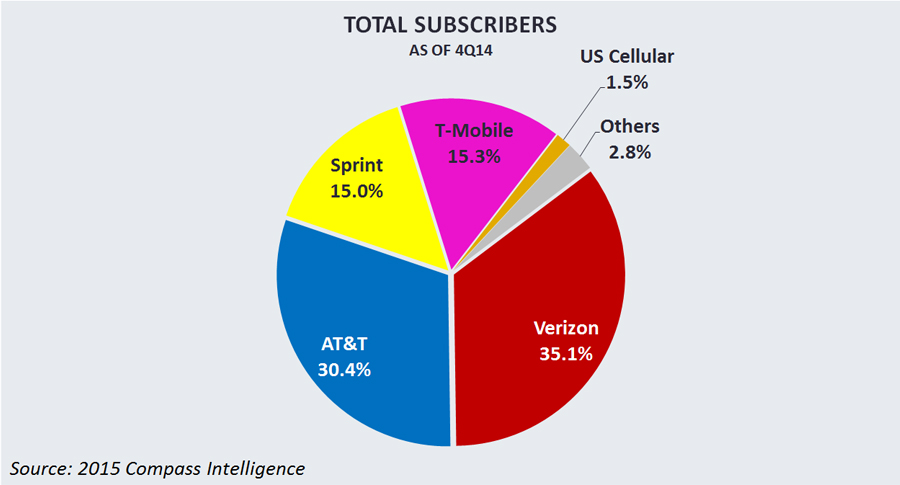
For tablets with data plans — and thus excluding Wi-Fi only variants — Compass Intelligence released numbers for the five largest wireless carriers from last year. More than 19 million tablets were sold with wireless activations in 2014 according to the information. For overall tablet numbers it should come as no surprise to see Verizon and AT&T lead the way, with 35.1% and 30.4% of the activations respectively. Sprint and T-Mobile are nearly tied, with U.S. Cellular and other companies rounding out the chart.

carrier-total-subs

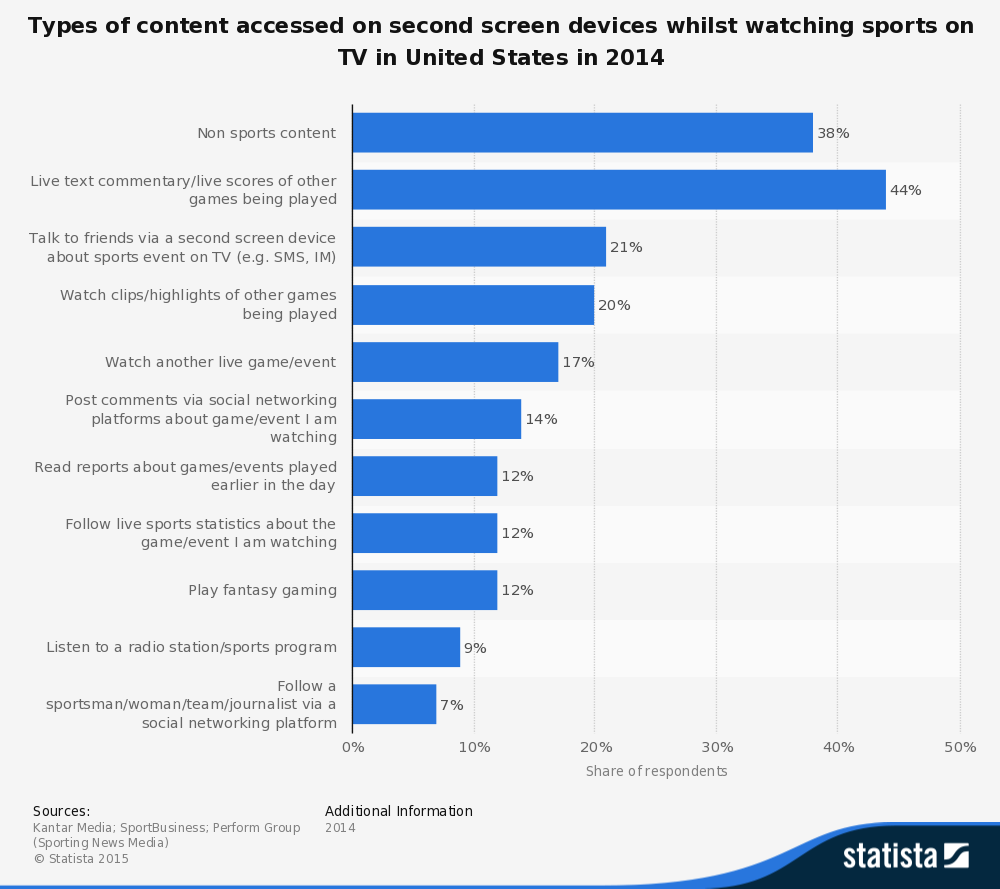
Tablets have certainly found more than just a niche fan base over the years and their sales as well as usage numbers have climbed. Sports leagues and networks have taken notice, particularly as the second screening experience grows more popular. Statista released a survey conducted about second screening in June of last year. A reported 44% of sports fans utilized another screen last year for live scores of other games currently being played, and 1-in-5 fans watched clips or highlights or was talking with a friend about the games. Somewhat surprisingly fewer than 1-in-7 claimed they utilized their screens for social networking or watching a separate live game.

statistic_id316658_types-of-content-on-second-screen-devices-whilst-watching-sports-on-tv-us-2014

Currently in the midst of March Madness, four games are slated today, however two games will overlap each other. Tip off times for 7:15 and 7:45 eastern as well as 9:45 and 10:17, thus ensuring those without multiple TV’s will be forced to either swap between channels or utilize a second screen. With baseball season just around the corner, games happen concurrently every day, though MLB.TV does allow watching four games at once with their picture-in-picture feature. Similarly, NFL Sunday Ticket allows the user to view eight games simultaneously

Presuming the tablet market continues to grow, something the trends suggest would be a safe assumption, count on seeing even more sports fans make the jump to second screening. Already broadcasts are inundated with suggested hashtags, plugs for apps and commercials displaying the best features of online subscriptions. Eventually sports broadcasts may reach the point where second screening is the norm.

(Header image via Digital Trends)

Canada Tells Citizens Not to Cut the Cord Quite Yet

Canada is looking to be a world leader in entertainment, and no, it isn’t hockey. Well, it could be hockey, as the beauty of the country’s recently announced cable plans leafs leaves all of the decisions to the customer. The Canadian Radio-Television and Telecommunications Commission (CRTC) claims next year Canadians will have the option of an entry level TV service starting at $20 per month, then an option to purchase individual channels from there. By December of next year, all of Canada is set to have “pick-and-pay” basis or in small packages available.

The vague wording on what “small packages” consists of is yet to be determined, however the CRTC will cap the basic package range from $20 to $25 (plus add-ons) compared to the cheapest current cable package at Rogers Communications goes for $40.48. Of course, much like Big Cable here in the United States, Rogers charges a one time activation fee (49.99), installation fee ($14.95) and renting or purchase fees of the equipment. No word on whether the new plans will have features such as high definition, DVR or any Video-On-Demand services either, which would almost certainly be a major a factor for many.

Take a look at the basic (read: no HD, no premium channels, etc.) packages available in my area for a single TV compared to what we know about Canada’s plans.

Price (Monthly) Extra Charges Installation Activation
Canada $20-$25 None N/A N/A
Charter $59.99 $6.99 $29.99 N/A
AT&T $29.99* None $99.99** $49.99**

*This is the price for the initial six months, then the price jumps to $65.00
**After speaking with an online representative, I was able to get both the install and activation fees waived

The mass appeal to an à la carte system is clear, though it could be nothing more than swapping deck chairs on the Titanic. For someone like me, one who roots for favorite sports teams outside of the local coverage, going back to cable doesn’t make sense. I am already paying monthly for Netflix as well as one time payments for MLB.TV, Fox Soccer 2 Go, Amazone Prime and MLS Live (plus various subscriptions to Twitch.TV) as well the soon to be launched HBO Now, do I really want another monthly bill for entertainment?

For years my parents, friends and others have complained and expressed frustration about paying for dozens (f not hundreds) of channels they’ll never watch. Canada is taking a step for people to choose what they want, but many, myself included, already know — and have — what we want. If I lived in Canada, I’m not sure this package would be for me, however I realize I am on the fringe for many things entertainment.

(Header image via Wikipedia)

YouTube To Launch Subscription-Based Service

According to CNBC, YouTube could be on the brink of a major makeover for companies and content creators. The service would offer a subscription price to eliminate advertisements in videos. Google — which bought out YouTube for $1.65 billion in 2006 — has been experimenting with a subscription based revenue model since 2013, though now it seems the service will launch full-scale in a matter of months.

The ad-free experimental model, starting as low as $0.99 per month, currently features partnerships with National Geographic, PGA, UFC and 26 other channels. After two months the service wasn’t quite what some hoped, at least according to National Geographic’s senior vice president of global strategy. On top of the channels and content, YouTube is also launching their Music Key service in order to bring ad-free content specifically to music videos.

As more and more people are finding ways around the pre-roll and in-video ads — the Ad Block Plus Chrome extension claims over 50 million users — it will be curious to see what demographic this new YouTube service is aimed at. As someone who has cut the cord, I rely on streaming services for information, entertainment and the like. While I turn off ABP for certain websites and for Twitch.TV, for the vast majority of my computer based browsing, I leave it on.

The sheer volume of content on YouTube is staggering: over one billion active users upload 300 hours of content is uploaded every minute. Despite sporting an impressive 50% advert revenue going back to the partners on YouTube, this new subscription-based model for generating revenue could be the cure for people like myself who use third-party options to avoid ads. I certainly can’t speak for everyone using ABP or a similar service, but advertisements are a matter of being an inconvenience and for me, just being impatient.

I for one, welcome our new subscription based YouTube overlords.

(Header image via YouTube)