Archive for online

Behind the Code: Ken Pomeroy

Behind the Code is an interview series centered around the sports-related web sites we use every day.

For many college basketball fans, Ken Pomeroy’s kenpom.com is the first–and often the last–word in statistics and analytics.

Pomeroy’s efficiency-based team ratings have received praise from the likes of Nate Silver and have led Pomeroy to consulting opportunities for several college and professional teams. Yet they only scratch the surface of the info “KenPom” provides, including player comparisons, posts on college basketball trends, and preseason game-by-game projections — the latter of which just went live for 2015-16.

TechGraphs writer Brice Russ spoke recently with Pomeroy about what’s new and what’s next for kenpom.com.

Brice Russ: What’s new on KenPom.com for the 2015-16 season? It seems like every fall, there’s another half-dozen features on the site. What should we be looking for this time around?

Ken Pomeroy: The main offseason addition was expanding the player stats to break out performance against different levels of competition.
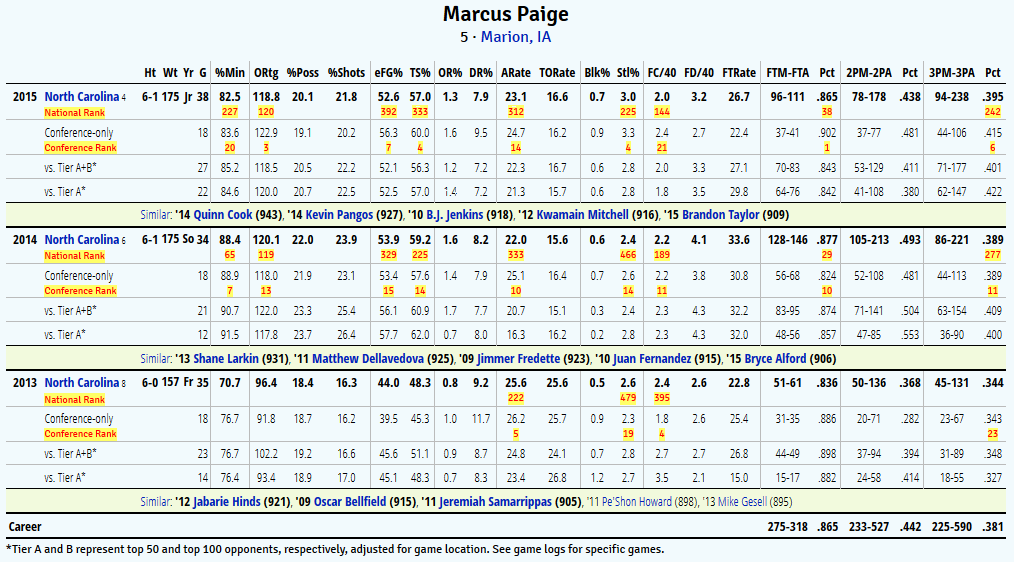
Marcus Paige stats
Marcus Paige career stats breakdown by level of competition

That is an extension of the conference-only player stats and minutes tracker that I added towards the end of last season. I’ve added some search boxes to the navigation bar so people can find teams and coaches a little more quickly.

There are some other things on the burner for this season, but they’ll be surprises for people when they appear. I’m usually reluctant to call my shots because I don’t want to over-promise something.

BR: What’s your motivation when you’re adding new stats to KenPom? Are you looking to incorporate what you think will be most popular? Most useful? Anything you’ve added as a result of your consulting work?

KP: There’s definitely a selfish motive. Usually, I’m thinking of things that I’d like to see, but that’s also consistent with doing something that will be useful to an audience interested in analytics.

I’m not opposed to adding what I’d call trivial stats that have little analytical value. I mean, I have team free throw percentage defense on the site. But I try to avoid adding trivial stats that might be misconstrued as useful. I always get a few requests for home/road splits and largely the differences in home/road performance over the course of the brief college hoops season is noise and not useful from a predictive standpoint, so that’s why they aren’t on the site.

BR: KenPom is unquestionably one of the oldest and most well-established sports analytics sites around, particularly in the basketball arena.

How have you seen the perception and role of analytics change in sports over the years, especially in the public eye? Has the field grown more competitive, or does it feel like there’s still plenty of ground for everyone to cover?

KP: It’s definitely more accepted than it was a decade ago. A lot more people understand the concept and utility of points per possession. But then again, almost every broadcaster and coach still cites regular field goal percentage to measure shooting accuracy, so it’s not like there has been a revolution.

As far as competition, there are certainly more people coming out of college with the goal of working in sports analytics. But it seems like most of the people interested in basketball gravitate to the NBA level, where the data is so much more granular and there are fewer teams to cover.

BR: One of the biggest stories for the upcoming season is the introduction of the new 30-second shot clock. Presumably, this will lead to an increase in tempo, but how else do you expect this to change the game from a metrics standpoint?

You took a brief look at the clock before it was tested in last year’s NIT; have you had a chance to look at the data since then?

KP: I haven’t looked at it any further, although my series of blog posts over the summer was partly inspired by trying to develop a theoretical framework to figure out how we got to this point. And what I found was some evidence that the offense deserves a good chunk of the blame for the slowing of the game.

The cool thing is that with 200+ games during the opening weekend we’ll get a real good idea of the impact of the clock (and the expanded charge circle) fairly quickly.

BR: 2015 will mark the fifth season that team-level KenPom data has gone behind the paywall. Is it fair to say this has been a successful experiment at this point? Any data or trends you can provide about subscriptions?

KP: It’s worked out well. I had a choice between appealing to a mass audience and blasting people with ads, or putting up the paywall and keeping the site clean and limiting the audience to folks who really wanted a source for advanced stats.

BR: What’s next?

KP: Usually the events of the season dictate this, so it’s difficult to say.  But I’m sure it won’t take long for something interesting to happen.

Thanks to Ken for speaking with us! You can follow Ken on Twitter at @kenpomeroy and, of course, at kenpom.com.

TechGraphs Report: On Deck Sports and Technology Conference

Earlier this week, NYC’s Bohemian National Hall played host to hundreds of sports executives, entrepreneurs, and others looking to learn about the very latest in sports technology. Since 2013, the On Deck Sports and Technology Conference (organized and presented by SeatGeek) has provided a forum to showcase what products are “on deck” to help fans follow, analyze, and participate in sports.

On Deck has a slight bent towards sports startups, so a decent amount of the conference was geared more towards raising capital, scaling businesses, etc. Still, there were plenty of fascinating talks, panels and interviews for anyone interested in straight sports tech.

Statcast And Beyond

Possibly the most entertaining talk of the day was Joe Inzerillo’s (CTO, MLBAM) update on MLB’s Statcast, which is finally getting its moment in the sun this season. For those who needed a refresher on how Statcast operates, Inzerillo discussed its missile-technology radar system, its stereoscopically-placed cameras, and how these allow each Major League ballpark to track the movements of every player on the field (plus the ball) at any given time.

Once Statcast has this information, as Inzerillo pointed out, it can then provide real-time data on pitch velocity (actual and perceived), player velocity and reaction time, and a horde of other quantitative metrics, plus more advanced data on a 12-second delay, like fielding route efficiency. This data is just inherently cool (as you likely know if you’ve seen a Statcast-enhanced game or highlight on television), but it’s also already being used to both question and confirm existing baseball strategies.

For an example of the latter, Inzerillo looked at the fallacy of sliding into first using Statcast to plot Eric Hosmer’s 1B slide in Game 7 of the last World Series. Hosmer hit a peak speed of 20.9 MPH before sliding and being out by less than a tenth of a second. If he had just kept running, Statcast found, he would have been safe by nearly a foot. Statcast is already getting noticed by clubs, and even players — batters like to talk smack, apparently, over who has the highest exit velocity.

During questions, Inzerillo was slightly cautious about committing to the future of Statcast, but he did mention that minor league stadiums were a natural next step, and that there was plenty of work being done on developing new metrics. Statcast already tracks ‘defensive range’ for fielders, for example, but since a player doesn’t travel the same speed in every direction, there’s a need to find the more amorphous ‘effective defensive range’ and how it changes–such as during defensive shifts.

On the football side of things, Sportradar’s Tom Masterman talked about the NFL’s NGS (Next Gen Stats) platform, which is collecting data on every single game in 2015 to track, analyze, and visualize how players are moving on the field. NGS is already being distributed to clubs, media, and health and safety personnel; the long-term goal is to have X,Y,Z coordinates for every player and official, plus the ball.

Go Bucks

On Deck’s attendees weren’t just league officials and startup managers–the conference started with a live interview of Wes Edens, who became co-owner of the NBA’s Milwaukee Bucks in 2014. Much of the conversation focused on the new Bucks arena, which was being voted on by the Milwaukee city council literally as the interview was ongoing. As it’s currently planned, the presently-unnamed arena will focus heavily on keeping fans digitally connected — giving attendees plenty of WiFi, for example. At the same time, Edens noted, they want to avoid fans using technology to become distracted from the game going on in front of them. (Edens used the phrase “Instagram culture”, specifically, though he noted that he himself has had these sorts of problems before.)

Edens was similarly balanced when the discussion turned to analytics. One of the first things Edens did after buying the Bucks was to build their analytics program — bringing on employees, consultants and even discussing methodologies with other owners. There’s definitely a “golden age” of analytics in basketball going on.  Edens even thinks the NBA will end up surpassing the MLB as the leader in sports technology. But when he was asked about how the players feel?

“It’s a good question,” Edens replied. “There’s definitely lines that can be crossed” with having too much data being made public, at least when it can affect the privacy of the players (such as rest/injury issues).

Edens also briefly discussed the role of the referees and the potential benefits of replay and “the new center across the river“. Could we see yet more referee technology, even an Oculus Rift-type headset for NBA officials, in the future? “Totally possible.”

Era of Mobility

When it came time to look at how fans themselves were interacting with sports, technologically, it became clear that mobile is “it.” In that panel about growing sports startups I mentioned earlier, representatives from SeatGeek, FanDuel and Krossover all praised the importance of the mobile web for their companies–SeatGeek’s rep described it as a “tale of two companies”, pre- and post-mobile, and Krossover’s founder mentioned they’re considering dumping their web app altogether in lieu of just being on smartphones and tablets. When Yahoo Sports’ VP of engineering presented a chart showing their fantasy football traffic from this season’s Week 1, the fraction of non-mobile data was a pretty small sliver at the top.

Yahoo fantasy data graph
Trust me, it’s there.

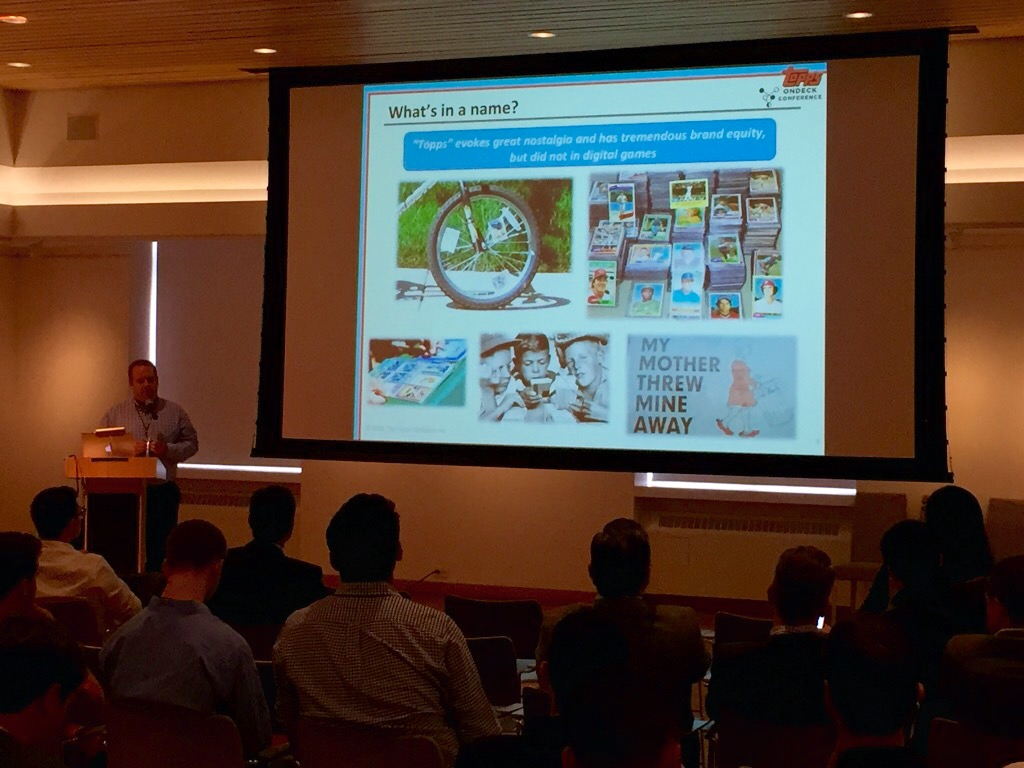
Even companies you might never expect to get in the mobile game are joining and succeeding. Jeremy Strauser had 20 years of gaming experience at EA Sports and Zynga before joining one of the most loved and enduring brands in the sports industry, Topps. Yep, they’re digital playing cards.

Topps first got into the digital game 4 years ago and how has three top-selling sports card apps, plus a newly launched Star Wars-themed set. Why should you be interested in buying trading cards on your phone? One starting point is the capabilities the digital platform provides — literally hundreds of thousands of different designs, the ability to create all manner of rare and unique cards, etc.

Topps is also rolling out a daily fantasy sports feature (DFS was a major topic of conversation at On Deck) that allows you to compete using the players in your card deck and swapping them in and out in real time as they go up to pitch or bat. It probably doesn’t hurt, either, that they won’t take up space under your bed or get thrown out by your mom when you’re away at college.

Topps conference talk

Coming To Your Hometown

If you want to look for the next wave of sports technology, though, look to your neighborhood.

Rather than providing new tools or analytics for MLB, the NFL or the NBA, the newest sports apps want to help you participate in sports in your own town. On Deck wrapped up with a “Startup Pitch Contest” a la Shark Tank where teams had four minutes to present their groundbreaking app to a group of judges. The six competitors included:

  • Wooter – a search engine for finding and joining sports and activities like local rec leagues. Wooter provides profiles for leagues looking to form teams, players looking to join them, and the tools to process payment and set up other logistics.
  • NextPlay – helping youth coaches conduct tryouts and league drafts. For $15/month, instead of taking a stopwatch, a bunch of handwritten notes, and an Excel spreadsheet to put together youth rosters, NextPlay handles all the data collection and analytics itself. Their beta has been used by “a couple hundred organizations” and over 10,000 athletes.
  • ScoreStream – filling a gap in local journalism by crowdsourcing reports on high school sports.

With a really impressive presentation, broad coverage (10,300 HS games covered last week alone) and the #1 iOS app for high school sports, I really thought Scorestream would walk away with the prize, but it ended up going to…

  • SidelineSwap, a P2P marketplace for sporting goods. SidelineSwap has over 43,000 registered users who’re interested in trading out sporting gear just collecting dust in their basement or garage. They’re working on building partnerships with youth organizations and promoting used college-branded material, which should play very well with their chief audience of high school students.

On the whole, On Deck was a whirlwind experience for learning about cutting-edge sports tech. This report only covers part of everything I caught there. Watch for further updates and profiles soon!


GameOn Releases Sports Social Networking App

In a continued effort to personalize and curate the world of sports to each person’s preference, the GameOn app — developed by GameOn Technologies — recently secured funding for additional expansion across the iOS and Android platforms. Among the backers who helped raise 1.5 million dollars was Hall of Fame quarterback Joe Montana as well as West Indian cricket player Dwayne Bravo. In addition to Montana and Brave a number of other athletes have signed on to give exclusive content — ranging from USWNT striker Sydney Leroux, former USMNT midfielder Cobi Jones and current Denver Broncos safety T.J. Ward.

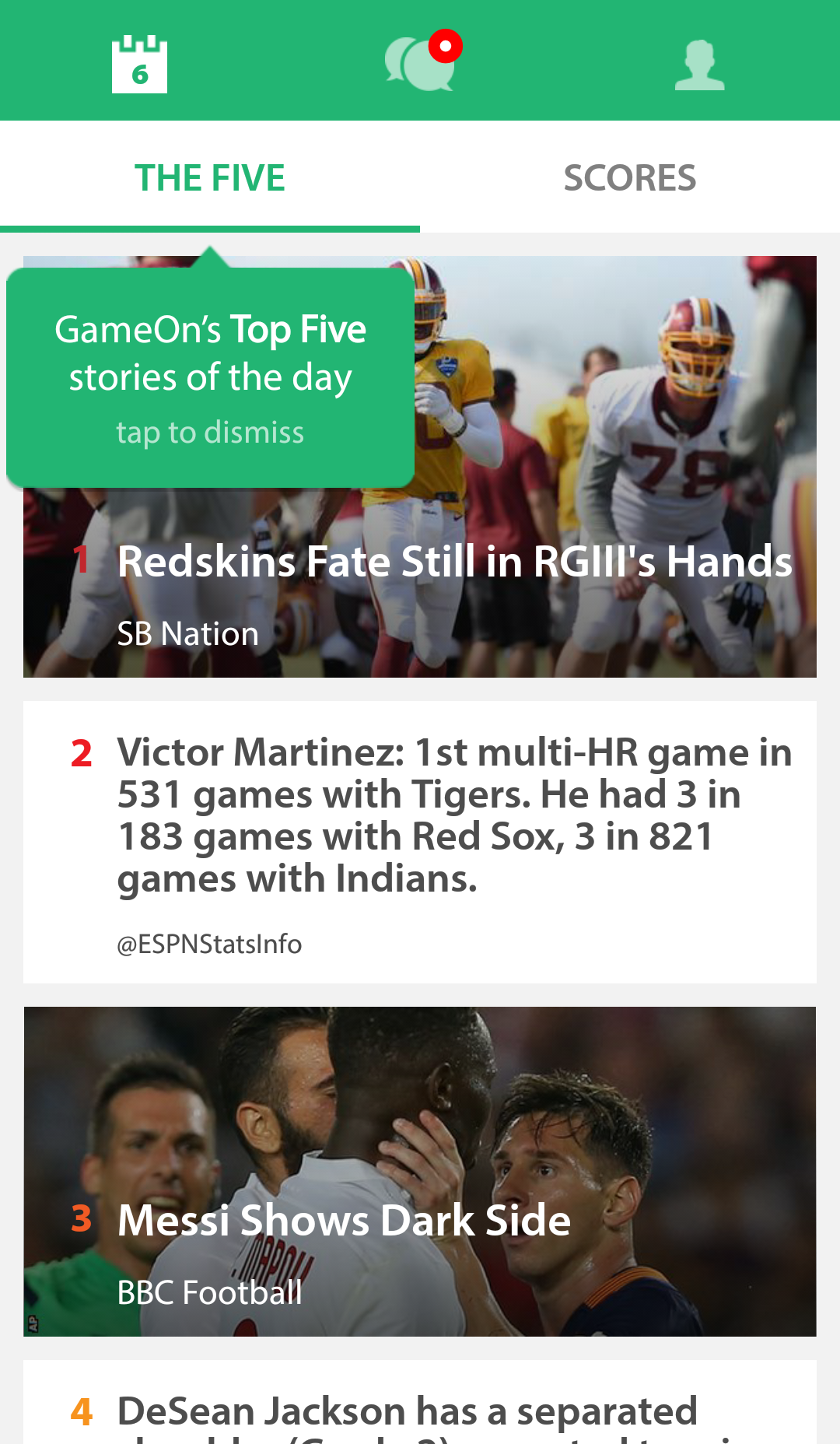
The app itself ties news feeds from other sources in one convenient place called The Five. Think of The Five like an aggregator or RSS for all sports.

gameonthefive1

From browsing GameOn — drawing articles and tweets ESPN, Grantland, SB Nation, BBC, CBS Sports and others, — there is plenty of reading material for the major sports teams. Unfortunately there is not a way to customize what appears on The Five, it seems to pick whichever articles or tweets are currently getting the most attention. The good news is just about anything else can be tweaked to show which teams you’d like to follow.

It’s a personal preference, but when opening a story from The Five, it does not give the option to open in Chrome — I don’t have an iOS device to see if Safari was an option — as tapping a link simply opens up the story within GameOn. It isn’t a hindrance or particularly inconvenient, I just like opening links in new tabs and windows. Call it a hangover effect from years of opening links in Chrome with my Mouse3 button.

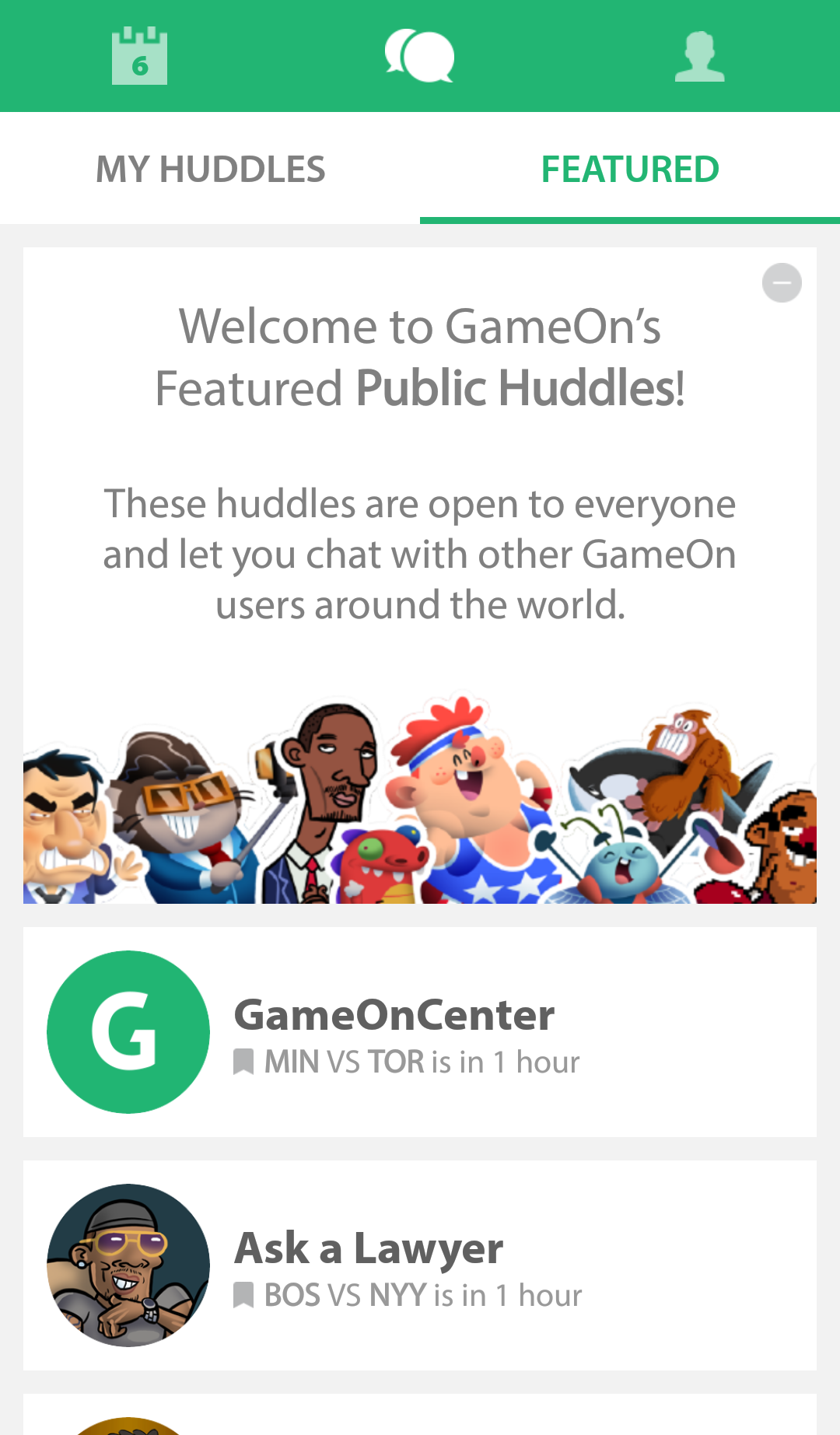
In addition to specific teams and featured articles, there are individual “Featured Public Huddles” where fans can join and debate with each other, related links are posted, and a host of emoji-like stickers can be used.

gameonfeaturedhuddle
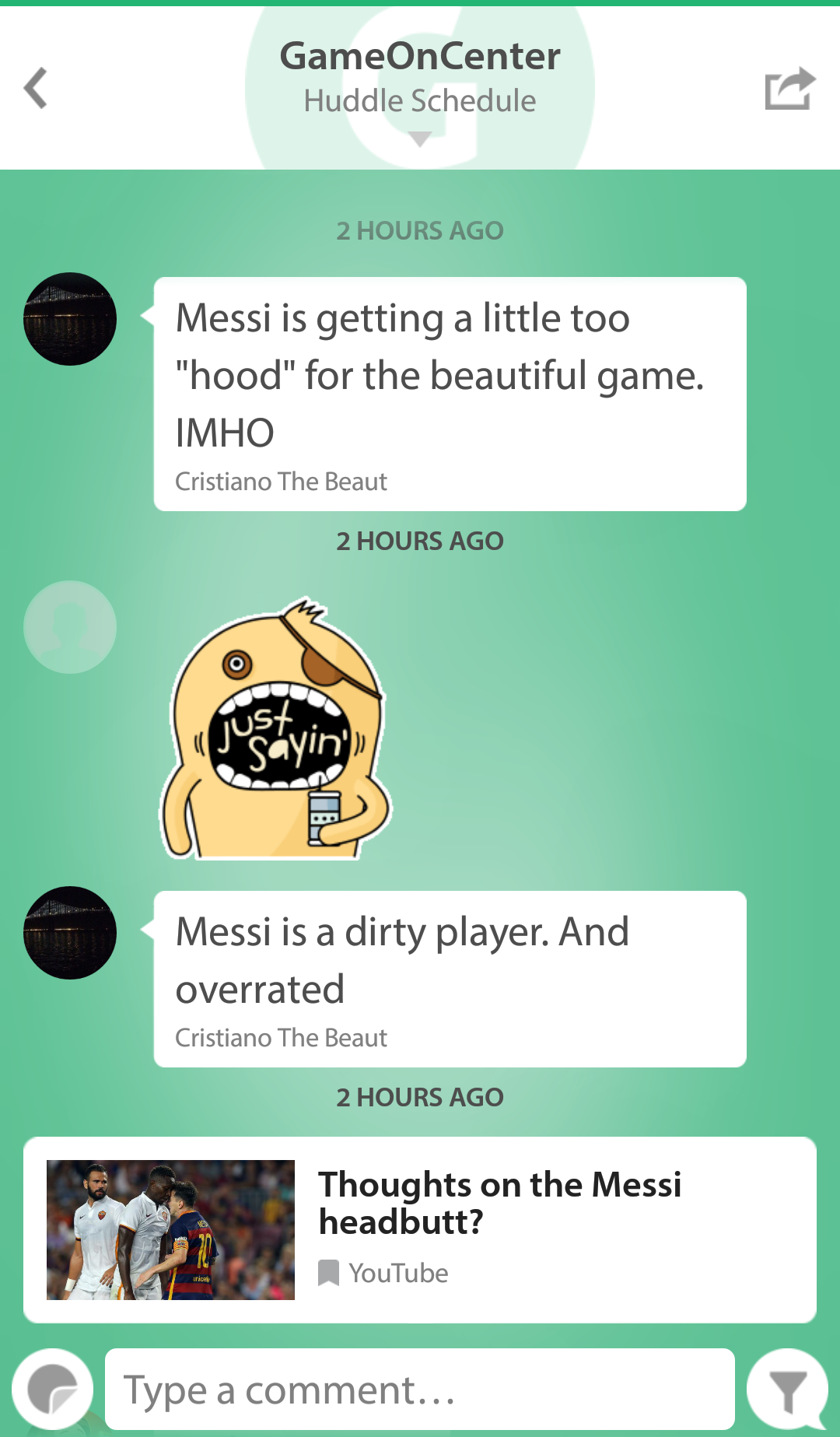
For an example of a what can only be assumed to be a clearly unbiased opinion, user Cristiano The Beaut (presumably named for Real Madrid star Cristiano Ronaldo) calls Lionel Messi a “dirty and overrated player.” I’d recommend a spoon to take all those grains of salt with that opinion.

gameonfanbanter

Huddles is just the name GameOn gives team or game threads, and in addition to the public “Featured” ones, any user can create private Huddles as well.

As I find myself more and more interested in following the German soccer league, the Bundesliga, I decided to create a pair of Huddles for their upcoming fixtures against Hoffenheim and Hannover. From my phonebook or friends within the GameOn app, I can invite people to join in the Huddle.

gameonprivatehuddle

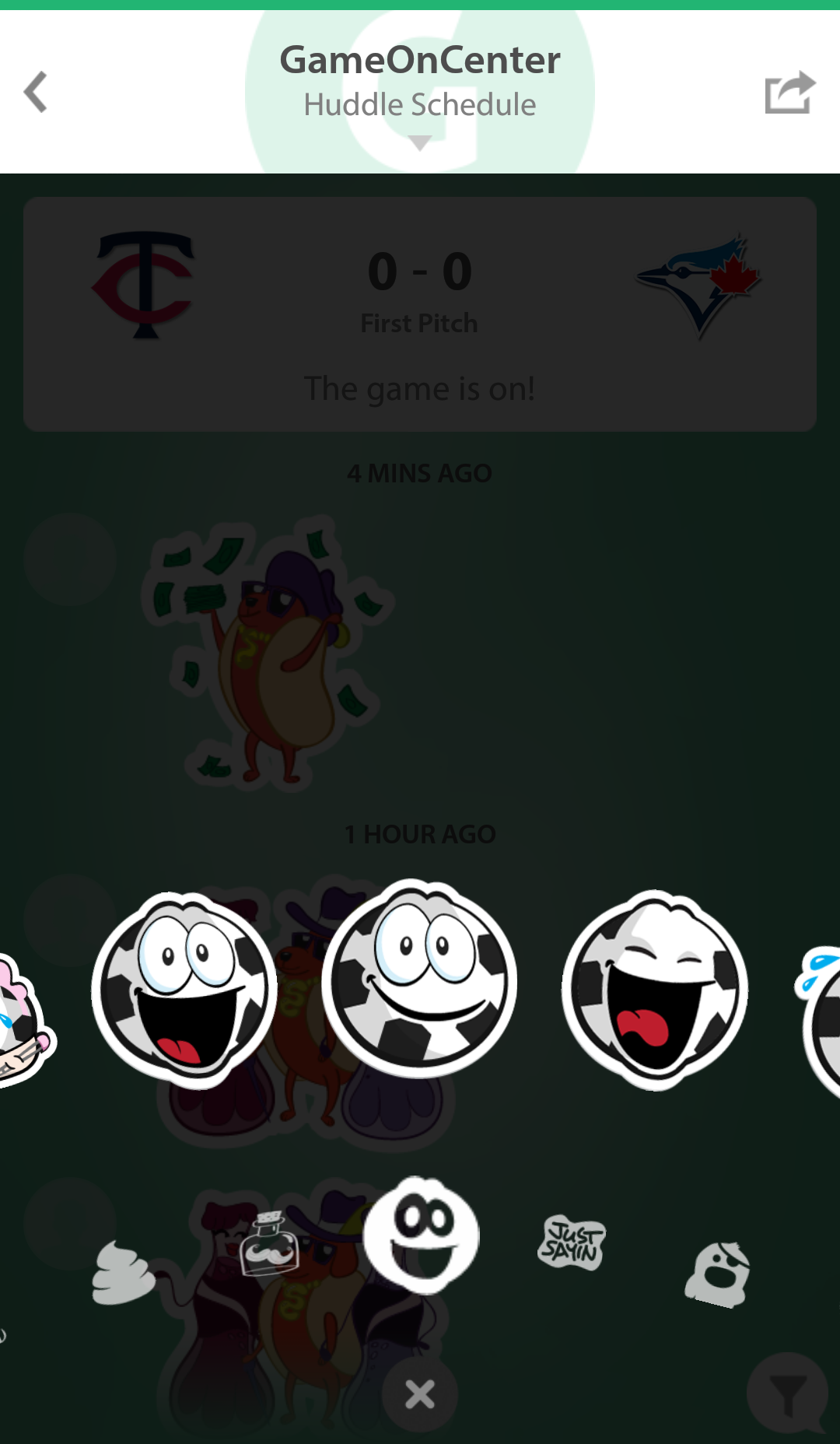
The stickers — there are hundreds if not thousands of them — are a unique feature and I really like the multi-site integration and aggregate feed. But really, the stickers are awesome.

gameonstickers

Even with the fun and smack-talk-integration the stickers offer, GameOn really doesn’t differentiate itself from other sports apps, specifically Fancred. Additionally, Twitter’s influence on the sports social network scene, despite not being marketed as a sports-centric app, looks as strong as ever given numbers from their second quarter of this year. According to the financial report, Twitter increased their average active monthly user base from 308 million in Q2 2014 to 316 million Q2 2015. GameOn has a solid beginning, however with a modest 50,000 or so downloads in its first year of Beta testing, it has a long way to go to reach the top of the sports social network world.


MLB Network Announces New Streaming Option

Major League Baseball gets a lot things right. Their Advanced Media department, the group in control of MLB.com and MLB.TV, have now updated their At-Bat app. In addition to watching games — which are still subject to local blackouts — the app now allows for constant viewing of the MLB Network’s round the clock channel. Unfortunately unlike Pinocchio, there remain strings attached to this deal.

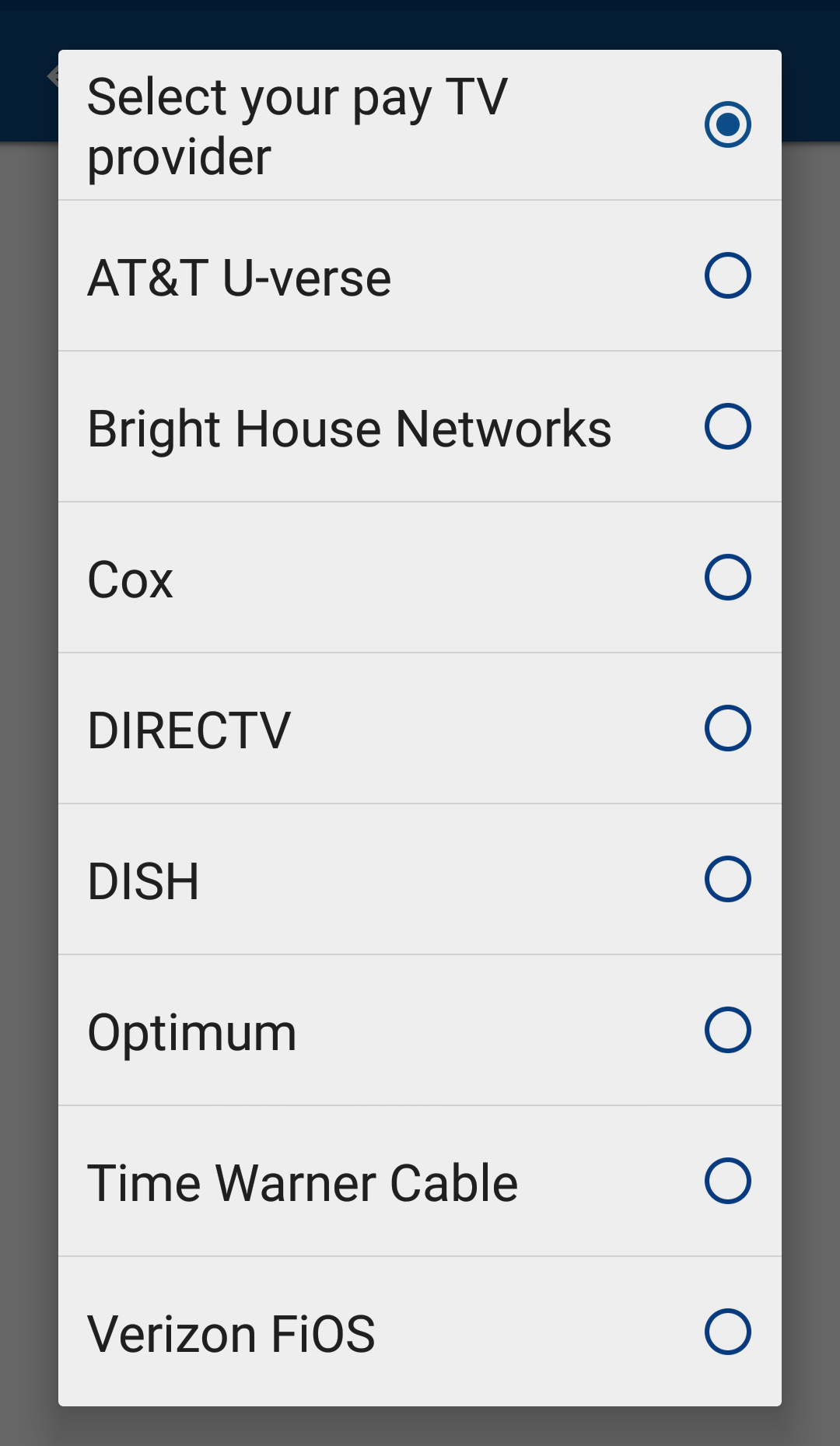
A qualifying cable subscription is required to view the MLB Network live stream. The stream is available on iOS and Android phones or tablets as well as Mac and PCs. As noted by the crew over at Awful Announcing, the initial group of cable providers who have agreed to support the stream does not include Comcast. In addition to missing what Wikipedia calls the number one (by subscriber count) provider in the United States, those who use Charter Communications — number six by subscriber count — such as myself, are also left out.

After logging into my app, I was sad to see I was one of the million of baseball fans left out of the ability to stream the show.

mlbapp

The upshot is this means people on the go (or at work) have the option to view MLB Network shows, interviews and even out-of-market games while away from their televisions. Perhaps even more importantly is the inclusion of playoff and preseason games. Being able to catch a spring training game after a long winter or watching a potential series-defining game when not at home and without paying for any extra add-ons is a great move for baseball.

Last season MLB Network claimed two playoff games, Game 2 of the NLDS between the Dodgers and the Cardinals and Game 3 of the NLDS with the Nationals and Giants. In 2013 there were also two DS games shown, one from the NL and another from the AL. The same format of MLB Network getting two DS games stretches back to 2012. Given that MLB, ESPN, Fox and TBS came to an eight-year, $12.4 billion broadcast agreement that runs through 201, count on continuing to be able to see at least two playoff games per year via MLB Network’s online stream.

Even with the blackouts and the restrictions due to cable companies, this 24/7 streaming of a major sport offering represents a first in the world of sports. Yes, the NBA, NHL and NFL all have their own channels however none are simulcast in the same way MLB Network is. This move seems like a way to meet the old crowd and the new generation in the middle. More traditional TV subscribers may not find a ton of use for it and dedicated cord cutters will likely wish MLB Network didn’t require a cable package. Of course, with such a lukewarm offering, it’s hard to imagine this move generating a lasting effect. Perhaps as the NFL embraces the online streaming realm and as more and more people cut the cord, eventually a non-subscription version may arrive at some point.


Slingbox Service Heads Across the Pond

For those frustrated in the United Kingdom regarding the Sky TV’s Go and Go Extra no longer being watchable on Google Chrome, help has arrived in the form of Slingbox’s M1 now being available throughout Europe. Via press release, Slingbox announced their set-top box system is now being sold for £129.99 or €199.99 and boasts being compatible with every cable and satellite provider and 100 percent channel availability in their M1 video.

While this still requires a cable subscription, Slingbox does not require any monthly fees to watch sports and shows on the go. That their computer and laptop interface is compatible with Chrome (as well as Safari and Firefox) is a major chip in Slingbox’s favor. Sky Go doesn’t cost anything extra for eligible cable subscriptions, however features such as international viewing, downloading or watching downloaded content are limited to the Sky Go Extra package, costing an additional £5 per month. Currently Sky Go and Extra are limited to iOS and Android whereas the M1 works with iOS, Android, Windows Phone and Kindle devices.

Slingbox is looking to fill what appears to be a self-created void created by Sky for many soccer fans throughout the UK. Given Sky — and to a lesser extent BT Sports — dominate the English Premier League broadcasting rights, it’s surprising to see a company refuse service on a web browser. Fans who can’t be in front their televisions could turn to Slingbox for their on-the-go needs. Senior VP and GM of Sling Media Michael Hawkey is counting on that and said of the latest market expansion:

Given its strong reception in the United States, we are excited to introduce the Slingbox M1 into the European market….With a Slingbox M1 that has been completely localised for customers, we’re delivering the most affordable Slingbox packed with the most robust set of features that we believe will significantly expand the mobile TV and video market.

If the M1 sells well enough and Sky finds many subscribers canceling their Sky Go Extra package, perhaps then the message will be clear: keep up to date with the consumer’s demands or you will lose money.

(Header image via Slingbox)

Even Professional Bull Riding is Getting into the Streaming Game

Last year’s Super Bowl being streamed online was a huge move for the big four — NFL, NBA, MLB and NHL — though the other sports have yet to cater to the streaming population. More fringe or niche leagues may be more willing to embrace the available technology as they attempt to grow their brands, or so it would seem within the ranks of the Professional Bull Riders. Last week PBR announced a partnership with the streaming company Flipps to showcase via pay-per-view their Ring of Honor: Unfinished Business event.

Earlier today via press release, Flipps posted additional details about the Ring of Honor stream. Set to take place on May 30, will consist of a three hour live broadcast of the various competitions with riders aiming to take home up to $160,000 in the winner-take-all formats. In order to view the event, a $29.95 price tag is attached, the same price to watch on Dish Network. Flipps CEO, Kosta Jordanov, said of the partnership with PBR:

PBR is the premiere bull riding organization in the world and we are honored to be able to elevate that content to new audiences through the Flipps platform.

Flipps, a free app available on iOS, Android, most SmartTVs and more, offers both free and PPV options for sports highlights, games and matches ranging from the ACC Digital Network to UFC Sports, the Golf Channel and dozens of others. The entertainment isn’t limited to sports coverage, though. Flipps is dedicated to bringing live coverage to their user base, and includes select programming from Showtime, music videos, plus dedicated genres for children and news. The channel selection also includes industry updates and videos from automotive, health and tech sources. With much of their content readily available for free, Flipps’ revenue comes from in-app ads and video ads, though given their impressive lineup, it is understandable. If you happen to be a bull riding fan who has cut the cord, this is mana from streaming heaven. For those who have dropped their cable packages but are not terrible enthusiastic about the PBR, Flipps has enough other options to be well worth a download.

(Header image via Doug Wertman)

Age Gaps In Preferred Media and Entertainment

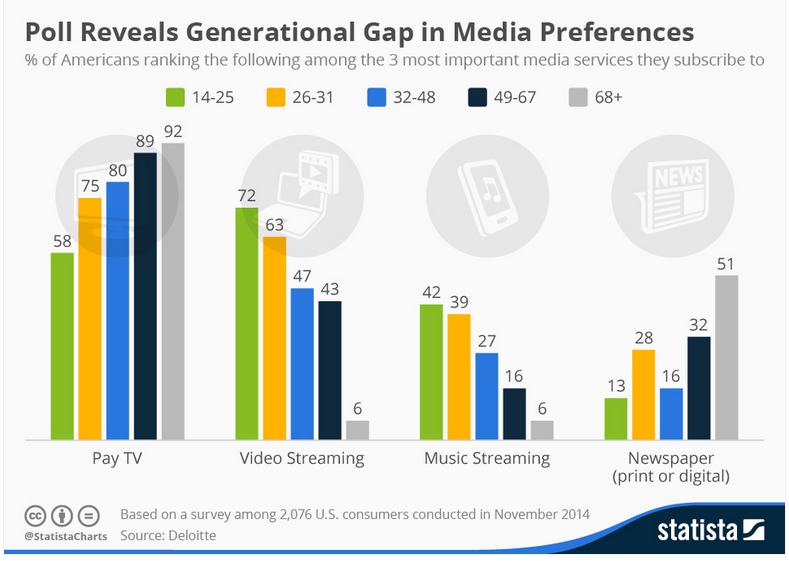
Media consumption, like most things, can be broken down into various age demographics. While the brackets tend to have somewhat arbitrary numbers attached to them  — does turning 26 years old really change the preferred method of watching your favorite TV shows? — they can serve as a platform for observation. With thanks to Statista and Deloitte, the gap between paid cable subscriptions and streaming services, among other things, for those in the United States can be clearly shown.

mediaconsumption

It comes as no real surprise to see the two younger age groups consume the least amount of television while also nabbing the top two spots in video streaming. Somewhat surprising is to see the leading millennials 26-31 age group absorbing more newspaper, be it digital or print, than their older 32-48 counterparts. With large number of online and subscriptions available, plus the Washington Post’s agreement with Kindle customers, perhaps the leading millennial group has come back around in a cyclical trend of newspaper reading.

The percentage of the different aged people who are content with their current cable TV subscription is closely tied with age. The youngest three groups are the least satisfied, reporting at most 55% saying they haven’t at least considered cutting the cord.

mediaconsumption1

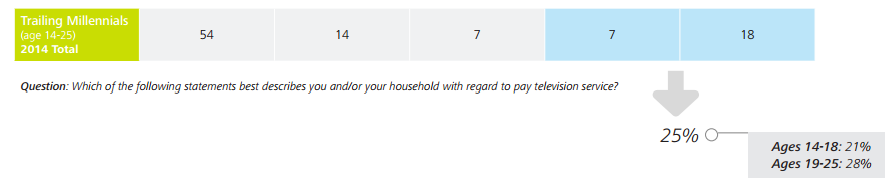
With no shortage of streaming or screencasting options — despite AppleTV’s recent insistence on requiring a cable package for CBS Sports, USA and NBC Sports — the number of current and potential cord cutters has increased over the years, particularly in the younger crowds. Already 25% of the polled age-14 through 25 group hasn’t paid for TV in over a year or have ended their cable subscription within 12 months. Within the age group another trend emerges as 28% of 19-25 year olds versus 21% of 14-18 year olds are calling themselves cord cutters.

mediaconsumption2

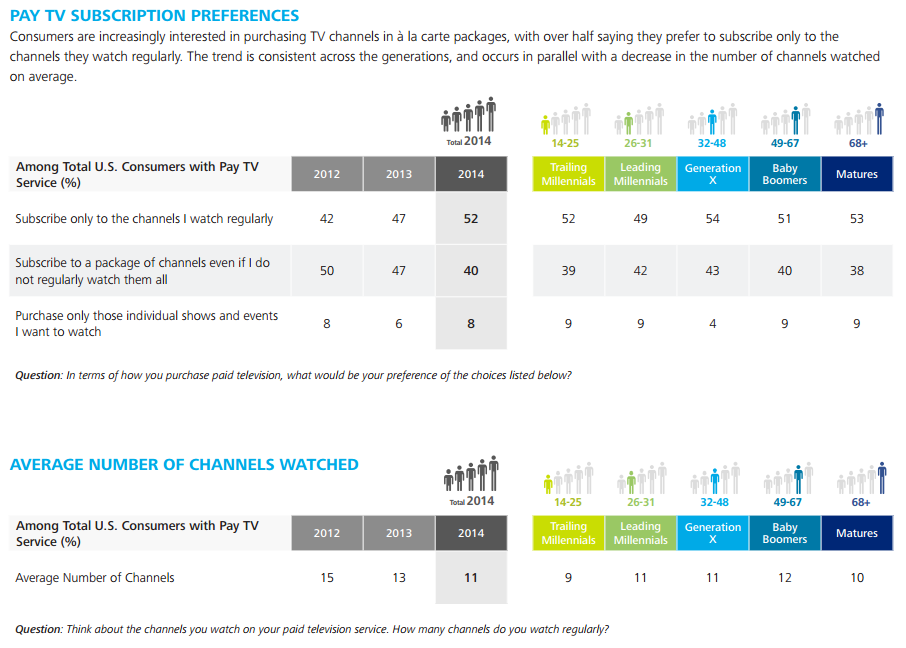
As the overall demand for TV changes, so does the desire for the way TV packages are sold. For the first time in the three year data set, more than 50% of the polled desire the ability to choose individual channels to watch. A three year decrease in the average number of channels watched further highlights the growing calls for an a la carte system. Canada is already developing a government mandate for cable companies to allow customers to choose individual channels after an initial package, though no legislative traction has gained ground in the U.S. yet.

mediaconsumption4

The numbers represent a clear trend in increased subscription based services and a desire to either ditch cable TV altogether or give it a serious overhaul in programming options. The people are applying pressure to big cable with their wallets as companies lose money with every person severing their TV packages. Still, and with apologies to Bon Jovi, at this point it feels like we’re livin’ on a prayer rather than being halfway there.

(Header image via Deloitte)

Microsoft Is Losing the Browser Battle, But the War Isn’t Over

Despite — or in some cases because of — Google’s insistence on pushing forward with new web browsing technologies, the tech giant continues to dominate the browser demographics for desktops as well as mobile phones and tablets. Not only has Chrome been on the rise for people at home, but also on the go. Via numbers from StatCounter Global Stats for mobile and tablets, only Chrome and to a much lesser extent the Android-based UC Browser and IE Mobile have increased their market shares since December 2012, the first month of collected data (click to embiggen).

browsermobile

For fellow computer users, and where many concerns stem from as Google phases out older technology, Chrome is even more dominant than on the mobile market. Again according to StatCounter GC, Chrome holds a remarkable 52.96% of the desktop browser market share. The gap between Chrome and everyone else has been widening since May of 2012, however Microsoft’s newest browser, Edge is looking to change things provided you’re running a Windows 10 machine.

browserdesktop

Edge doesn’t yet have a release date, but it something I’m eager to check out. It is seemingly looking to streamline the web, something I can get behind as separate tabs and locations for things like favorites, recently visited, current downloads and my reading list are all found in different areas in Chrome. Edge’s “Hub” will place them all in one easy to access area, however it isn’t all sunshine and rainbows with Microsoft’s latest browser. While the company is promising support for existing Chrome and Firefox extensions, that support will not be arriving until a later date. No official word on Silverlight being compatible with Edge, though recent history suggests it would be as all Windows 8 devices, including the tablet Surface Pro 3, are. It would be a stunning (though in my opinion welcome) reversal if Windows 10 and by extension Edge, was not Silverlight compatible. An introduction video to Edge can be found on YouTube.

Already some sports fans are finding themselves caught in the crossfire of the browser battles, specifically those looking to watch games on Sky TV, the preeminent broadcast of English Premier League soccer games in the United Kingdom. Sky — working with BT Sports — recently negotiated a new cable deal where Sky holds broadcast rights to 126 EPL matches per season, three times as many games as BT Sports will broadcast. On the Sky Go page there is a message regarding the incompatibility:

skygoUntil Edge is officially released — and probably for some time after — Chrome remains the undisputed browser champion. If Microsoft really does aim to “blur the line between consumption and creation” as the Edge preview video suggests, Windows 10 and Edge will drop Silverlight support and force broadcast companies to update to new and better technologies. What I don’t want to see is Edge allowing massive companies to sit on their hands at the cost of time and frustration for customers.

(Header image via Microsoft)

In the World of Live-Streaming, Some Creators are In, Others are Out

The live-stream app Meerkat went live on the Android market today. It’s still in Beta form, so things may not be perfect just yet, however as TechGraphs overlord David Temple explained over a month ago, Meerkat — and Periscope — both offer a new way to broadcast video.

Meerkat’s rules page doesn’t clearly define what you can or can’t stream as it is more of an outline of features.

meerkat

Once you jump into the legal area of their terms of use one can see the company strictly prohibits broadcasting copyrighted material — as do the content creators. HBO has already sent out takedown notices to people streaming the new Game of Thrones season via Meerkat, though perhaps the company is in the takedown notice mood. Other creative minds have gone the opposite way and are embracing Meerkat. Entertainers such as Jimmy Fallon, Snoop Dogg and Jim Gaffigan are sprinkled among Meerkat’s leader-board in order for them to be easily found. If you are so inclined to follow them on Meerkat, expect a push notification when they begin a new broadcast.

Within each cast there is a chat room for interaction between viewers and the broadcaster. One of the pillars of Meerkat is the ability to cast in the here and now, however the company has also added ability to schedule a future broadcast. The quality of the available casts seems to be dependent on the the strength of the caster’s internet connection. In my brief experiences those doing in an office or home setting have had a quality better than Vines — even with their new 720p broadcasts — however what I assumed to be 4G/LTE connections stuttered and froze from to time. Part of it could be the app is still in Beta or it could be that the heavy bandwidth required to stream is too taxing on user’s non-WiFi networks.

These are urky broadcasting rights waters we’ve waded into. From takedown notices, muted streams on Twitch.tv due to music rights to being wary of narcs taking you down in person for an illegally stream boxing match, the gap between producers and end-users appears to be widening.

(Header image via Meerkat)

NBCSports Teams Up With AppleTV and Roku

The landscape of television programming availability is constantly shifting. Though some networks and cable providers have been giving end users a difficult time, NBC is shifting more freedom towards their cable subscribers. The broadcast giant has now made their NBC Sports Live Extra app available on both AppleTV and Roku boxes, allowing those with qualified cable plans to view NBC covered sports ranging from the PGA Tour to English Premier League action.

Allison Moore, general manager and executive vice-president of TV Everywhere (NBC Universal) was quoted:

“This launch demonstrates NBC Sports’ ongoing commitment to provide added value to loyal fans who can now have more access to the live sporting events they love. Customers love our Apps on iPhone and iPad and we can’t wait for them to experience what we can offer on Apple TV.”

On the Roku side of things, Moore went on to say:

“As we have seen with the success of the NFL and the Olympic Games, real-time sports programming with a cross-device reach is a crown jewel in NBCUniversal’s ever-expanding TV Everywhere initiative.”

While these moves fail to address cord cutters, at least a major content provider is paying attention to the desires of their existing customers. It may not bring anyone who has already parted ways with their cable bill, but it just might keep a few more sports fans in the NBC fold. With other traditional content companies attempting to embrace new broadcast media, namely Cablevision’s recent partnerships with Hulu and HBO Now, it appears as though the old dogs are trying to learn new tricks.

(Header image via Roku)