Archive for Racing

An Update on Drones in Sports

Drones racing each other at breakneck speeds through an abandoned industrial complex, controlled through VR goggles that broadcast a first-person view simultaneously to the operators and fans alike.

This may seem futuristic, but it was actually one of the most imminent ideas recently discussed in a special panel dedicated to “Drones In Sports”. At last week’s On Deck Sports and Technology Conference, three drone sport experts came together to talk about the potential–and the potential pitfalls–that drones may provide for the future of sports technology.

As one panelist put it, drones in sports are currently “kind of a Wild West opportunity”, and Matt Higgins, CEO of RSE Ventures and vice-chairman of the Miami Dolphins, kicked the panel off with the example of the Drone Racing League. Earlier this year, the DRL started informally as groups of hobbyists flying drones through parking garages and abandoned buildings, but plans are in the works to turn it into a full-fledged sport, pitting sponsored teams of self-taught drone specialists against ex-military UAV pilots.

The DRL held their first two test flights earlier this year in the New York metro area, and plans to release their first official video “in the next few weeks.” When Higgins (an investor in the DRL) was asked how to make this a spectator sport, though, he responded candidly, “I have no clue.” He expects that streaming services like Twitch and Meerkat will be critical in building fan engagement with drone racing — and there certainly aren’t a lack of ideas to spice the sport up, as Bradley Woodrum outlined earlier this year.

Companies are also thinking about how drones can be used to improve the experience for players and fans in more traditional sports. In the eyes of the panelists, the “low-hanging fruit” was using drones to provide new angles for gameplay and practice, but the Amazon “drone-delivery” model was also a clear influence. The possibilities bantered about by the panel seemed limitless. Dispatching drones on golf courses for tee-side food delivery, handing out tickets with drones during games, the drone t-shirt cannon…

…wait a second, “the drone t-shirt cannon”?

It’s an undeniably cool idea, but taking a few seconds to visualize an unmanned aerial vehicle launching anything at fans may remind you that drones still face a number of psychological (and legal) obstacles. Eben Novy-Williams (a reporter for Bloomberg and the panel’s moderator) noted, as one example, that he was at a recent triathlon where a drone filming at the finish line elicited divided reactions–half the audience loved it, but the other half was clearly uncomfortable.

Chris Proudlove (an aerospace insurance expert with Global Aerospace) agreed that “we’re not quite there” when it comes to drones flying over crowds and that we need to “build a public sense that drones will be operated safely”, but that at the same time we don’t want to overstate the risk. The top concern of Proudlove’s clients when discussing drones was “invasion of privacy,” but he predicted this would be “moot” in less than 10 years. We’ve already become accustomed to ubiquitous smartphones that record video; from a certain perspective, drones aren’t terribly novel, just an extension of technology. The rest of the panel was even more bullish about the long-term prospects of us welcoming our new drone overlords.

But there’s still a lot to be done to make drones seem — and be — safer. Chris described geofencing technology to keep drones in and out of certain locations, such as ‘within the stadium, but at least 20 meters from the stands’, and better use of parachutes and other physical features. (Many of us probably remember the recent drone crash during the 2015 tennis U.S. Open, but the panelists were also well-aware of the 1979 mishap where a lawnmower-shaped model plane killed a fan during halftime at a Jets-Patriots game.) Chris also suggested that regulations distinguishing ‘micro-drones’ (of less than 2 pounds) and ‘the big ones’ could make drone safety easier.

In fact, the panel generally agreed that regulatory issues were the primary roadblock currently facing drones in sports. Right now, commercial use of drones (in the US) is illegal except when exemptions are provided by the FAA, and this is expected to remain the status quo until the FAA issues a full ruling on drones sometime in 2017. Until then, companies will need to build their usage of drones on a case-by-case basis. (Late last week, for example, the news broke that the FAA had allowed the NFL an exemption for drone usage — but only in empty stadiums.)

In short, it looks like we haven’t yet reached a drone-filled future of sport, but that day is likely drawing nigh. When Eben asked the panel for a bold “five-year prediction,” panelist Jon Ollwerther suggested that by 2020, we’d see drones being used in “every major American sport”– even down to the high school level.

NBC’s Belmont Stakes Streaming Coverage: Still Tied to the Whipping Post?

The 147th running of the Belmont Stakes, where American Pharoah will attempt to beat increasingly long odds and become the first Triple Crown winner since Affirmed in 1978, airs this Saturday, June 6, at 6:50 p.m. The sport of kings still feels royally restrictive– no non-folding or folding furniture allowed on the premises?— in many respects, but, for mere spectators, a glimpse at history is increasingly accessible.

NBC is providing major-network television coverage of the race, primarily through its cable sports channel, NBCSN, beginning on Friday afternoon. For the main event, the action switches to NBC itself beginning at 4:30 p.m. on Saturday. In a new development, NBC also is offering live radio coverage of the race.

 For streamers, NBC’s television content will be available live through its NBC Sports Live Extra service. While there is no additional cost to use NBC Live Extra, it has a number of restrictions. Most critically, it is not available without a cable or satellite subscription, and it is not available outside the United States or its territories. If you’re still reading, there are free Apple and Android mobile apps, and the service is available for Roku and Apple TV, but all of these still require a cable or satellite subscription.

One sign that NBC may be loosening the reins, however slightly, on cable and satellite providers’ control of content was their decision to stream Wednesday’s draw, the event that determines the horses’ positions in the starting gate, live on Periscope. Comments by NBC Sports Group Chief Marketing Officer John Miller (not to be confused with NBC Sports Group President of Programming Jon Miller) suggest that NBC does not see the free, Twitter-based streaming technology as a part of the network’s core services going forward, however. Miller described the draw as “not an event that [ordinarily] would be covered” and the Periscope broadcast of it as “promotional.” Although Belmont Park allows fans to bring mobile telephones to the Belmont Stakes (after “screening”), Miller does not see potential unofficial Periscope streams of the race as a threat to NBC’s ratings or coverage.

As noted at this site last week, the comparatively low quality of streams on Periscope, and its cousin Meerkat, are likely to tamp down heavy usage for live sporting events. This seems particularly likely to be the case for events available on standard television broadcasts like the Belmont Stakes, and it supports Miller’s view that, at least for now, these services will be limited to a supporting role. Interestingly, though, a note on an article discussing last month’s Mayweather-Pacquiao fight, in which Periscope streams of the pay-per-view event gave HBO and Showtime headaches, discloses that NBC’s owner, Comcast, is a Meerkat investor.

Periscope et al. may yet leave their marks in the live sports space, but if you want to watch American Pharoah try this weekend to make sure we never forget his name, you’re going to need a cable or satellite subscription.

(Image via Donnie Ray Jones)

Whistle Sports Raises $28 Million From Investors Including Derek Jeter and Peyton Manning

Burgeoning digital sports network Whistle Sports announced they closed their Series B round of funding, raising $28 million led by Emil Capital Partners and featuring prominent athletes like Derek Jeter and Peyton Manning as investors.

The network launched in January 2014 and has experienced tremendous growth in only a year, with close to 13 million YouTube subscribers, while gaining 10 million new social followers across their platforms each month. The next closest sports YouTube channel is the NBA at close to six million subscribers.

Their most popular YouTube channel partner is Dude Perfect, the group of Texas A&M alums who got their start making ridiculous basketball trick shots. They have also begun forming content partnerships with professional athletes like Jeremy Lin.

The network’s revenue has been more than doubling each quarter and their videos have been viewed over two billion times. This can be attributed in part to the network’s popularity with the much sought after demographic for advertisers—young males (78 percent of their viewers are male).

Along with pro athlete content partnerships, Whistle Sports has partnered with nearly all major pro sports franchises, including the NFL, MLB, PGA Tour, and NASCAR. In an interview with Forbes, John West, the CEO of Whistle Sports, described the companies relationship with sports leagues, saying, “Each is a true partnership, in which they give us access to their libraries that we use to co-create content, and then we distribute that content on our platforms as well as theirs. Why did they all choose to partner with us? They’re losing young viewers and they have to adapt and evolve—we’re the vehicle to make that happen.”

With nearly 40 percent of their viewers from outside the US, the company has recently opened an office in London and is planning opening another in Latin America this year.

Given their amazing growth and plans to go international, Whistle Sports is now a giant in the digital media space, building in one year what took others like VICE years to do.

(Photo by George Bush Presidential Library and Museum via Flickr)


Steam’s First VR Sports Game Launches

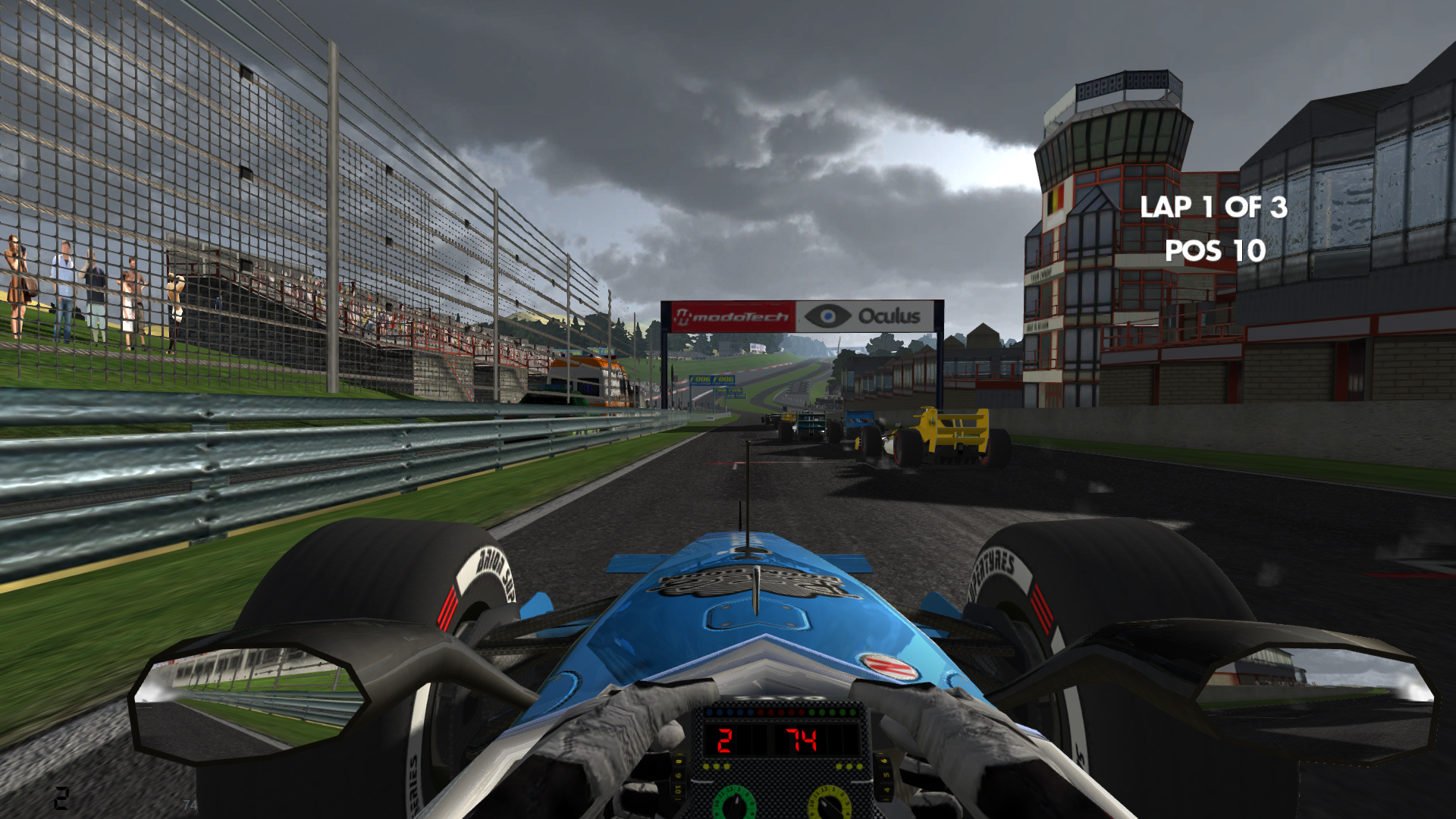
The first virtual reality sports game just hit Steam with the release of Motorsport Revolution, a physics-based PC racing game compatible with the Oculus Rift DK2 headset.   It is the first sports VR game added to the Steam library. And based on the VR buzz at the Consumer Electronics Show, this is just the beginning.

The single-player game features multiple 3D tracks to burn, such as California Speedway, Brazil Raceway and Big Country Criterion, as well as over 20 different cars to choose from as one races through five sports classes, starting with economy and ending with the ultimate formula class.

Screens1920_07

Neal Nellans, CEO of Ghost Machine, the game’s developer, said the game is more about action than a simulated racing experience.

“We wanted to create an adrenaline-filled action scenario,” Nellans told me. “The AI is very aggressive and it (the game) gives very fantastic crash scenarios.”

Nellans said that a racing genre lended itself nicely to VR because first-person, 3D racing games already existed. This made the transition to VR easy simply by adding a 3D camera.

When asked about issues of nausea, a common challenge within VR experiences, Nellans said that cockpit-type games – games in which action moves around a stationary first person or object — reduce those issues.

Waiting for EA Sports to launch a John Madden VR title? Don’t hold your breath. Nellans thinks the big developers will take a wait-and-see attitude with the tech.

Ghost Machine, a virtual reality studio based in Austin, is also developing Extreme Golf and expects to launch in December. This is not your grandpa’s golf. Features include a timer for each hole which affects scoring, along with the ability to smack your opponent with a club and knock them down to gain an edge and improve your score. Nellans said the game will include a multiplayer element.

The company has six VR games currently in development.

Motorsports Revolution is currently on sale for $12.74 (regularly $14.99) while the Oculus Rift DK2 headset costs $350.

Images via Ghost Studio