

Preventing Concussions in the Next Generation of Football Players
Concussions are bad.
Nobody has ever really disputed this, but over the last decade, it has become increasingly apparent that repetitive head injuries, seen particularly often in football, can lead to significant long-term medical effects.
The “concussion debate” has largely taken place on the professional stage, from the controversies generated by League of Denial to Will Smith’s forthcoming feature film Concussion and beyond. Yet the true impact is being felt across the nation, as schools and innovators work to protect the more than 1,000,000 young adults who play college and high school football each season.
This fall, new devices large and small are being tested to reduce the frequency and effect of football-related concussions.
The Dartmouth Dummy
Five years ago, the Dartmouth Big Green football program eliminated athlete-on-athlete tackling during practices. Cutting out these collisions in favor of tackle sleds and dummies cuts down on injuries and concussions–which makes sense–but made it harder to actually practice tackling against a moving target–which also makes sense.
Enter the MVP–the “Mobile Virtual Player”.
Designed by two Dartmouth engineering students, the MVP is a remote-controlled, human-sized dummy that resembles a cross between the Headless Horseman and a Weeble. Less bone-crushing than an actual human, the MVP allows for relatively realistic tackling simulations while significantly decreasing the risk of head and neck injuries.
Two MVPs were deployed in August, with a third on the way, and the experiment has received the attention of major media, tech blogs–and, reportedly, a few NFL teams.
New Helmets InSite
This doesn’t do much to prevent contact during games–and, as long as there’s tackling in football, there’s only so much you can do–but some new tools are being developed to limit the effects of major hits when they do happen.
The sporting company Riddell is in the process of bringing a new line of helmets to high schools around the country. The SpeedFlex helmets, equipped with Riddell’s InSite Impact Response System, use six built-in accelerometers to measure the individual and combined force of every impact a player receives. This data is sent live to a laptop on the sidelines, where trainers and staff can monitor players for potential danger signs.
As programs continue to adopt the system, one trainer says, this data will itself be useful for better understanding what leads to football brain injuries.
Watch Your Mouth
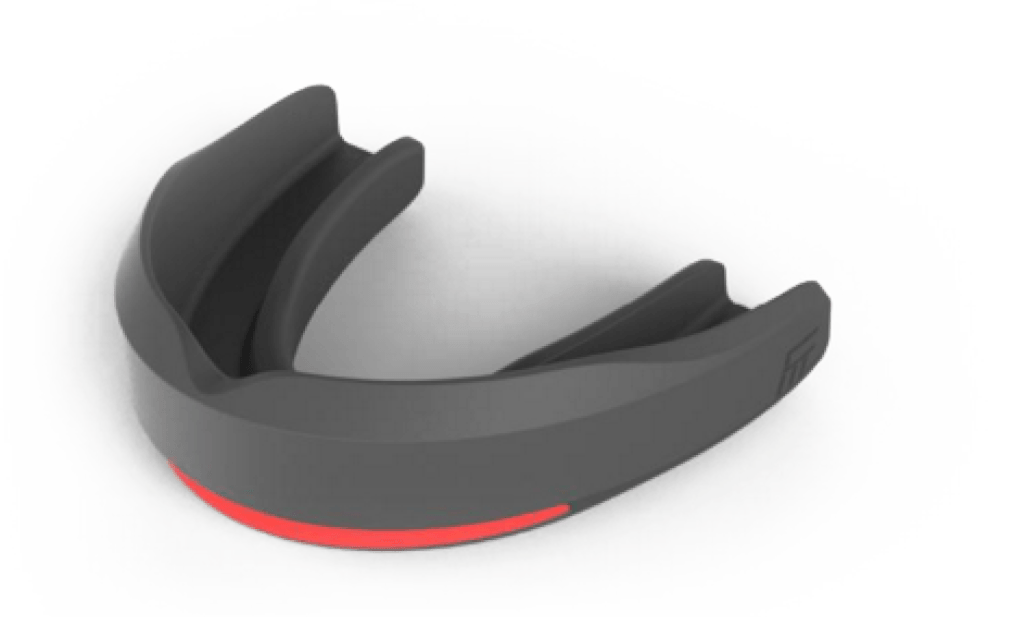
In fact, before long it might not even take a special helmet to easily detect potential concussions. Smithsonian reports on FITGuard, a mouth guard co-created by two Arizona State grads–one a veteran of the rugby team.
Like InSite, FITGuard uses sensors to measure hits to the head and can transfer data to a nearby computer. If FITGuard sees any signs of danger, though, it simply lights up the player’s mouth using LEDs. FITGuard is scheduled for release in early 2016.
These tools aren’t without their caveats. A recent Stanford study, for example, found that some currently existing concussion-measuring devices (particularly helmets) can significantly mismeasure the actual force of impact.
Nevertheless, with room for improvement and no end to the concussion crisis in sight, technology like this can still have great potential to help protect our next generation of football players.
(Featured Image via Dartmouth)
Brice lives in the Washington, DC area, where he does communications for linguistics and space exploration organizations. Brice has previously written for Ars Technica, Discovery News and the Winston-Salem Journal. He's on Twitter at @KilroyWasHere.
Evidence exists that CTE is actually caused by the far more common non-concussive repetitive hits to the head of the type experienced by lineman on almost every play during both practice and live games. Aren’t all of these ideas focused on capturing concussions and not non-concussive blows?
Not quite, to my understanding. From what I’ve read, Riddell InSite definitely tracks cumulative impacts, though I’m not as sure if FITGuard does. And the MVP’s goal is to cut down on hits to the head altogether (being headless/armless should help) and making those that do happen much less impactful by having a dummy with a lot more give.
The main issue to me is actually taking the data these tools provide for cumulative hits and making sure it’s accurately reflecting potential CTE risks, but I don’t think that’s an impossible problem.